Bending Not Breaking: Lessons in Resilience
Sometimes it feels like kids just want the world to bend to their will. Not in a malicious way, mostly. It’s more like they haven’t figured out that other pe...

Sometimes it feels like kids just want the world to bend to their will. Not in a malicious way, mostly. It’s more like they haven’t figured out that other people have wills too, and those wills matter. I see it every day in room 214, little arguments over who gets the blue crayon or which game we're playing during centers. It's tough to watch, especially when you know disappointment is coming. You want them to be happy, naturally, but happiness isn’t a right; it’s something you build, brick by brick, sometimes with help and sometimes on your own.
The thing about kids, though, is they don't come with instruction manuals. My grandma always said that parenting was “learning as you go,” which felt awfully vague when I first heard her say it in Delaware County. Now, standing in front of a room full of seven-year-olds, or watching my cousins’ kids squabble over the last slice of pizza at Sunday dinner, those words make a little more sense. You can't dictate how someone feels; you can only give them the tools to deal with feeling however they are. And flexibility – that bendiness in your thinking – is a pretty powerful tool.
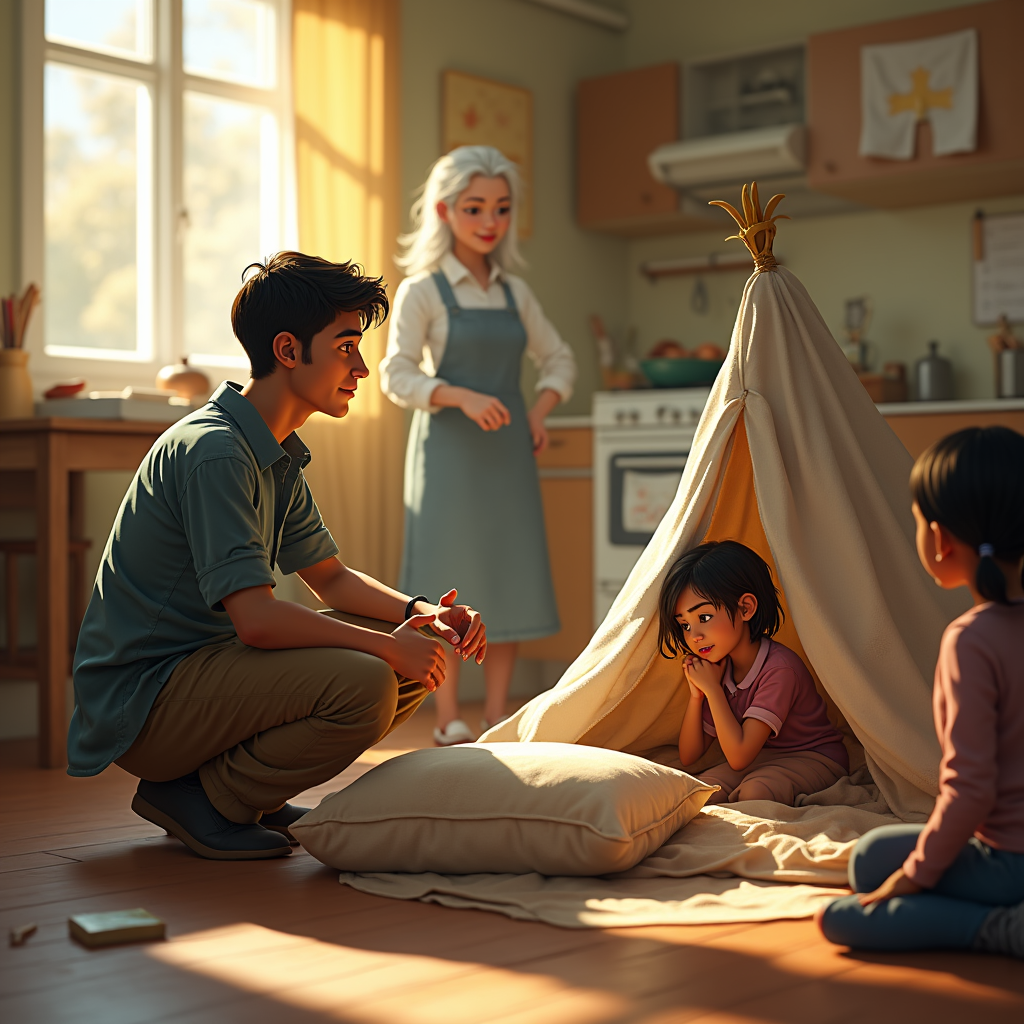
There was this one time, last spring, I saw two kids arguing about building a fort out of blankets and chairs. One kid insisted it *had* to be a castle, complete with a drawbridge made of pillows. The other just wanted a cozy hideout. Both were digging their heels in, and the frustration hung thick in the air. I didn't step in and declare a winner. Instead, I just sort of… watched. Eventually, they started throwing out ideas – maybe the castle could have a secret entrance? Maybe the pillows could be soft walls *inside* the hideout?
It’s not about letting kids get everything they want. It’s about showing them that there's usually more than one way to reach an outcome. The “perfect” plan rarely survives contact with reality, especially when you have another person—or five—depending on it. Learning to adjust, to compromise, isn’t failure; it's how things actually work. I think kids need to see that, even if it means a temporary frown or a little bit of sadness. It builds something stronger in the long run than just an uninterrupted sequence of “yeses.”
My grandmother makes gravy every Sunday. *Real* gravy, the kind that takes hours and requires constant attention. She'd let me help when I was little, but mostly she’d stand over the stove, explaining what she was doing, why a pinch more this or a dash less of that made all the difference. Sometimes I’d mess it up—curdle the milk, add too much salt—and she wouldn’t yell. She'd just say, "Alright, let's figure out how to fix it." It taught me not to be afraid to make mistakes and, more importantly, how to learn from them. That’s what I try to do with my kids – not necessarily in the kitchen, but in their relationships and their frustrations.
I noticed a girl in room 214, Maya, she gets upset when games don't go her way. She's got this particular idea of how things *should* be, and when they deviate from that plan, it can be rough. She starts to withdraw, builds up these walls around herself instead of trying to find a solution. I’ve been working with her on just thinking about what someone else might need or want in the situation – not as a way of giving in, but as a way of understanding.
It’s funny how sometimes the simplest shifts in perspective can make all the difference. It's like adjusting a recipe - adding a little something unexpected to create a completely different result. Showing Maya that being flexible isn’t about losing; it’s about finding new ways to play, new ways to connect. New ways to be happy, even when things don’t go exactly as planned. It seems to be sinking in, slowly but surely.
And that's the thing about these moments – they aren’t always pretty. There will be tears and frustration and maybe a few slammed doors. But if you can equip them with the ability to bend, instead of break, under pressure… well, that’s something worth fighting for. It’s more important than any castle or perfect gravy recipe; it's about building resilience, one small adjustment at a time. It's what I hope they carry out of room 214 and into the world beyond.