Beyond Letters: Seeing Kids Truly.
Okay. The thing is, folks keep talking about letters. Phonics. Like that’s *it*. Like if you just teach the kids to sound out words, they’ll suddenly…get it....

Okay.
The thing is, folks keep talking about letters. Phonics. Like that’s *it*. Like if you just teach the kids to sound out words, they’ll suddenly…get it. You know? Like magic. I’ve been in Room 214 with these kids, eight and nine years old, and I’ve seen it. I've *seen* them struggle. Not just with the sounds, but with…well, with everything.
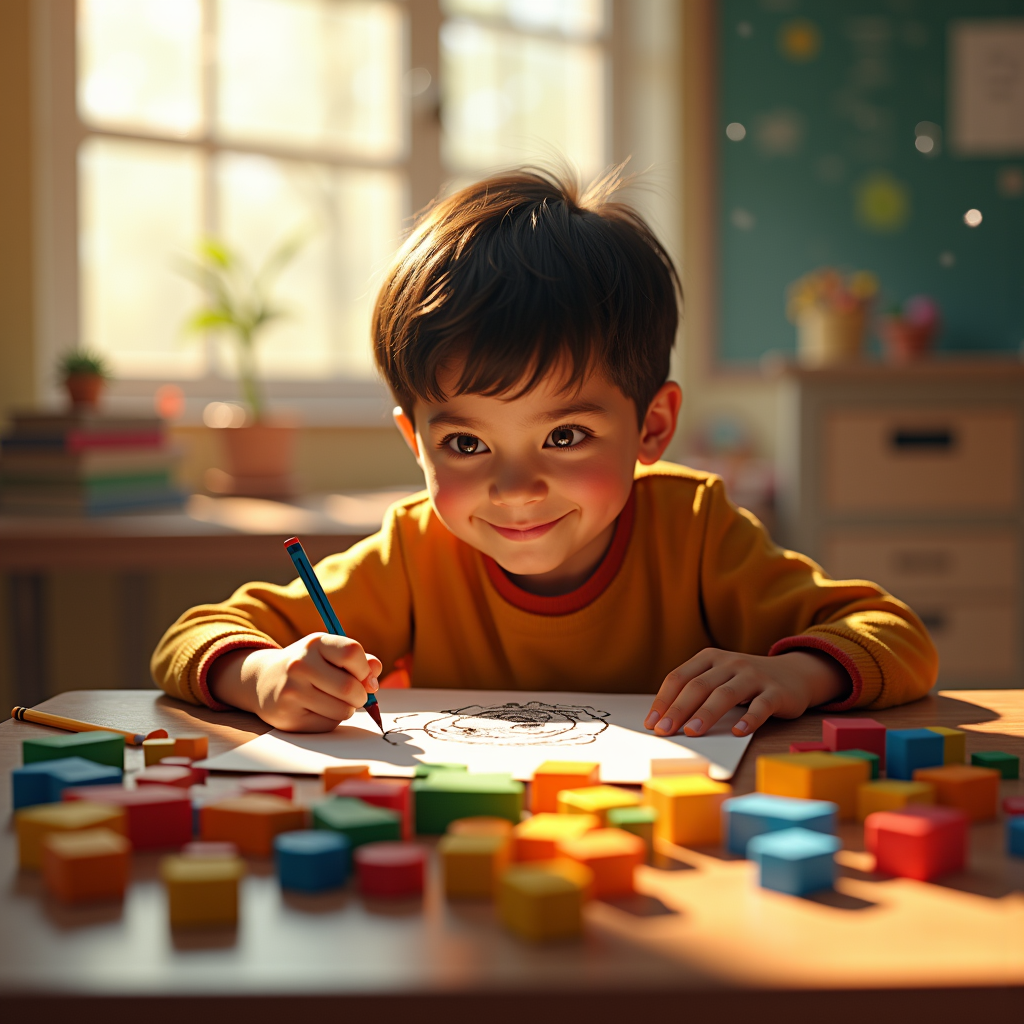
It’s not about the letters, not really. It's about what they *want* to say. That’s what I’ve realized, sitting here with these kids, watching them build towers of blocks, arguing over the last crayon, trying to figure out how to share a single piece of fruit. They’re trying to tell *stories*. And if you’re not listening for the story, if you’re just drilling them on ‘b-a-t’ and ‘c-a-t,’ you’re missing the whole point.
I remember little Mateo. He could spell “cat” perfectly, every time. But when he tried to write about his dog, Buster, it was…a mess. Scrawls. Random letters. He was trying so hard to get it *right*, to follow the rules, that he forgot he was trying to *tell* us about Buster's goofy grin. It made me think, what good is knowing the rules if you don't know what you’re trying to build?
And it’s not just about writing, either. You see it in math, too. They can memorize the steps to add two numbers, but they don’t *understand* why they’re adding. They don’t see the problem as something to solve, a puzzle to figure out. They just…do the steps. Like robots.
I talk to them about feelings sometimes. About how sometimes things just *feel* hard, and you don't have to know *why* to just…let it be. You know, like when Sarah couldn’t draw a straight line. She kept erasing, getting frustrated, and it wasn’t the line itself that was making her upset, was it? It was the *pressure* to get it right.
It’s about curiosity, I think. Giving them space to be curious. Letting them ask those “stupid” questions – the ones that make you think, “Wait, *why* are they asking that?” – and actually, you know, *answer* them. Not with a textbook answer, but with a real conversation.
I tried something different with a group last week. We weren't working on any specific skill. We were just…watching the pigeons in the courtyard. Just *watching*. I asked them what they noticed. And suddenly, they were talking about shapes, colors, movement, patterns. They were seeing things I hadn't even considered. And they were talking about it, really talking about it.
It seems simple, doesn't it? But sometimes, the most complicated things are the simplest. It's about seeing the kids as people, not just learners. About recognizing that they’re carrying around whole worlds in their heads, waiting to be explored.
It’s about letting them build those worlds, one messy, wonderful, imperfect word at a time.