Beyond Logic Finding the Felt Truth
Man, philosophy classes been wilding out lately. Not in a bad way, just… different. For years, I was trying to map everything out, break it down into neat li...

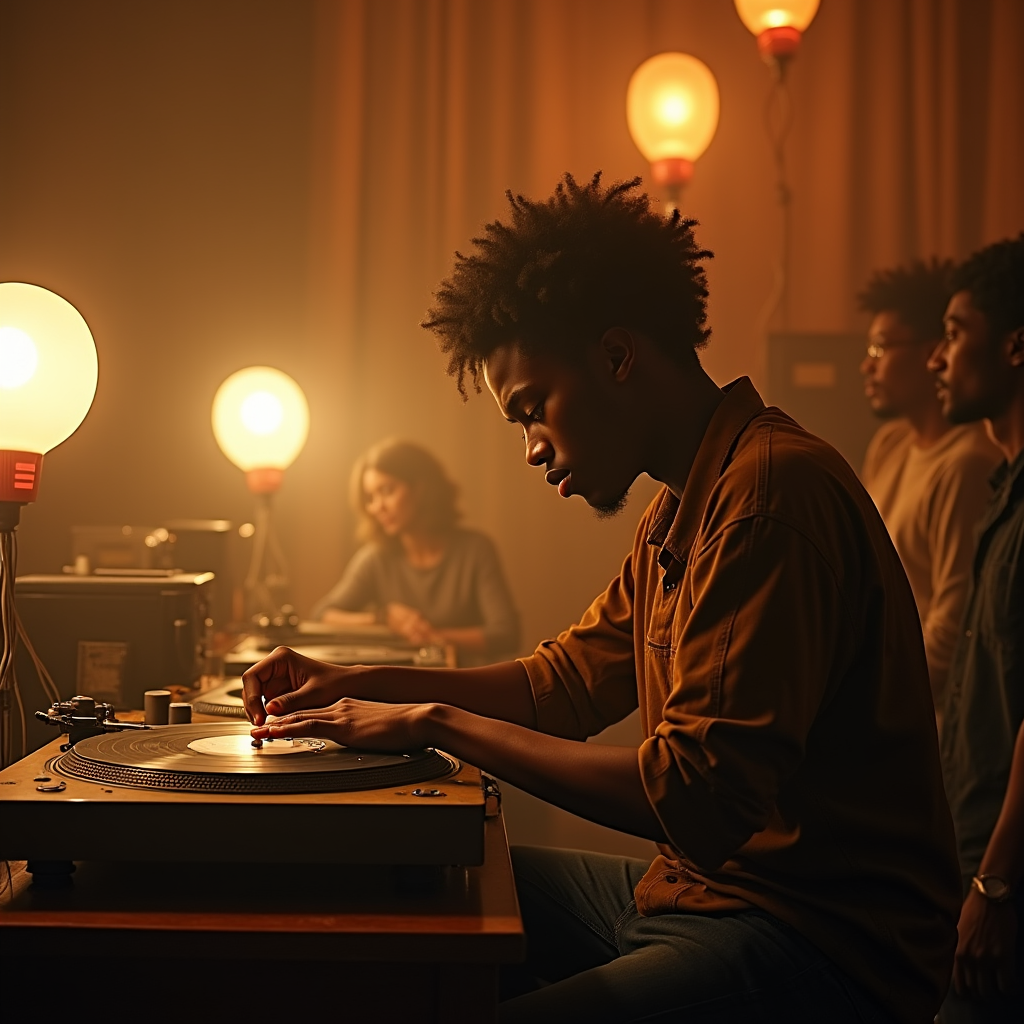
Man, philosophy classes been wilding out lately. Not in a bad way, just… different. For years, I was trying to map everything out, break it down into neat little boxes with clear labels. Like, if I'm trying to explain how a beat feels – that certain bounce, that melancholy you can't quite name – I’d start dissecting it. Tempo, the interplay of the 808s and the hi-hats, the samples I’m layering. All valid, all necessary to *understand* it, but does understanding it fully *capture* it? Nah.
It’s kinda like that with philosophy. You got folks obsessed with making everything logically airtight, stripping away all the nuance and complexity until you’re left with these sterile, perfect sentences. Like, a blueprint for thought. But life ain’t a blueprint. Life is a warped vinyl, skipping and crackling and full of unexpected vibrations. Try to fit that into a logical statement and you lose something vital.
There’s a history to this, I’m realizing. For a long time, people were chasing some grand, overarching truth, building these elaborate metaphysical structures to explain everything. Then, suddenly, folks started saying, “Hold up. Maybe the problem isn’t the world itself, but the language we’re using to talk about it.” And that shifted everything. It felt like flipping a switch.
I remember feeling that shift most acutely when I started really digging into music production. It’s a language in itself, right? And you can analyze a track to death – the EQ, the compression, the MIDI mapping – but that ain’t the song. That’s just the *how*. The “what” – the feeling, the message – that comes from somewhere else, from a place that’s hard to pin down.
I had this beat I made back in August. It was late, I was just messing around, not really trying to *make* anything. But when I played it back, I felt this… clarity. It wasn’t a logical understanding, it was a gut feeling, a resonance. I knew I needed to do something with it, something bigger than just layering another sample on top. It felt like a direction, a pull.
That’s where ordinary language comes in. It's not about precision, it's about connection. It's about finding the words that best capture the feeling, even if those words are messy and ambiguous. It’s about using metaphors, analogies, letting the conversation flow organically. It’s how you talk to your grandma, how you hype up your boy on a Friday night, how you try to explain why a track hit you so hard.
The tension is real, though. There’s a constant tug-of-war between wanting to be precise, to be understood, and wanting to honor the messiness of experience. Sometimes, it feels like I’m trying to build a bridge between two different worlds – the world of logical certainty and the world of felt experience.
And maybe that’s the point. Maybe philosophy isn’t about finding the one, true answer. Maybe it’s about holding both those worlds in tension, recognizing that they both have something valuable to offer. Maybe it’s about learning to speak in a language that can encompass both the precision of logic and the richness of everyday life. It's about finding the beat that really moves you, even if you can't explain exactly why.