Beyond Pixels: Gaming, Systems, and Balance
Man, it's wild how everything gets painted black and white. Like, video games? Good or bad? Nah. It’s way more complicated than that. I’ve been living in tha...

Man, it's wild how everything gets painted black and white. Like, video games? Good or bad? Nah. It’s way more complicated than that. I’ve been living in that complexity for a minute now, bouncing between late-night beat sessions and trying to convince myself I need to pay attention in class. Gaming isn’t some universal evil, and it’s definitely not a cure-all. It's just… a thing. A thing that occupies a *lot* of space in how people process the world, especially my generation.
I remember when I first started getting into making beats, really digging into the technical side. It was like unlocking a new level of understanding, not just of music, but of how systems work. Games do that too, right? They’re designed. There's a logic to them, a reward structure. That feeling when you finally nail a difficult combo, or solve a puzzle, that’s more than just satisfaction; it’s a demonstration of skill. And that feeling, that sense of accomplishment, is something you can’t just find everywhere.
I've seen it firsthand. My cousin, Deonte, he struggles with… everything, honestly. Social stuff, school, just feeling comfortable in his own skin. But when he's online, in a game, he’s different. He's strategic, he’s leading, he’s *present*. It’s not that the problems disappear, but the environment shifts. Suddenly, his anxiety isn’t the first thing he’s thinking about. He's focused on a mission, a team, a goal. It’s a temporary escape, yeah, but sometimes temporary is exactly what you need.
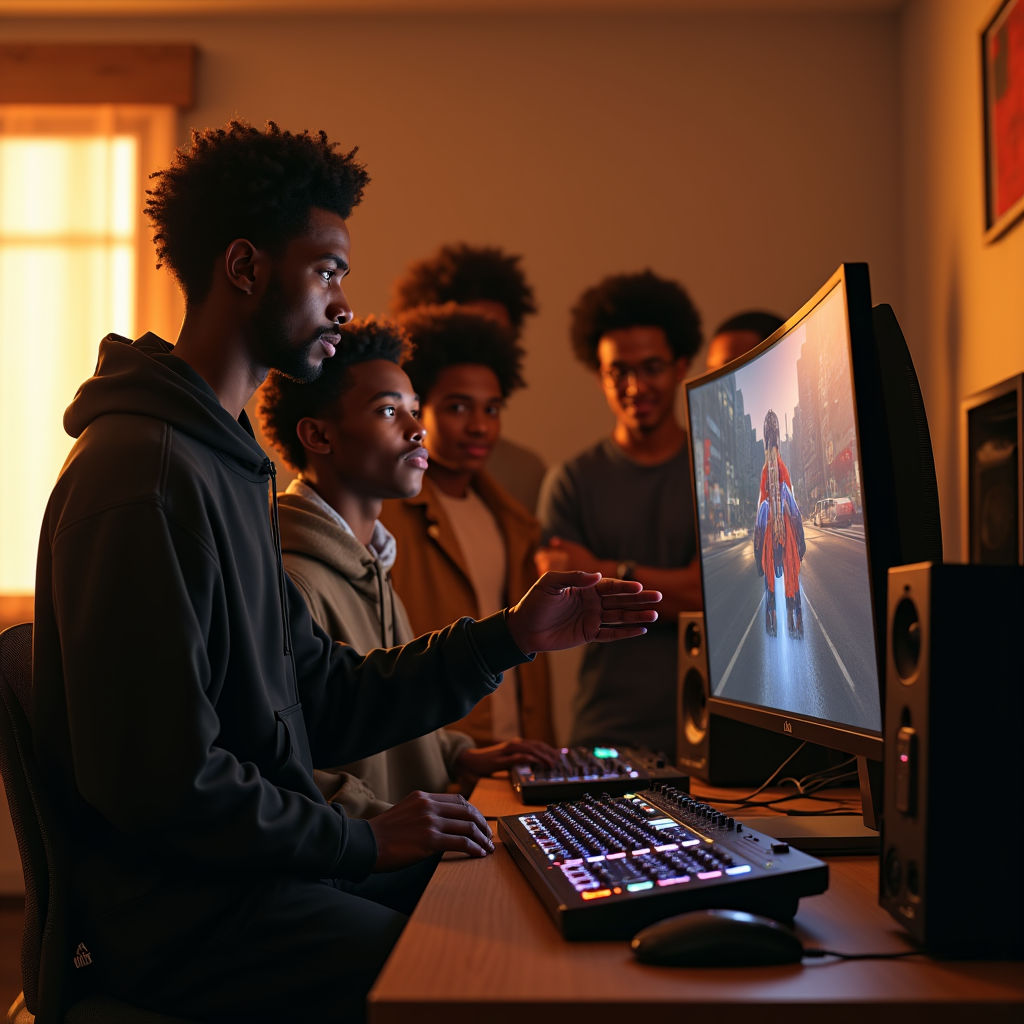
And it ain’t just about escape. I’ve gotten genuinely better at certain things because of games. Reaction time, problem-solving, even spatial reasoning. I mean, when I was building out my bedroom studio, figuring out the acoustics and cable management, that felt less like a construction project and more like optimizing a character build. Sounds crazy, but the logic’s there. These games force you to think critically, to adapt, to anticipate.
The thing is, that can also be a trap. I know plenty of people, myself included, who’ve lost hours, days, even weeks to chasing that feeling. It's that "flow" state, that feeling of being totally absorbed, where time just melts away. It’s addictive, no doubt. When I'm in that zone, building a beat, tweaking a sample, the world outside just fades. It's powerful, but you gotta be mindful of where it’s taking you. Skipping class to perfect that one snare sound? Not a winning strategy.
It’s not just about individual accountability, though. The developers got a responsibility too. They're designing these experiences, engineering these reward loops. They know how to tap into our psychological needs – the need for belonging, the need for mastery, the need for purpose. Is it ethical to exploit those needs, even if it’s creating something entertaining and engaging? That's a question I've been grappling with, especially now that I'm making my own music.
I see the way these games are marketed, too. The constant push to spend more, to upgrade faster, to be "the best." It’s a relentless cycle, and it can be easy to get caught up in it. It's like that pressure I feel between what my professors want me to be doing and what feels true to me. There's a temptation to chase metrics, to chase validation, to chase the next level, even when you know it’s not ultimately fulfilling.
Ultimately, it’s about balance. Gaming isn’t inherently good or bad. It's a tool, like music production, like anything else. It can be a source of joy, connection, and even growth. But it can also be a distraction, an addiction, a crutch. And understanding that nuance, recognizing that complexity, that’s the key. It's about being honest with yourself about what you're getting out of it, and making sure it’s actually adding something positive to your life. It’s about finding that flow, without letting it drown you.