Beyond Screens: Rethinking Childhood Activity
Sometimes, I think about what we tell kids. All the things we assume they *need* to know, or *should* be doing, to grow up… well, right. Like, “Go outside an...

Sometimes, I think about what we tell kids. All the things we assume they *need* to know, or *should* be doing, to grow up… well, right. Like, “Go outside and play!” It’s practically a mantra, isn't it? It’s what my mom said to me, what my teachers said to me, and now what I find myself saying to a room full of seven and eight-year-olds every day in room 214. But lately, I’ve been reading something that makes me wonder if we're not missing a piece of the puzzle.
There’s this study, a long one, following kids from when they’re little all the way through adolescence. The kind of study that takes years and years to actually show you something useful. They looked at how much time kids spent being active – running around, playing games, all that good stuff – and how much time they spent looking at screens. And then, a long time later, they looked at how those kids were doing in school, how well they could think, how easily they could learn new things. And what they found… well, it’s complicated.
We’ve all heard it: too much screen time is bad for kids. Rotting their brains, turning them into zombies glued to their phones. It feels intuitive, doesn’t it? Like something you *know* to be true. And, of course, there's a truth there. Too much of anything isn’t good. But these researchers found something surprising: it's not quite as simple as "screen time = bad grades."
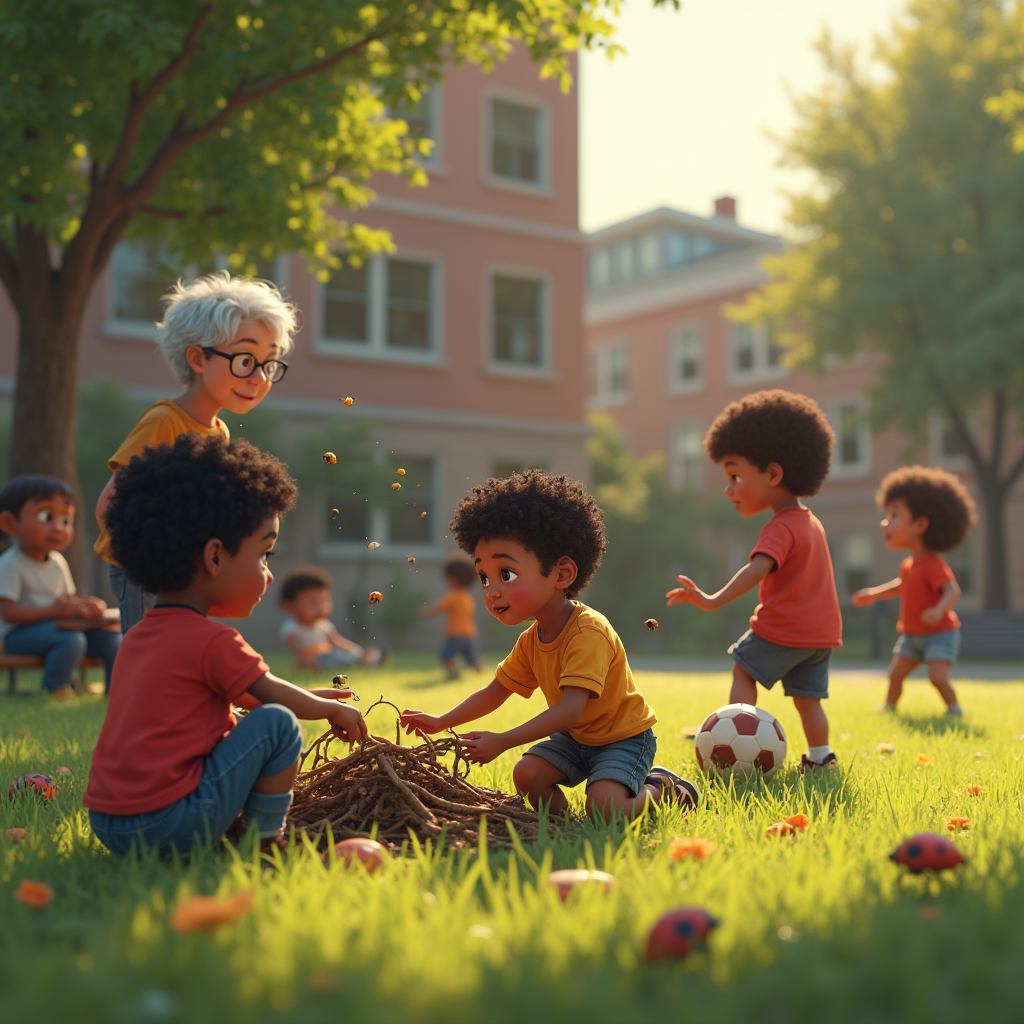
What they noticed was this subtle dance. It wasn’t about the *amount* of time spent on screens, as much as it was about what happened *around* that time. Kids who had plenty of opportunities to just *move*, to run and jump and build forts out of sticks – those kids seemed to do just fine, even if they also spent a couple of hours each day playing video games or watching cartoons. The kids who were mostly still, mostly indoors… well, they didn't do so well.
It reminds me of something I saw just last week. Two boys, Jamal and Mateo, were arguing over who got to use the soccer ball. They were yelling, pushing – typical seven-year-old stuff. But then Mrs. Rodriguez, the reading specialist, came over and just *watched* them. She didn’t intervene, just let them work it out. And they did. They figured out a way to share, to take turns. It wasn’t about the soccer ball, really. It was about learning to navigate a disagreement, to problem-solve, to compromise. That’s the kind of thing movement seems to encourage – that ability to adapt and figure things out.
I remember when I first started driving to this school, how nervous I was. Leaving South Jersey felt like a big deal. Everything felt… different. But I noticed something else too – the kids here, they weren’t all neatly packaged into boxes. They had edges, rough spots, and a hunger for something I couldn’t quite name. Maybe it’s that hunger for movement, for activity, for a chance to just *be* without needing to be right or perfect. Maybe it’s that struggle to figure things out that makes them so present.
It's not about banning screens. It’s about recognizing that kids need more than just structured activity – they need space to be messy, to be loud, to figure things out for themselves. It’s about remembering that learning isn’t just about books and tests. It’s about running around in the dirt, building forts out of sticks, and arguing over a soccer ball. It’s about the whole package.
And maybe, just maybe, we need to rethink what we tell those kids. Not just, "Go outside and play!" But maybe, "Go outside and *explore*. Go outside and *discover*. Go outside and *be*." Because sometimes, the most important lessons aren’t found in a textbook. They’re found in the scrape of a knee, the burst of laughter, and the endless possibilities of a summer afternoon.