
Beyond the 10,000-Hour Myth
The thing about chasing a dream is, you want a roadmap. Something you can follow, a clear set of instructions to get you where you’re going. For a while, the...

The thing about chasing a dream is, you want a roadmap. Something you can follow, a clear set of instructions to get you where you’re going. For a while, the 10,000-hour rule felt like that for a lot of people, me included. The original framing – dedicate yourself, grind it out, put in the time, and mastery will follow – it's appealing, right? It gives you the illusion of control in a world that often feels completely random. Like, *okay*, I can do that. I can dedicate myself.
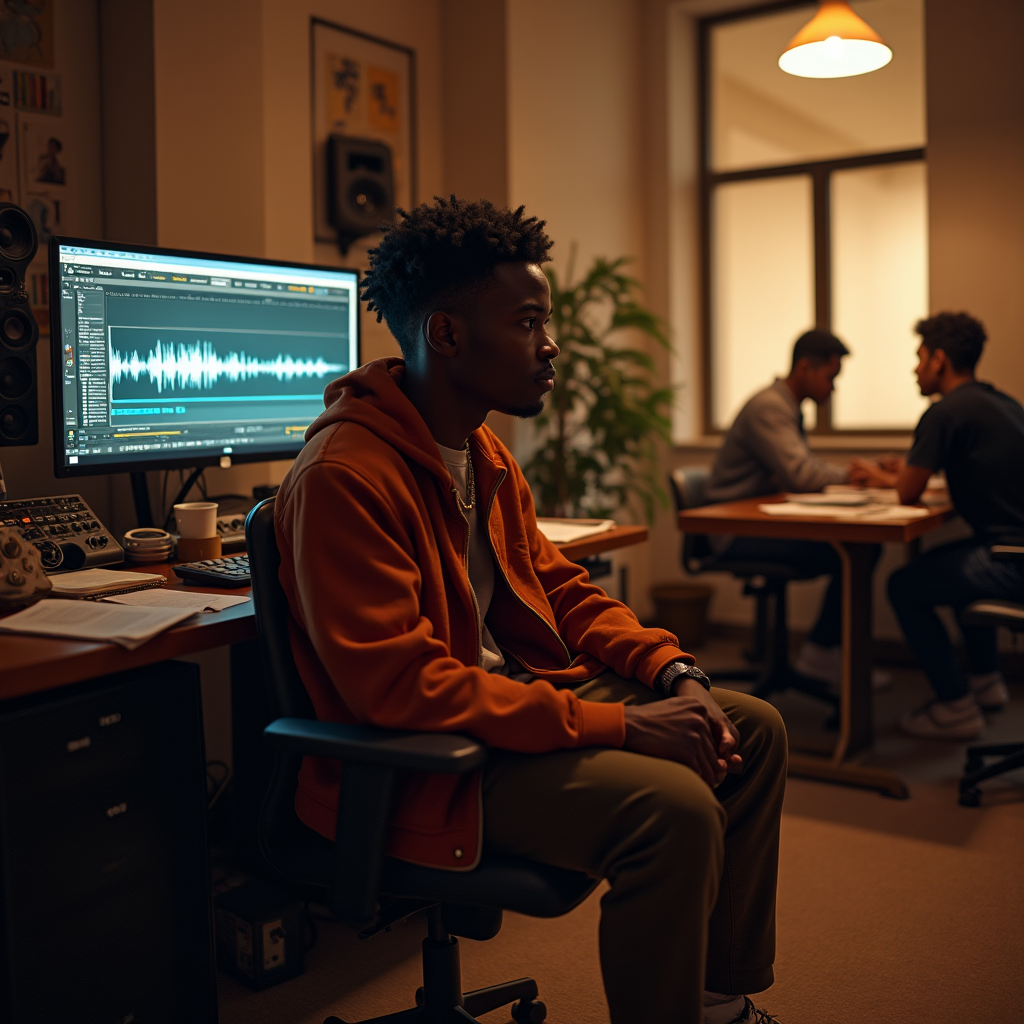
I remember staring at the ceiling in my bedroom studio, surrounded by blankets to dampen the sound, late into August nights, wondering if I was putting in enough hours. Was this beat I'm crafting, a hazy, melodic loop with a driving 808, going to be enough? Did I need to log more time tweaking the EQ, restructuring the arrangement, just *doing*? The pressure felt real. It wasn't about the music itself anymore; it was about the numbers. The metric. The arbitrary yardstick measuring my potential.
And that's the insidious part about these kinds of narratives. They simplify something incredibly complex. They take the journey of someone, somewhere, and distill it into a formula that suggests anyone can replicate it. It's the ultimate bootstrap fantasy. But the recent pushback against this idea, these studies showing that the reported ranges of practice hours needed to reach elite performance are… well, far less consistent than we thought, it’s a gut punch. A familiar sting of disappointment.
You start questioning everything. All those hours spent meticulously crafting beats, all the fits I threw together for my Instagram, documenting the process, chasing the algorithm – did it even *matter* if the number wasn't right? Because I felt like I was moving. I knew I was moving. My small but loyal following online, the feedback I was getting, the raw energy I felt when I finally locked in a melody – that wasn’t a lie. It felt *real*.
It's easy to dismiss the popularity of the 10,000-hour rule as naive. But it taps into a deeper desire: the desire to believe that effort is a guarantee of success. It’s comforting to think that if you just work hard enough, you can overcome any obstacle. It's more uncomfortable to confront the possibility that talent, timing, circumstance—things entirely outside of your control—play a much larger role than we like to admit. It’s even more unsettling to realize the original studies may have been flawed.
I'm thinking about a conversation I overheard in Clark Atlanta’s library last week. Two students were debating the merits of a particular study on music education. One was adamant about the 10,000-hour rule, while the other pointed out the biases in the initial research – the way the focus was almost exclusively on violinists, a field heavily influenced by privilege and access. It made me re-evaluate my own thinking. Did I even know what I was chasing?
It’s not about abandoning the idea of practice altogether. It’s about shifting the focus. Instead of obsessing over a number, maybe we should be asking better questions. About *how* we practice. About the quality of the feedback we’re receiving. About the environment we’re creating for ourselves. About the intangible elements – the passion, the drive, the sheer stubbornness—that can't be quantified.
Honestly, this whole thing has been a weird relief. It frees me up, almost. If the number isn’t the answer, then the answer isn’t a number at all. Maybe it’s in the feeling of the bass hitting just right. Maybe it’s in the confidence I feel when I step out in a fit I designed myself. Maybe it’s just about making what feels authentic, and letting the rest sort itself out. Because right now, chasing a feeling feels a lot more sustainable than chasing an arbitrary milestone.