Beyond the Horizon, A Search for Meaning
Sometimes, I think about that National show, back in, like, 2022, and how small everything felt afterward. The concert itself was huge, packed and loud, but ...

Sometimes, I think about that National show, back in, like, 2022, and how small everything felt afterward. The concert itself was huge, packed and loud, but when I got back in the car, the Ohio night just seemed…flat. Like the edges of the world had been scrubbed away. It’s funny, because I felt then that I had to *go* somewhere, have something *happen* to me. Now, I realize that feeling was about understanding something more than just location.
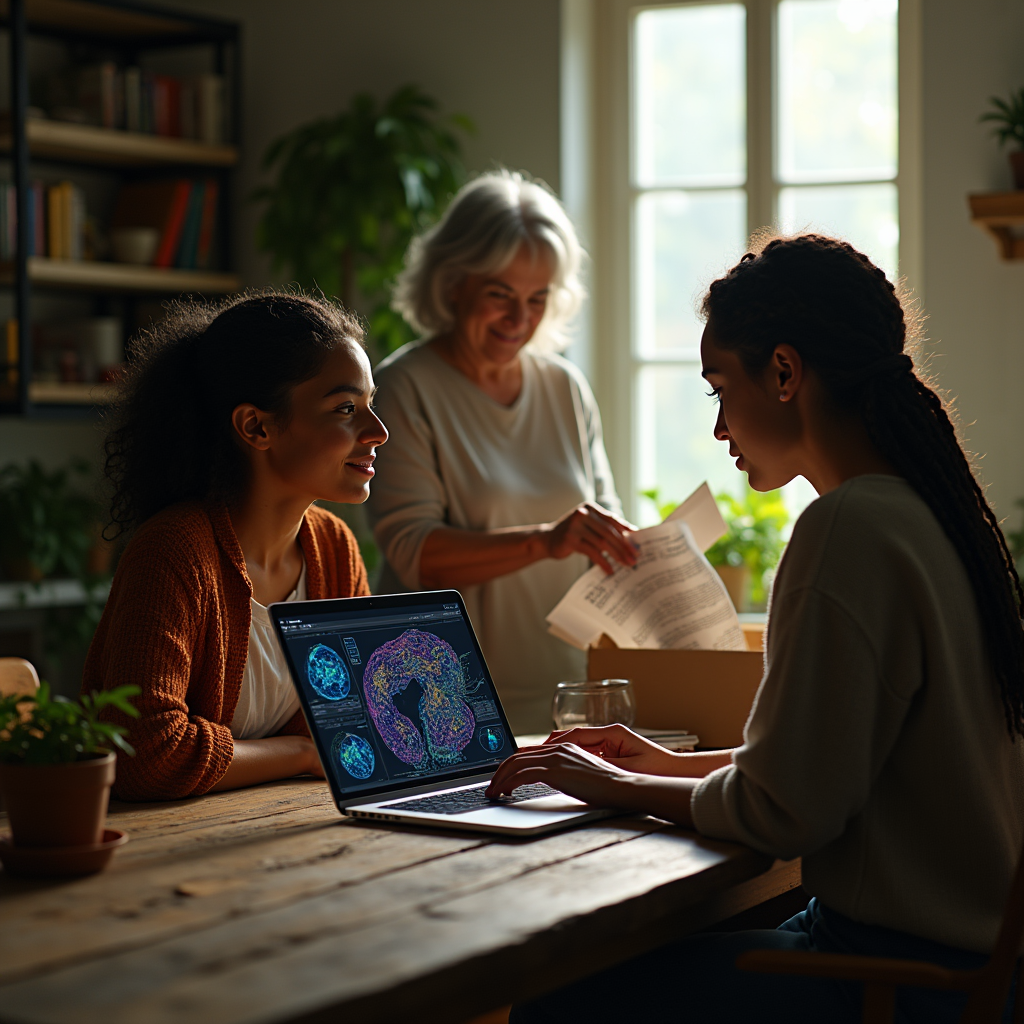
My dad, he never really got the blog. “Just a hobby,” he’d say, which felt like a polite way to dismiss a whole bunch of feeling. He likes practical things, things you can build with your hands, things that *do*. My mom, she'd print out my articles, carefully folded, and put them in a box. She didn’t always understand the music, the lyrics, the way a chord progression could feel like a secret language, but she appreciated that I was making something. It was about *effort*, not outcome.
The Phoebe Bridgers thing changed something. Two hundred people, strangers, found my writing through a Tumblr reblog. Two hundred people who cared, even a little, about what I wrote about the way she uses silence. It was a strange, electric feeling – like the signal was finally leaving the valley. That’s what the new science stuff feels like, too, in a weird way. It's less about me and more about… something bigger.
There's this layer of complexity in biology that used to feel impenetrable. For so long, scientists were looking at things in broad strokes – what genes are present, which proteins are being made. It’s like trying to understand a song just from the sheet music; you get the structure, the notes, but you miss the feeling of the performance, the way the musician breathes and shifts the dynamic. Single-cell omics – looking at individual cells – is like watching that musician, seeing the tiny, almost imperceptible shifts that make all the difference.
It's overwhelming, the amount of data. My friend Sarah, she’s into coding and she’s been trying to explain how they're building algorithms to sift through it, to find the patterns hidden in all that noise. She says it’s like trying to assemble a jigsaw puzzle with a million pieces, where some of the pieces are blurry and some are missing altogether. It sounds incredibly difficult, and also incredibly important.
The possibilities for medicine are… intense. Imagine being able to look at a person's cells and not just diagnose a disease, but also understand exactly *how* it’s affecting them, and tailor treatment accordingly. It’s not just about giving everyone the same pill; it’s about recognizing that each person’s body is its own ecosystem, with its own unique vulnerabilities and strengths. It feels almost unbelievably precise.
Of course, that precision brings responsibility. My ethics class last semester spent a lot of time talking about access and equity. Who gets to benefit from these advancements? How do we make sure that these technologies don’t widen the gap between those who have and those who don’t? It's the same questions that always come up, just amplified by the power of the science itself.
It’s exhilarating, and terrifying, to consider. Like staring out at a star field, knowing there’s so much we don’t know, so much we’re just beginning to understand. It makes me think about that feeling after the National show, not as a need to *go* somewhere, but as a desire to learn, to absorb, to be part of something much bigger than myself. And maybe, just maybe, to write about it in a way that someone else, somewhere else, will understand.