Bridging the Generational Parenting Gap
Sometimes, it seems as if the wellspring of wisdom hasn’t been passed down quite right these days. I see it in my niece Clara's parenting; she and her husban...


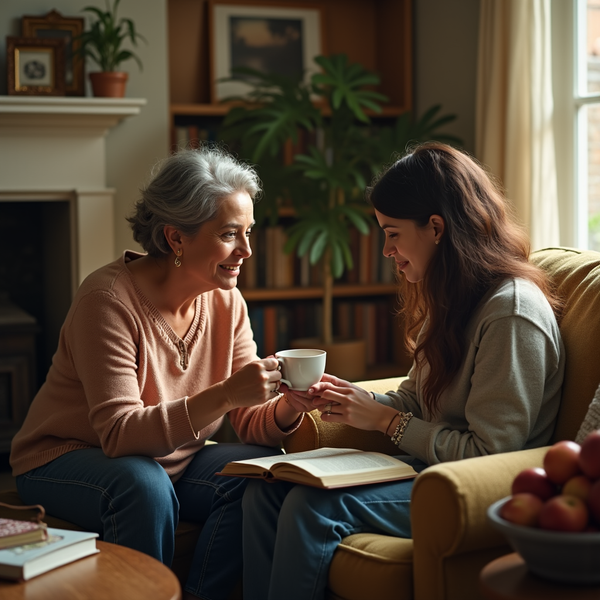
Sometimes, it seems as if the wellspring of wisdom hasn’t been passed down quite right these days. I see it in my niece Clara's parenting; she and her husband, David, are devoted parents, truly, but their approaches sometimes feel… far removed from how I raised my own children, and even further still from how *my* mother raised me. It isn't a matter of them being "wrong," mind you. The world changes, and what worked then doesn’t always work now. But the chasm can be so wide that it feels difficult to bridge.
It wasn't always this way. When my children were small, I felt quite close to their grandmother, my own mother. We shared a similar philosophy – structure, routine, gentle guidance with clear expectations. Of course, there were disagreements, as there always are between generations who experience different societal shifts and norms. But those were mostly minor things, easily smoothed over with a cup of tea and a kind word. Now? Sometimes I find myself biting my tongue so hard it hurts.
The biggest difference, I think, isn't necessarily the *what* – the actual discipline or activities—but rather the underlying reasoning. There’s a gentleness now that can feel almost… hesitant. A reluctance to impose boundaries, a desire to avoid any perceived discomfort in their child. My mother, bless her heart, believed firmly in facing unpleasantness head-on. Not with harshness, no, but with a steadfast assurance that resilience was built through navigating challenges.
I recall one conversation I had with Clara recently, where she expressed concern about setting limits on screen time. David felt similarly. “We want him to be happy,” she said, her brow furrowed. And of course they do! Who wouldn’t? But happiness isn't a constant state of unadulterated joy; it’s built upon the foundation of responsibility and self-regulation. Allowing avoidance now simply postpones the inevitable lessons in delayed gratification.
It's not that I want to see Clara struggle, goodness no. My greatest desire is for her children to grow into well-adjusted, confident young adults. But sometimes, in their earnestness to shield them from pain or disappointment, they inadvertently rob them of opportunities for growth and understanding. The world isn’t a perfectly curated garden; it’s full of prickly bushes and unexpected stones. Learning how to navigate those obstacles is essential.
The tricky part, as I've come to understand, is offering support without judgment. Grandparents have a perspective shaped by decades – sometimes half a century or more – of experience. That perspective can be invaluable, but it must be offered with grace and humility. A lecture rarely changes anyone’s mind. Instead, asking questions, really *listening* to their reasoning, that's far more effective.
This past summer I started doing just that. When Clara mentioned a concern about her son's outbursts, instead of offering advice, I asked her, "What do you think he might be trying to communicate?” That simple shift in approach – from pronouncements to inquiry – opened up a surprisingly productive conversation. They hadn’t considered the underlying emotional need driving his behavior. It turns out that he was craving more one-on-one time with David after Clara had started an evening pottery class.
Perhaps this is simply part of being a grandparent in the modern age. Not to dictate, not to instruct, but to be a sounding board, a source of quiet reassurance, and a gentle reminder that the core principles of love and guidance remain timeless, even as parenting styles evolve around us. I’m finding, especially now in my retirement, that it's less about telling them *what* to do and more about helping them find their own way. And Bernard—bless his practical heart—he simply nods along, makes a pot of tea, and lets me have my say.