Different Minds, Shared Learning Moments
Do half of your peers seem smarter than you? That’s great. It happens. You walk into Room 214, same as every Tuesday, same little faces staring back, and it ...

Do half of your peers seem smarter than you? That’s great.
It happens. You walk into Room 214, same as every Tuesday, same little faces staring back, and it hits you. Not a dramatic, earth-shattering kind of hit, mind you. More like a quiet, “Wait a minute…” kind of thing. You glance around, taking in the drawings taped to the walls—mostly dinosaurs, a surprisingly impressive collection of sparkly rocks, and a few attempts at recreating the school’s principal—and then you notice it. Some of them just…get it. Faster. They’re asking questions you haven’t even thought to formulate, wrestling with concepts like fractions and the lifecycle of a butterfly with an intensity that makes you feel a little bit like you’re watching a movie.
And you’re sitting there, grading worksheets, trying to explain the difference between “there,” “their,” and “they’re” for the tenth time that day, and it’s easy to start feeling…well, not exactly bad. But definitely…noticed. Like a misplaced crayon in a box full of bright, perfectly arranged ones. It’s not about feeling *less* smart, you realize. It’s about seeing how different people process things. How some kids are like little sponges, soaking everything up, while others—and sometimes it’s you, you gotta admit—need a little more time to let the water settle.
It’s funny, isn’t it? We spend so much time trying to make everything uniform, to measure everyone against the same yardstick. Like standardized tests. Like the neat rows of desks in this room. But kids? Kids are anything but uniform. They come in all shapes, sizes, and speeds. And sometimes, the smartest thing you can do is just…accept that. Accept that someone else is ahead of you, and that’s okay.
I’ve seen this a lot with Marcus, for instance. He's in second grade, and he's already reading chapter books. Not just reading, but *discussing* them. He’ll challenge my interpretations, ask me questions about symbolism, and generally make me feel like I’m teaching a graduate seminar. And you know what? It’s fantastic. It pushes me. It reminds me that learning isn't a race.
The thing is, you start to realize that everyone has their own way of seeing the world. Some kids get the abstract stuff—the metaphors, the patterns—right away. Others need to see it grounded in something concrete, something they can touch and feel. And that’s not a weakness. It's just…different.
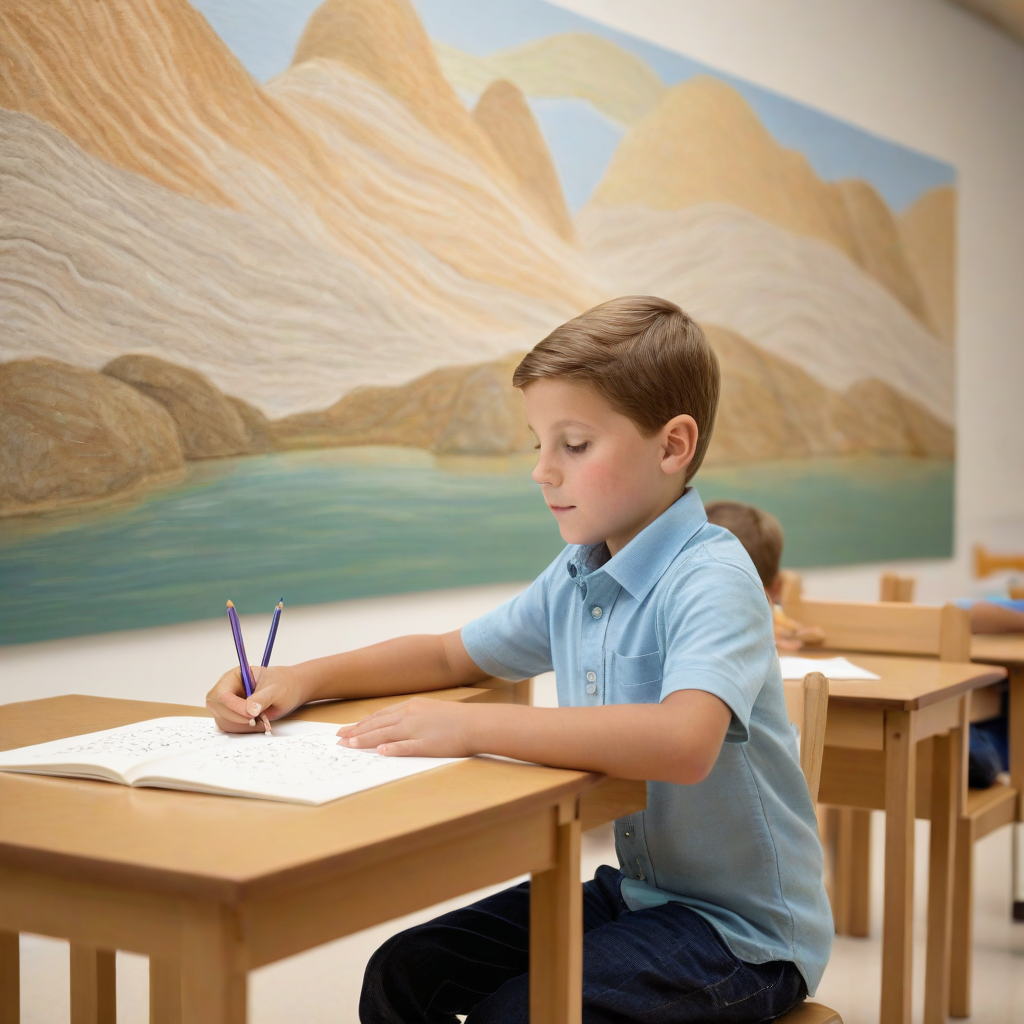
It’s like looking at a mural. You can appreciate the whole picture, the grand design, but it’s also amazing to zoom in on the individual brushstrokes, the tiny details that make the whole thing come to life. Each kid brings their own unique perspective to the classroom, their own set of experiences and ideas.
And you know what else? It’s a good reminder that you’re not the only one struggling with things. You’re not the only one feeling like you’re not quite keeping up. Everyone’s got their moments. Everyone’s got their things they don't get. It's just a matter of recognizing it and letting it go.
So, if half of your peers seem smarter than you? That’s great. Really. It means they're engaged. It means they're curious. And it means you're in a room full of kids who are going to teach you just as much as you’re going to teach them.