Echoes in Room 214
The rain smelled like wet asphalt and something vaguely floral – honeysuckle, maybe – drifting from Mrs. Rodriguez’s garden across the street. It always seem...

The rain smelled like wet asphalt and something vaguely floral – honeysuckle, maybe – drifting from Mrs. Rodriguez’s garden across the street. It always seemed to follow Mateo around, this gray drizzle, clinging to him as he sketched in his notebook during recess. I watched him from my doorway, a small island of observation in the usual chaos of Room 214, and it struck me again: how much of what I’m seeing here—the way these kids latch onto things, the sudden shifts in their moods—it feels like an echo of something bigger. Like a tremor running beneath everything.
It's funny, isn’t it? The way you think you’ve got some kind of handle on things, some framework to understand how people work, and then suddenly a kid like Mateo just...exists differently. He doesn’t *try* to be alert or focused, not in the way we tell them they should. It’s almost as if his brain is actively resisting, pulling back from any kind of imposed order. And yet, he’s brilliant with charcoal, capturing the curve of a fallen leaf with a precision that surprised even me when I saw him show it to Ms. Evans.
Yesterday was particularly…thick. The news kept buzzing about that situation in Syria, you know? Some escalation, some more words nobody seemed to understand. It felt like a static charge building up in the air, and it settled on the kids particularly hard. Chloe wouldn’t talk to anyone, just sat by her desk with her head down, tracing patterns on her math worksheet. I tried offering her a piece of gum—she takes them when she's stressed—but she just shook her head. It felt like trying to shore up a crumbling wall with sandbags.
I was going through my list this morning – the one for the grocery store, the one for Jerry’s birthday, the one I started on last week about fixing that leaky faucet—and it struck me how much of my energy goes into *managing* things. Managing expectations, managing distractions, managing the inevitable disruptions that kids bring to a classroom. It's exhausting, really. Like trying to hold onto water with cupped hands.
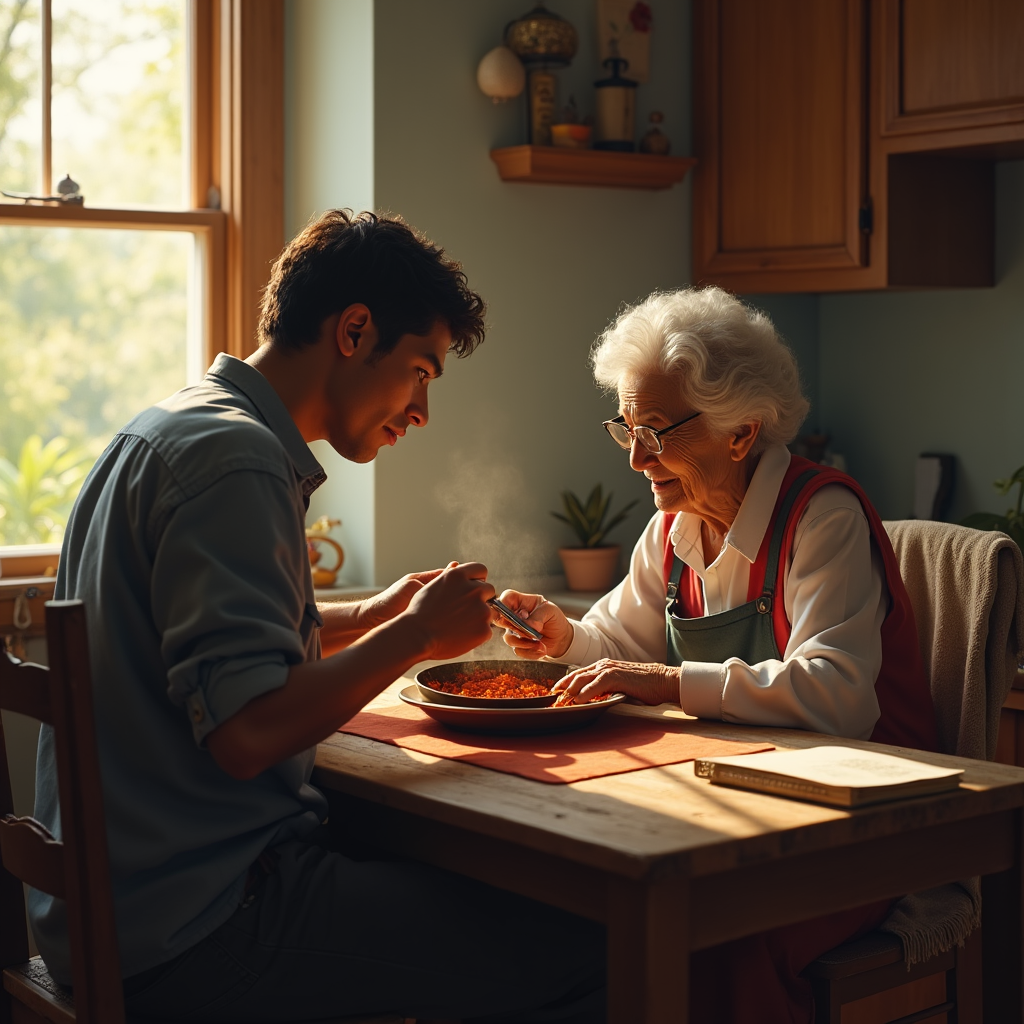
My grandmother always said you find peace in tending to what’s within your control. She used to say, "The storms will come, child, but you can still grow the roses." And that's precisely how I started back at the kitchen table last week – really digging into those Sunday gravy recipes. It wasn’t about making a fancy meal, it was about wrestling with the spices, understanding the proportions, remembering the way her hands moved as she stirred. It felt… grounding. A small space where I could actually *feel* like I had some influence over something.
I keep thinking about how much of what we teach them isn't really *teaching* at all, not in the way it should be. It’s more like...planting seeds. Hoping they sprout, hoping they take root, and hoping that somewhere along the line, they develop a sense of curiosity that doesn’t need to be directed or controlled. I tried telling Mateo about the connection between exercise and memory today, linking it to some research I read—he just looked at me like I was speaking Martian.
It’s strange, isn't it? The way knowledge can feel so…distant, theoretical. Like a collection of facts separated by an ocean. It only really becomes meaningful when it’s tied to something tangible – the smell of rain on pavement, the way a child’s face lights up when they finally grasp a difficult concept, or the satisfaction of putting a good meal on the table after hours of work.
I walked down to Delaware County yesterday, just to see my parents. It wasn't some grand gesture; just a couple of hours. But seeing their faces, hearing about Jerry’s latest woodworking project, it reminded me why I came back here in the first place. It felt like coming home, not to a building or a neighborhood, but to a feeling—a quiet certainty that matters aren't always solved by complicated answers. Sometimes, they’re just solved by being present.