
Fermentation’s Future A Window Into Process
Sometimes I think about my vegetable garden, and how much can go wrong even with careful planning. You put in your seeds, you water diligently, you pull out ...

Sometimes I think about my vegetable garden, and how much can go wrong even with careful planning. You put in your seeds, you water diligently, you pull out those pesky weeds – and still, nature has its own ideas. Fermentation is a bit like that, isn't it? Such a beautiful process—taking something simple, like grains or fruits, and transforming them into something richer, more complex, through the work of tiny creatures. But so much can hinge on delicate balances.
I remember one year trying to make elderflower cordial – a complete disaster! It just… soured. All that lovely blossom wasted. And it made me think about all sorts of industrial processes where subtle shifts in conditions can lead to entire batches being unusable, or producing something entirely different from what was intended. There's a tremendous amount of waste that can be generated; resources spent, effort expended, all lost. That’s never the intention, you see – it's always about creating something useful and valuable.
For years, fermentation has been largely reliant on what I suppose one might call “educated guesswork.” Check this once in a while, adjust that, hope for the best. It’s quite similar to how we used to troubleshoot problems with student behavior, really – observe, infer, intervene—with varying degrees of success. You make decisions based on limited information and experience. And sometimes you get it right. Sometimes… not so much.
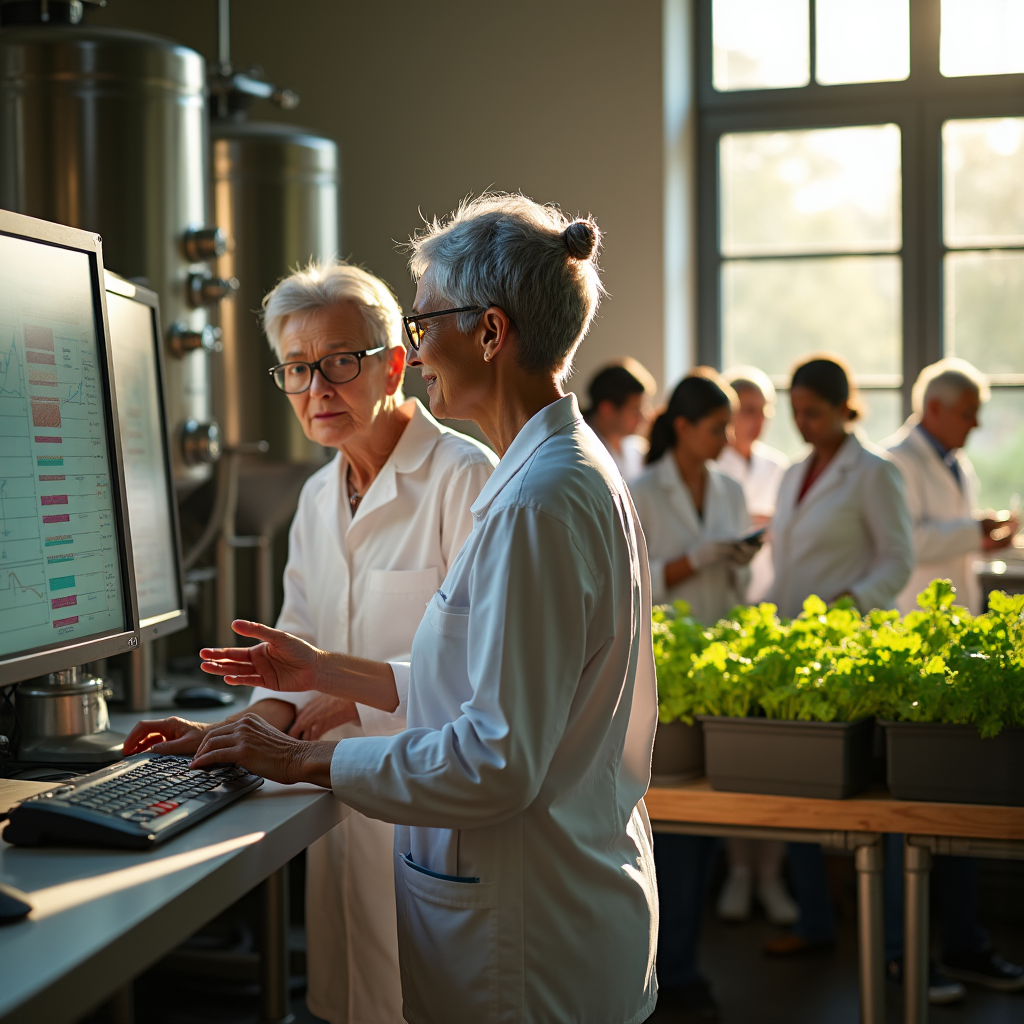
Now, things are changing. There's a fascinating technology emerging that allows for what amounts to real-time analysis of the gases released during fermentation. Imagine being able to *see*—not just guess at—exactly what’s happening inside those tanks and vessels. To know instantly if something is off, before it becomes an irreparable problem. It’s almost like having a window into that complex process.
Phyllis showed me an article about it the other day. She’s always been much more adept at keeping up with these advancements than I am—always poking around on her computer, learning new things. It described how specific gases are released depending on the metabolic activity of the microorganisms involved. And sensors, sophisticated little devices, can detect those changes and provide data instantaneously.
The possibilities for improvement are quite staggering, really. Not just in terms of minimizing waste – although that’s certainly a vital benefit—but also in optimizing the overall process. Fine-tuning conditions to achieve maximum yield, ensuring consistent quality, and potentially even shortening production times. I think about my rhubarb patch and how sometimes, one plant will thrive far more than another for reasons I can never quite discern. This technology feels like offering some insight into *why* that is, at a fundamental level.
It's particularly encouraging to see how this kind of technology can lessen the burden on those who are running these operations. I recall the stress of grading papers and preparing lessons—it’s exhausting work, especially when you feel like something isn’t quite right. Having real-time data removes so much guesswork; it allows for proactive adjustments rather than reactive firefighting. It's a calmer way to work – a more sustainable approach.
And that, I think, is the true significance of this advance. It isn’t just about efficiency—although that's certainly a welcome outcome. It’s about reducing waste and improving precision in processes that underpin so much of what we consume. Just like tending a garden requires constant vigilance and adaptation, so too does modern industry benefit from technology that allows us to understand the subtle complexities at play – and to intervene with knowledge, not just hope.