Finding Stability A Child's Anchor
Sometimes I think about room 214 – not just the four walls and the chipped paint where little Leo used to trace constellations on his desk, but *everything*....

Sometimes I think about room 214 – not just the four walls and the chipped paint where little Leo used to trace constellations on his desk, but *everything*. The way that space held everything—joy when Mateo finally understood long division, frustration during a particularly messy art project, and the quiet exhaustion at the end of every day. That room taught me more about how people work than any book ever could. And lately, I've been thinking about what happens to kids who don’t have a room like that.
It isn’t always about big things. It’s not always about obvious trauma. Sometimes it’s just…shifting ground. My aunt Carol used to move us around a lot when I was little. Delaware County, then back to West Philly for a while, then another apartment in South Jersey – always because of something with her job or a relationship or the rent being too high. Each place felt temporary, like we were waiting to pack up again. And you know what that does? It makes you look over your shoulder all the time.
You start measuring everything by how long it will last. Every friendship, every birthday party, even just a good afternoon playing stickball in the park – it's all tinged with this little worry: *How much time do I have left before we move?* And that’s hard on a kid. It teaches you to expect change, and maybe even to expect disappointment. It makes you… cautious.
I see it now with some of my kids. Not every single one, of course, but there are a few who seem to walk around bracing for something. They're quick to get upset when things don’t go as planned – not in a tantrum kind of way, but in this quiet, almost resigned disappointment. Like they already know the world isn't going to give them what they want. Like stability is an illusion. And I understand that feeling.
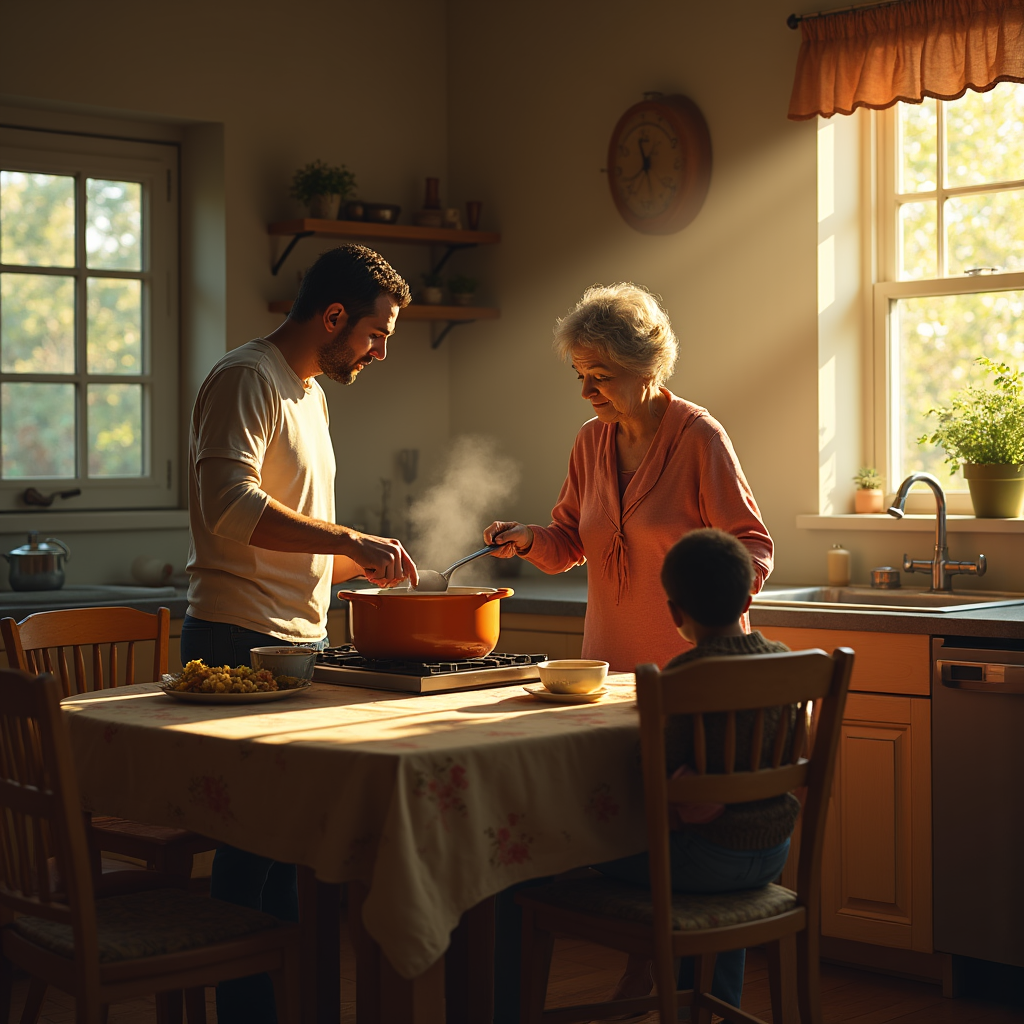
My grandmother tried so hard to provide some sort of anchor for me through all of that. Sunday gravy days were our thing. Every few weeks she’d be simmering something on the stove for hours – a rich, complicated sauce that seemed to hold all the flavors of her life: Italy, Delaware County, West Philly. It was comforting, predictable. A taste of something solid in a world that felt like it was constantly spinning.
That smell alone—the garlic and oregano simmering together—it's tied so deeply to feeling safe and loved. I’ve been working on her recipe this summer, trying to get it just right. It's frustrating sometimes; it needs *something*, but I can't quite put my finger on it. I want to be able to pass that down, not just the recipe, but the sense of continuity, of belonging. Something those Sundays with Grandma gave me.
It makes you wonder what happens when kids don’t have those anchors – those reliable things they can count on, even if it's just a really good bowl of pasta and a familiar smell in the kitchen. What does it do to their hearts? What shapes do they take? How much harder is it for them to trust?
I learned a lot in room 214 about how resilient kids are—how they find ways to cope, to adapt. But I also learned that resilience isn't enough. Every kid deserves more than just the ability to bounce back. They deserve the feeling of a solid foundation under their feet, a place where they can truly be themselves without wondering when things will change again. Maybe that’s what it means to grow up—not just getting bigger, but building something lasting and real.