
Finding Stillness in a Noisy World
Sometimes, the quietest moments in room 214 aren’t quiet at all. They're full of fidgeting, of little hands drumming on desks, of whispers that try to disgui...

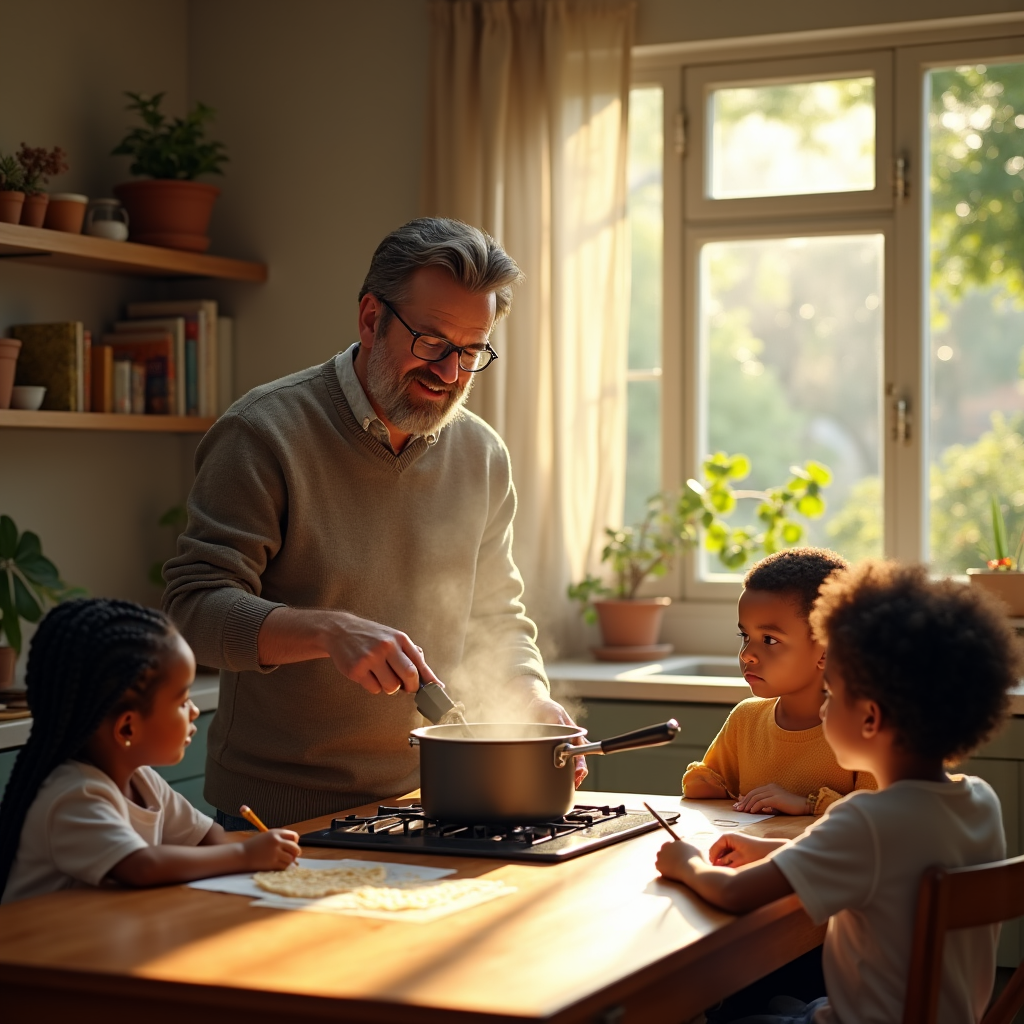
Sometimes, the quietest moments in room 214 aren’t quiet at all. They're full of fidgeting, of little hands drumming on desks, of whispers that try to disguise themselves as silence. This year, more than ever, it's been a struggle. You see it in their eyes – this… anxiety. It’s not sadness, not frustration exactly, but a deep unease that comes when there’s nothing *to do*.
I remember my grandma, Nonna, used to tell me, "A little bit of nothing is good for the soul, Mikey." She'd be stirring a pot of something incredible – usually gravy, which she’d been working on since before I woke up – and I’d be bouncing off the walls, wanting her to turn on the TV, play a game, *something*. She’d just smile that knowing smile and tell me to sit and watch. Just watch the bubbles. Just *be*. It took me a long time to understand what she meant.
It's a strange thing, this modern discomfort with stillness. My students, bright and energetic, seem almost… panicked when there isn’t a scheduled activity. The expectation, it seems, is that every second must be filled with something—a video, a song, a prompt. It’s like they're wired differently now, always anticipating the next hit of stimulation. It's a stark contrast to my own childhood summers spent mostly unsupervised in Delaware County, building forts in the woods, or just lying on the grass, watching the clouds.
We've tried different things, of course. Structured quiet time, drawing prompts, free play. The initial reactions are always the same: the fidgeting, the sighs, the complaints. "I'm boooored!" they wail, as if it's a tragedy. And it *is* a tragedy, in a way. Not because they’re experiencing boredom – that's a natural part of being a human being – but because they don't know how to *deal* with it.
This summer, I spent a lot of time in Fishtown. Long mornings at the kitchen table, a slow, deliberate pace to things I hadn’t had time for in a long time. I actually resurrected Nonna’s Sunday gravy recipe, a project she’d started years ago, always promising to teach me the "secrets" – the kind of secrets that aren't written down but passed down through gestures and observations. It required patience, a willingness to just *wait* for the flavors to meld, to trust the process.
That’s what I'm trying to teach them, too: patience. The ability to sit with discomfort. To recognize that boredom isn’t an enemy to be defeated, but a space to be explored. It’s in those quiet moments, when the mind isn't being bombarded with external input, that true creativity can blossom. I tell them that sometimes the best ideas come when you're not even trying to find them.
It’s not about forcing them to be still, of course. It’s about creating a safe environment where they *can* be still, even if they don’t initially want to be. It’s about modeling that behavior myself – putting down my phone, taking a deep breath, and just *being* in the moment with them. It’s about gently guiding them to discover the small joys in simplicity: the texture of a crayon, the pattern of the leaves outside the window, the quiet hum of the building.
And slowly, gradually, it’s starting to work. The fidgeting hasn't disappeared entirely, but there's a shift. A few fewer complaints. A few more moments of genuine quiet observation. A few more smiles that aren’t prompted by a game or a song. It's a small victory, perhaps, but it feels significant. Because I know, deep down, that teaching them how to be comfortable with boredom is teaching them something much bigger: how to be comfortable in their own skin.