
Igniting the Spark: Learning Through Passion
Sometimes, it feels like we’re all trying to solve the same equation, just using different pieces of the puzzle. You know, the one where we’re supposed to wa...

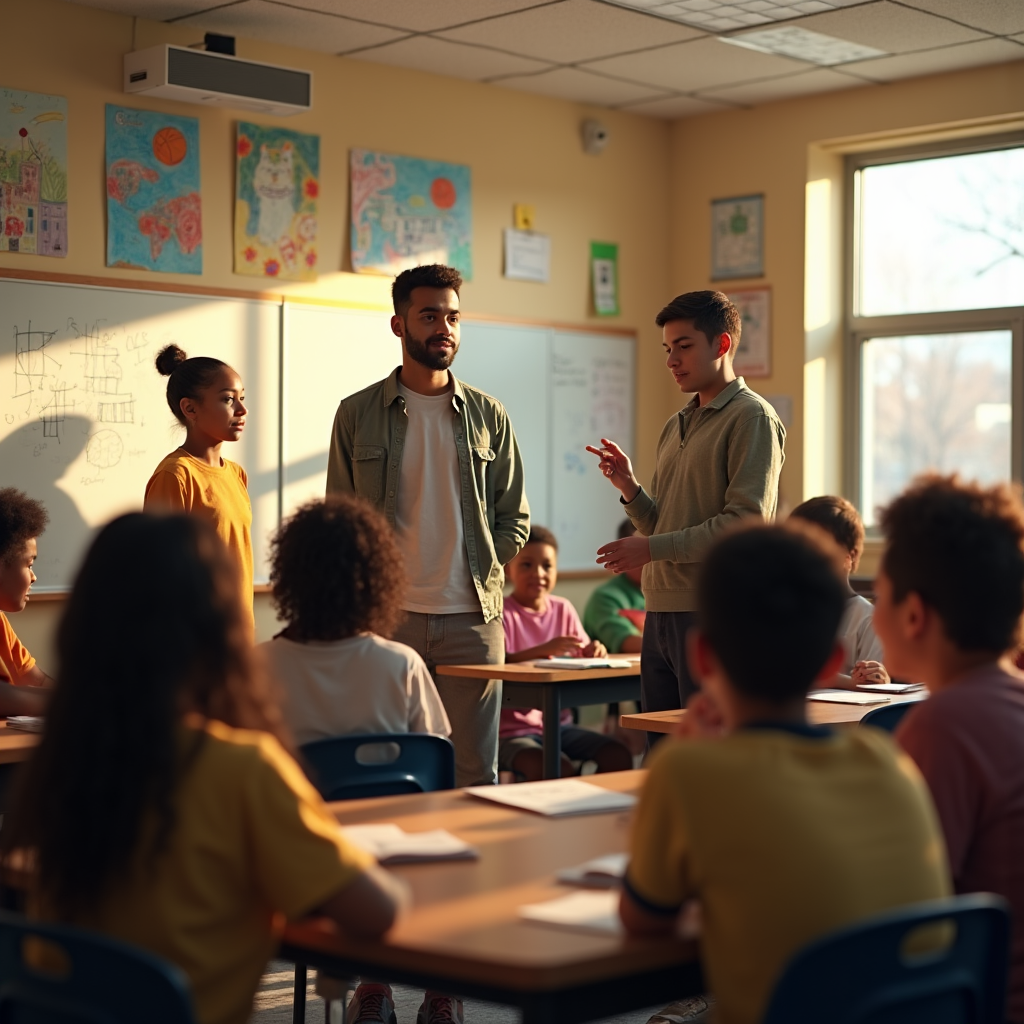
Sometimes, it feels like we’re all trying to solve the same equation, just using different pieces of the puzzle. You know, the one where we’re supposed to wave a magic wand and suddenly every kid in room 214 understands fractions, or algebra, or whatever thorny concept we’re wrestling with that week. Lately, I've been reading something that feels like it might actually shift some things around—a study that’s saying maybe the wand isn’t about making brains work better, but about making kids *want* to.
It’s easy to get caught up in the cognitive stuff. We talk about working memory, and attention spans, and all these things that sound like they’re inside a kid’s head, operating on a level we can’t really see. I spent a good chunk of my training trying to figure out how to boost those, how to help kids "hold more in their heads." It feels… important. But what if the real key isn’t about adding more memory space, but about filling it with something worthwhile?
Just last week, Malik was staring out the window during a lesson on ratios. You could practically see the gears grinding to a halt. I tried all my usual tricks—a real-world example involving basketball stats (Malik loves basketball), breaking it down into smaller steps. Nothing. Then I asked him a question about the neighborhood, something about how the number of houses on one block compared to another, and suddenly he was engaged. He was *thinking*. It wasn't about the math then, it was about the world.
The study, as I understand it, is basically saying something similar. It’s suggesting that the motivation – that spark of wanting to learn – is more powerful than some of the things we’ve been focusing on. Not that working memory isn't important, mind you. It is. But maybe it’s a consequence of engagement, not a prerequisite. Maybe kids’ brains fill up with math knowledge when they’re excited about it, not when we’re trying to build their cognitive muscles.
I think about how much I used to dread math in school. It felt like an exercise, a chore. I wasn't thinking about it as some way to understand the world around me. It was just… numbers on a page. I can’t imagine how much harder that made it. It's probably why I didn't get it as easily. I wasn’t *wanting* to get it. It’s easy to see how that can build up over time.
I’ve been trying something different lately, a little experiment really. Letting the kids lead a bit more. Not just in math, but in everything. Asking them what they’re interested in, letting them pick problems, allowing them to teach each other. It’s messy. It’s definitely not the neat, linear lesson plan I had in my head. But the energy in room 214? It’s something else.
Yesterday, Fatima, who usually sits quietly in the back, volunteered to create a math problem based on her favorite video game. It was complex, far more so than anything I had prepared. But she explained it with such enthusiasm, such clarity. And her classmates? They were hooked. They were arguing, collaborating, genuinely excited to solve a problem that came from one of their own. That’s the stuff, isn’t it? That’s the "something" I felt when I first walked into this school.
Maybe the answer isn’t in a textbook or a training program. Maybe it's about listening to the kids, understanding what makes them tick, and then finding a way to weave that into the curriculum. It's about finding the Malik-sized basketball, or the Fatima-sized video game, for every student in room 214. It’s about creating a space where math isn't a thing you *have* to do, but something you *want* to explore. And if that’s the case, well, maybe those numbers will start making a whole lot more sense.