
Kids: Exploring Truth, Building Worlds
The fluorescent lights in Room 214 hummed a steady drone, a soundtrack to the subtle chaos of a Tuesday morning. I was staring at Mateo’s construction site –...

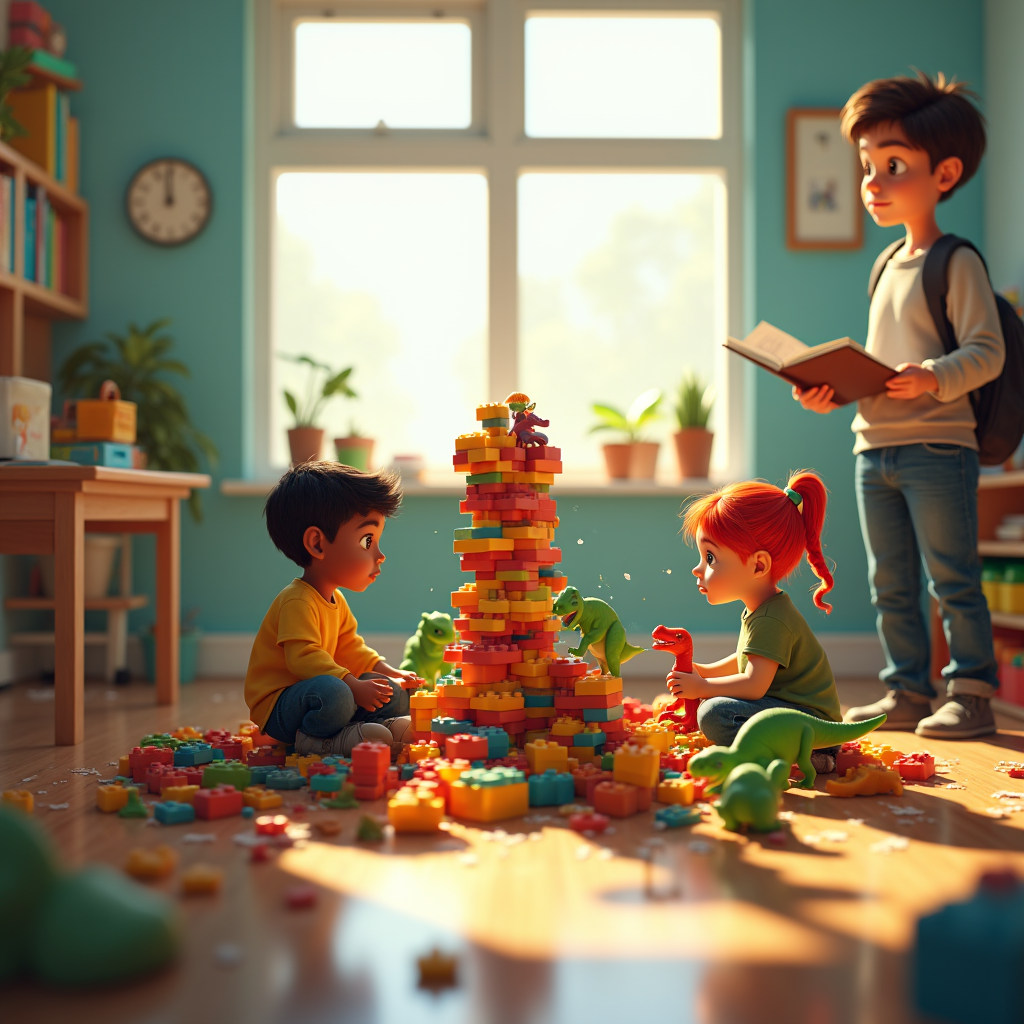
The fluorescent lights in Room 214 hummed a steady drone, a soundtrack to the subtle chaos of a Tuesday morning. I was staring at Mateo’s construction site – a magnificent pile of blocks and plastic dinosaurs – when it hit me again: the way he just…shifted things around. Not aggressively, not with any real malice, but enough to completely dismantle his carefully built world, then rebuild it into something new. It wasn't lying, exactly, though sometimes I wondered if that’s what it felt like coming from a seven-year-old. More like an active rewriting of reality, a constant testing and retesting of boundaries, a kind of relentless experimentation with the way things *could* be.
The thing is, kids aren't built to hold onto versions of truth. They don’t have that internal editor we adults seem so desperately to cling to. It's like trying to hold water in your hand – it just slips through, morphing into something new with every movement. And Chloe, bless her heart, was particularly skilled at this. Yesterday she told me her goldfish had died, and then, five minutes later, declared it was “sleeping” again. I didn’t correct her. It felt… pointless.
I’ve been thinking a lot about this lately—this almost casual disregard for factual accuracy. It's not that they’re deliberately trying to deceive us, more like their minds are just... exploring. They're building castles of thought with every conversation and dismantling them with equal enthusiasm. This morning, I noticed several kids were completely absorbed in drawing faces on the walls– which, admittedly, was a bit disruptive. But when I questioned it, they simply said, “It’s how we see things.”
The problem is, I got caught up in trying to *understand* why Mateo was rearranging his blocks, obsessing over whether he was deliberately creating conflict or if it just happened naturally. It felt like building a muscle—pushing and straining to hold onto a single, fixed idea of “truth,” only to have it crumble beneath the slightest pressure. I realized it wasn't about forcing myself to concentrate; it was about letting the questions flow, trusting that the answers would come in their own time.
It’s funny, isn’t it? This whole obsession with measuring and categorizing – like those researchers at McGill with their longitudinal studies. They're tracking kids through sixteen years, meticulously charting every instance of “lying.” It feels… reductive, somehow. Like trying to capture the entire ocean in a thimble. The data on lie-telling trajectories is fascinating, sure, but it misses the point, I think.
The real lesson isn’t about *whether* they lie – because most kids do, frequently and without malice – it's about *how* they explore the world. About their fearless curiosity, their willingness to challenge assumptions, their insistence on building a reality that makes sense for them. It’s not about correcting inaccuracies; it’s about fostering an environment where those inaccuracies are seen as opportunities for growth and discovery.
And honestly, when I think about it all, the most powerful lesson isn't some complex psychological theory, but simply observing Mateo meticulously rebuilding his dinosaur kingdom after a brief earthquake of a statement from Chloe. It reminded me that genuine focus comes not from forceful willpower—which quickly exhausts everyone involved – but from embracing those unexpected rhythms and allowing the questions to shape our own understanding.
Maybe the key isn't to stop them from shifting things around, from rewriting their narratives. Maybe it’s just to step back and watch, fascinated, as they build a world that is entirely, wonderfully, and unapologetically their own.