Kids Need Space To Breathe
Kids come to school tired. It's a fact. A real, honest-to-goodness fact, and I don’t mean the kind you hear on TV talking about how kids are always bouncing ...

Kids come to school tired. It's a fact. A real, honest-to-goodness fact, and I don’t mean the kind you hear on TV talking about how kids are always bouncing off the walls. I mean the quiet, slumped-over kind. The ones who don't raise their hands much, the ones who need a little extra nudge to get started on their worksheets. I’ve seen it in Room 214 every single day for the last ten years. And frankly, it bothers me. It bothers me a lot.
It's not about blaming parents, you know? Some folks work two jobs, some don’t have much time for anything but getting the kids fed and clothed and out the door. But a lot of them, the ones I talk to, the ones who really care, they admit they don't always see it. They don’t see how much time their kids are spending on screens, how much pressure there is to get good grades, how much they're carrying around – not just backpacks, but worries, I think.
The doctors, the ones pushing this whole “dedicated time for recess” idea, they’re smart. They’re looking at the bigger picture, and it’s something we’ve been ignoring right here in Room 214. We’re so focused on the tests, on the numbers, on making sure they meet certain benchmarks, that we forget to actually *see* the kids. We forget to ask them, “How are you *really* doing?”
It's funny, isn't it? We build these elaborate systems to track their progress, to measure their knowledge, and we don't have a simple way to measure their well-being. We’re obsessed with what they *know*, but we rarely take the time to understand how they *feel*. And feeling matters, you know? It matters more than any multiplication table, frankly.
I’ve had a few conversations with some of the boys, mostly after they’ve finished their work. Just little chats, you know? Marcus, he's a good kid, always trying his best, but he gets this look in his eyes sometimes, like he’s carrying a weight. He told me once, "Mr. Davis, it just feels...heavy." And it *is* heavy, I think. It’s the weight of expectations, of anxieties, of just being a kid in a world that feels a little too big sometimes.
The problem isn’t the lack of recess, not really. It’s the *lack of time* to just *be*. To just let them be kids. To let them run, to let them daydream, to let them just *feel*. That doesn’t fix a learning deficit, but it might give a kid a little space to breathe before they get back to the deficit.
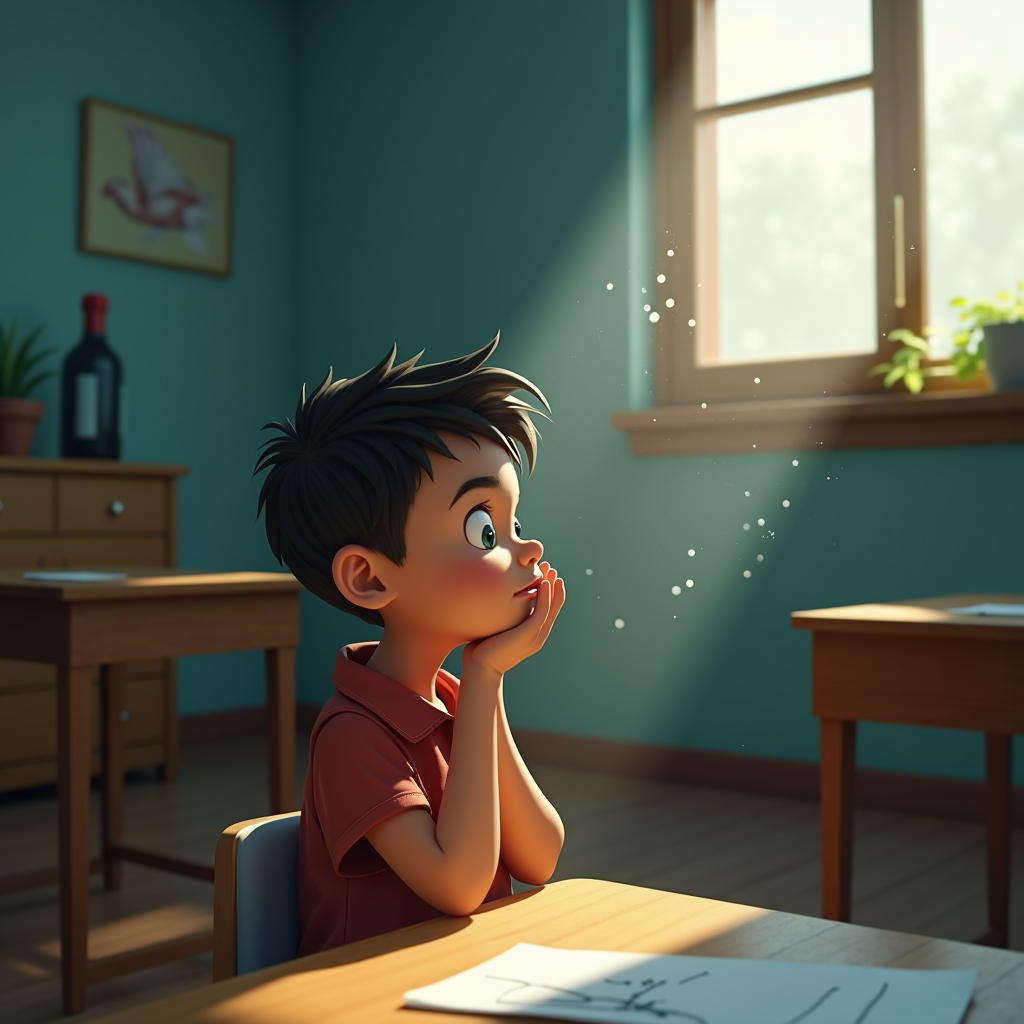
We need to find ways to build in that space, even if it’s just five, ten minutes a day. Maybe it’s a quiet reading corner, maybe it’s a simple drawing activity, maybe it’s just a chance for them to sit and look out the window. Something that allows them to reset, to reconnect with themselves, to remind themselves that they are, in fact, okay.
It’s not rocket science. It’s about remembering that kids aren’t robots. They’re people. They need time to play, to explore, to just *be*. And sometimes, all it takes is a little bit of space to let them be. To let them be… them.