Letting Go Lessons Learned
It’s a funny thing, watching kids leave home. I see it every year, of course, as they head off to college. Seems like just yesterday they were tying their sh...

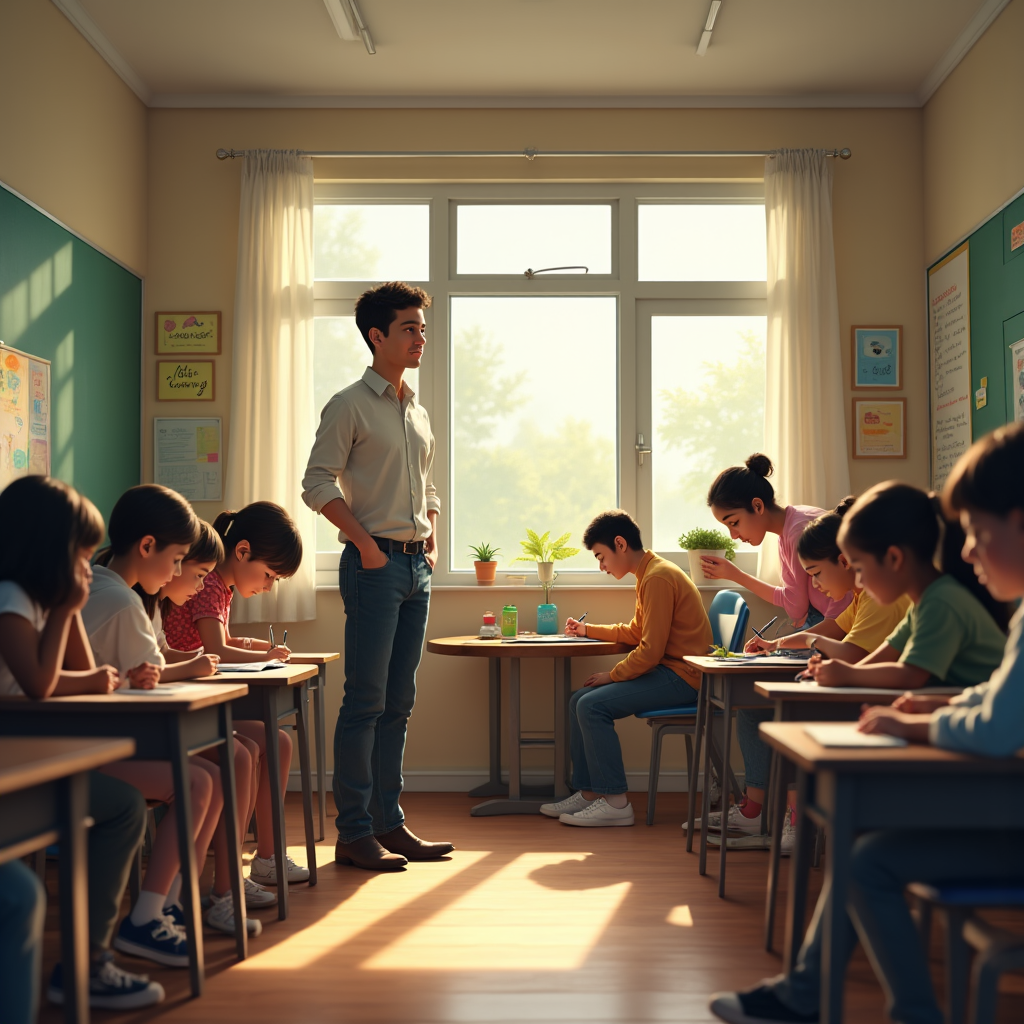
It’s a funny thing, watching kids leave home. I see it every year, of course, as they head off to college. Seems like just yesterday they were tying their shoes in my classroom, struggling with the laces and the frustration of getting it right. Now they're packing up dorm rooms and navigating FAFSA forms. And every year, I hear the same stories, the same quiet worries from their parents.
It isn't about the grades, not really. Those are celebrated, the accolades piled high. My students, even the ones who sometimes act like they’ve swallowed a whole classroom of glitter, are smart. They get into good schools. They can write a thesis on Shakespeare or solve a quadratic equation. But they can’t, it seems, boil an egg without setting off the smoke alarm.
I’ve had conversations, little ones, really, with parents who are genuinely distraught. Not because their child didn’t get into their first-choice school, but because their child doesn’t know how to do laundry. Doesn't know how to unclog a drain. Doesn't know, apparently, how to tell the difference between a wrench and a screwdriver.
It's always been this way, I think. There’s a pressure, a drive to make sure your kid is *ready*. Ready for the next step, the next challenge. A drive that, somewhere along the line, got twisted. It’s about shielding them, protecting them from failure, from the everyday frustrations that are, honestly, the best teachers. We pack their lunches, schedule their activities, and now, apparently, we’re also guaranteeing their competence.
My own dad, he grew up on a farm. He could fix a tractor before he could ride a bike. He didn’t have time for fancy lessons or curated experiences. He had to learn, to *do*, to survive. I didn't get that. My life was safer, more comfortable. And I’m grateful for it, truly. But I also see the cost now, watching these kids flounder, not because they’re incapable, but because they haven't had the chance to simply *try*.
You see it in the faces of the Resident Advisors, too. They're dealing with a constant stream of panicked texts and bewildered calls, troubleshooting everything from broken refrigerators to existential crises about meal plans. They’re unpaid therapists and handymen, a far cry from the mentorship they probably envisioned.
It’s not about blame. It’s easy to point fingers, to say "parents need to do better." But it’s more complicated than that. It's about a societal shift, an overcorrection driven by good intentions and a fear of letting our kids fall. We’re so focused on preventing scrapes and bruises that we’re forgetting they need to learn how to bandage their own knees.
Maybe that's what I'm trying to give them in Room 214. Not just reading comprehension and algebraic equations, but a space to make mistakes, to mess up, to figure things out. Because those are the lessons that stick. The ones that truly prepare you for the world, long after the graduation ceremony is over.