
Letting Them Learn: The Power of Slow Growth
Sometimes, I see parents hovering – really hovering – over their kids’ schoolwork. Like they’re worried a dust mote will derail a whole semester. And look, I...

Sometimes, I see parents hovering – really hovering – over their kids’ schoolwork. Like they’re worried a dust mote will derail a whole semester. And look, I get it. You want what’s best for them. You stay up late worrying about grades and test scores and whether they'll be *ready* for the next thing. But all that hovering? It often does exactly the opposite of what you intend.
It reminds me of my grandmother’s Sunday gravy, actually. She used to let it simmer for hours, stirring occasionally, but mostly just letting it *be*. You can't rush something like that; you gotta let the flavors meld. Same with learning. You can’t force a kid to absorb knowledge and then expect them to magically apply it later on. It needs time to settle in.
I had a student last year, Liam, who really wanted to learn how to play the harmonica. He kept asking for lessons, kept practicing – sometimes successfully, mostly not – and I would just let him go at it. Didn't offer much advice beyond “keep trying.” It was frustrating for him sometimes, seeing other kids pick things up faster, but he kept showing up with that little instrument in his mouth. Now, I’m no harmonica expert—I can barely play "Mary Had a Little Lamb" on the recorder—but eventually, Liam started making actual music.
That's what I see as real learning: figuring out how to keep going when things get tough. Not just memorizing facts for a test, but building that muscle of perseverance. It’s more important than any grade they ever bring home. Because let’s be honest—most of the specific information they learn in school? They won't remember it five years from now. What *will* stick with them is how they handle setbacks.
Helping kids set goals isn’t about laying out a detailed map to success; that feels like more hovering. It’s about giving them a sense of direction, helping them figure out what *they* want, and then offering just enough support so they can navigate the route themselves. It's about asking questions instead of providing answers. “What do you think would be a good first step?” or "How could you approach this differently?"
My mom always used to ask me those kinds of questions when I was trying (and failing) to fix something around the house – usually involving an Allen wrench and some kind of frustration. It wasn’t about getting it fixed *right then*; it was about teaching me how to problem-solve, how to think through things step by step. And honestly, she let me mess up a lot too. Which, looking back, was probably the best lesson of all.
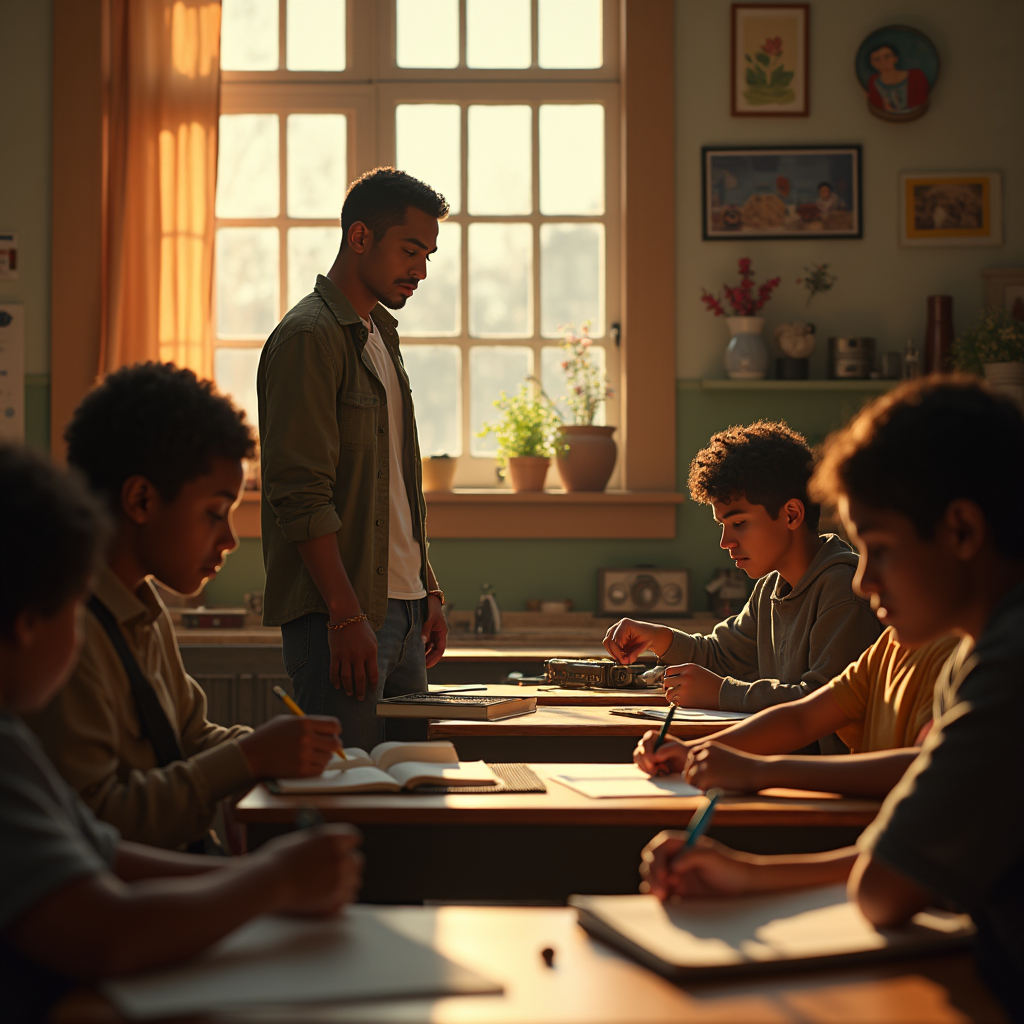
Sometimes parents are so worried about their kids achieving – getting into the right college, having the perfect resume—that they forget to let them stumble and learn from those stumbles. That's where real growth happens; in those moments when things don’t go as planned and they figure out how to adjust. I see it every day in room 214. It is the best kind of teaching.
It’s not about guaranteeing a straight path to success, because life isn't like that. It’s about equipping them with the tools to handle whatever comes their way – resilience, problem-solving skills, and maybe, just maybe, a little bit of self-belief. And a healthy appreciation for a good Sunday gravy.