Math in Motion: From Gravy to Geometry
Sometimes, it feels like I spend my whole life trying to figure out how to get kids excited about numbers. Not just memorizing facts – that's easy enough wit...

Sometimes, it feels like I spend my whole life trying to figure out how to get kids excited about numbers. Not just memorizing facts – that's easy enough with a little flash card drill – but really *understanding* them. Like, what does “area” even *mean*, beyond the space inside a shape? It’s always been a wrestling match, honestly. This year in room 214, we wrestled. A lot.
My grandmother used to say that cooking was math. Making Sunday gravy, especially. You need precise measurements for everything - salt, garlic, basil. Too much of one thing and the whole pot is off. I always thought she was being a little poetic, you know? But sitting here this summer, really trying to perfect her recipe, it hit me: she wasn’t wrong at all. It's about understanding relationships – how different elements interact, build on each other.
That got me thinking about school. We spend so much time in these four walls, staring at worksheets. And I get that there are standards to meet and assessments to pass. But something felt…missing. Like we were trying to force square pegs into round holes. I started small, just taking the kids outside for a few minutes here and there. Letting them skip numbers on the sidewalk while reciting multiplication tables. Suddenly they weren't groaning about math, they were asking *when* we could go out again.
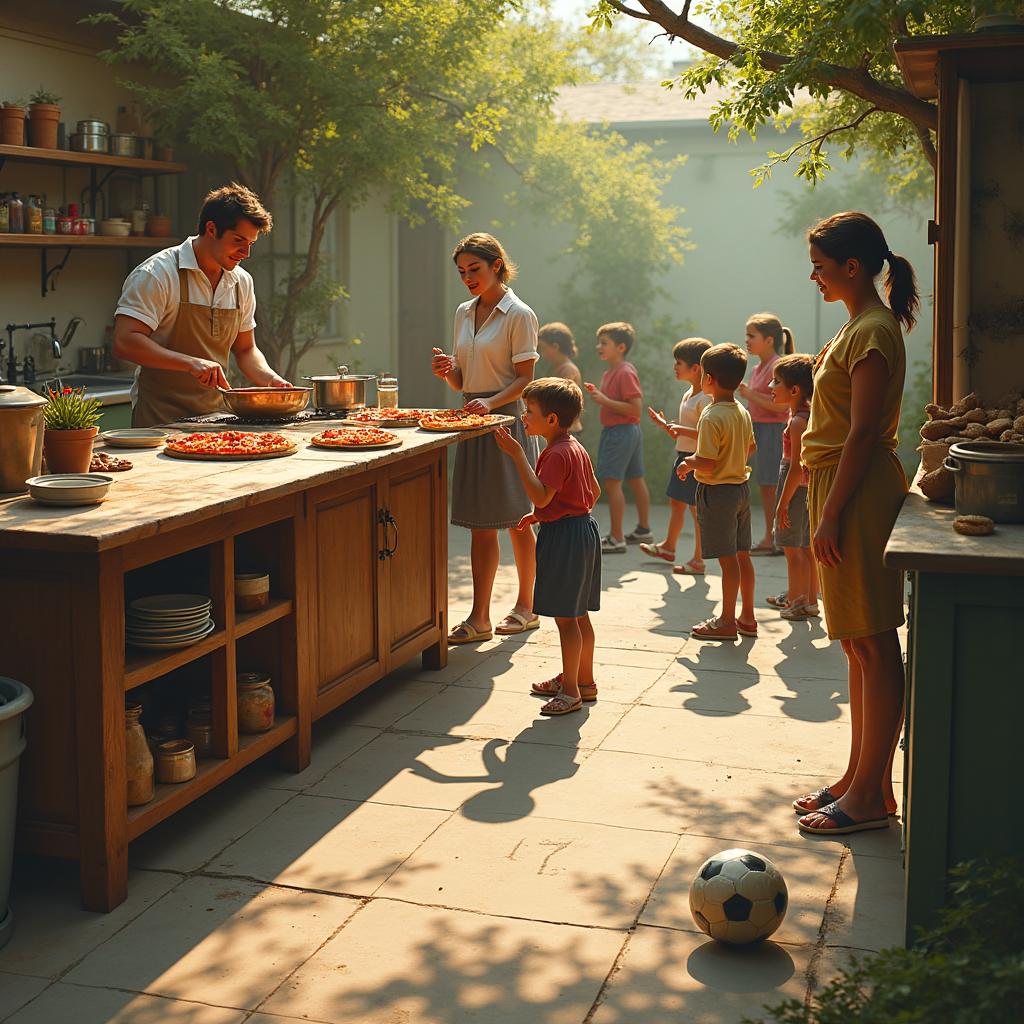
It’s funny, the way that movement changes things. There's this energy you can feel when kids are bouncing around, tossing a ball, or even just walking along a line drawn with chalk on the playground. They're not thinking about being “students” anymore; they're just…kids. And somehow, in that space, math starts to click. I saw a kid who’d been struggling all year finally grasp fractions while sharing slices of pizza during lunchtime outside – literally dividing it up amongst his friends.
I started noticing patterns with my own family too, back in Delaware County. My aunt runs the church bake sales every spring, and she always needs help figuring out how to portion things out evenly so everyone gets a fair share. Last year I tried to explain ratios using those cookies as an example. It was messy - crumbs everywhere – but they got it. Even my little cousin, who usually just wants to eat the frosting.
This summer has been about re-evaluating a lot of things. About finding that balance between structure and freedom. Between expectation and joy. And I've realized that math doesn’t have to be something you endure; it can be something you experience. It can be as simple as figuring out how many steps it takes to reach the swingset, or comparing the sizes of different leaves we find on the ground.
It's not about dumbing things down, either. We still cover all the curriculum stuff – the same angles and areas and equations. But instead of just solving problems on paper, they’re figuring out how much fabric my mom needs to make curtains for the kitchen window or how many cookies we can bake before running out of flour. The problem stays the same, but suddenly it feels… real.
I used to think a good teacher was someone who could explain something perfectly and make sure everyone understood. I still believe that’s important. But now I'm learning that a *great* teacher finds ways to unlock that understanding – even if it means stepping outside of room 214, getting a little dirt on your shoes, and letting the kids lead the way with their questions. And maybe making Sunday gravy while you're at it.