Nature's Wisdom: Learning Through Play
The air smelled of damp earth and something undeniably wild – a scent I’d come to crave lately. It wasn’t a consciously sought-out thing, not at first. It st...

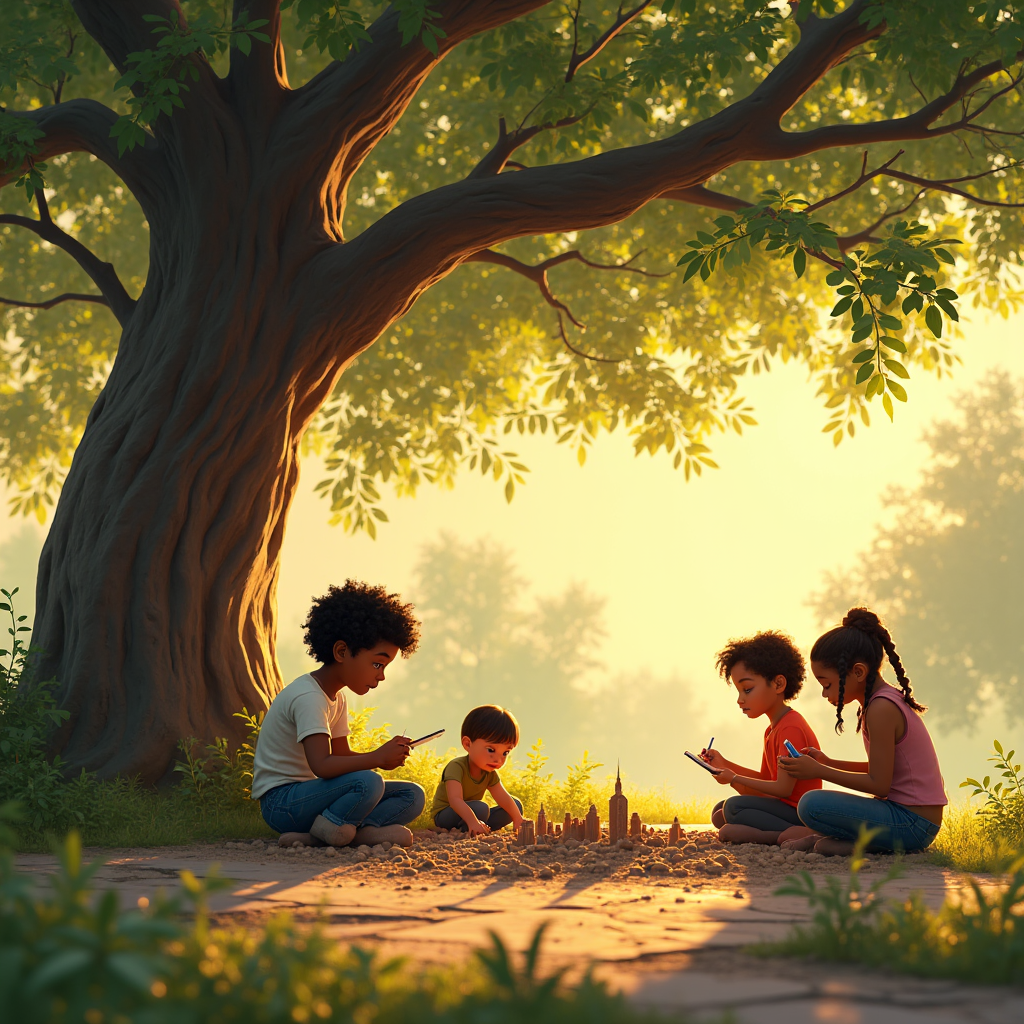
The air smelled of damp earth and something undeniably wild – a scent I’d come to crave lately. It wasn’t a consciously sought-out thing, not at first. It started with Mateo, my third-grade student, stubbornly refusing to leave the confines of our classroom’s small outdoor area during recess. He’d build intricate miniature cities from pebbles and twigs, utterly oblivious to the shrieks of other children chasing each other across the asphalt. I began observing him, not with an agenda, just… noticing. Then Chloe joined the circle of quiet concentration around his creations, eventually sketching alongside him in her notebook.
It struck me then – this wasn't simply about a particular child’s interest; it was a fundamental shift in their engagement with the world. The intensity I felt when trying to explain conflict resolution strategies during class suddenly seemed… futile. As if my carefully constructed explanations were bouncing off something intangible, something rooted in sensory experience and unadulterated movement. This realization wasn't born from academic research, but a quiet, persistent tug—a feeling that pressing too hard on comprehension was the problem, not the lack of understanding itself.
The Growing Up in Scotland dataset—with its 4,151 children—felt almost overwhelming in its scope, a vast attempt to quantify something so profoundly personal. Yet, the core data resonated with my own observations: the undeniable correlation between access to green spaces and a child’s emotional regulation. It's not about a precise number of days spent outdoors; it's about creating the *opportunity* for that connection—allowing space for those unexpected rhythms to emerge.
I began thinking of outdoor play not as an intervention, but as a facilitator – a gentle nudge towards a more natural way of learning and being. The scientists correctly identified that reducing externalizing symptoms was linked to increased outdoor time, but I saw something deeper: the ability to navigate frustration, to embrace imperfection, to simply *be* present in the moment without judgment. To build resilience not through instruction, but by experience.
The statistics—the 6% to 14% increase in odds—were fascinating, of course, but they felt almost secondary. The real revelation was that this wasn't a linear progression; it was a branching path, with some children finding a stable, low-symptom trajectory and others spiraling towards increasing or decreasing levels of difficulty. It reinforced the idea that we are not all wired to respond identically to external stimuli – that each child possesses a unique internal landscape that requires tailored support.
This perspective shifted my approach. Instead of focusing on fixing “problem behaviors,” I started designing activities that encouraged exploration, creativity, and risk-taking—activities where failure wasn’t penalized but seen as an opportunity for growth. The simple act of building a mud pie with Mateo became a lesson in problem-solving, collaboration, and the acceptance of messy outcomes.
The idea that providing public parks – especially those accessible to families without private gardens - is a “low-cost mandate” felt less like a political statement and more like an essential investment. It's easy to get lost in complex policy debates; however, sometimes the most effective solutions are remarkably straightforward—returning childhood to its roots, offering children access to the very spaces that nurture their minds and bodies.
Ultimately, this research underscored a critical truth: mental wellbeing isn’t something we can simply “teach” or prescribe. It is cultivated through connection – connection to nature, connection to community, and perhaps most importantly, connection to our own inner rhythms. And sometimes, the greatest lessons are learned not in the classroom, but beneath the shade of an old oak tree.