Rewriting Evolution Shaping Our Future
We always thought evolution was this…thing. Something happening *out there*. Natural selection playing its long game over millennia, shaping organisms accord...

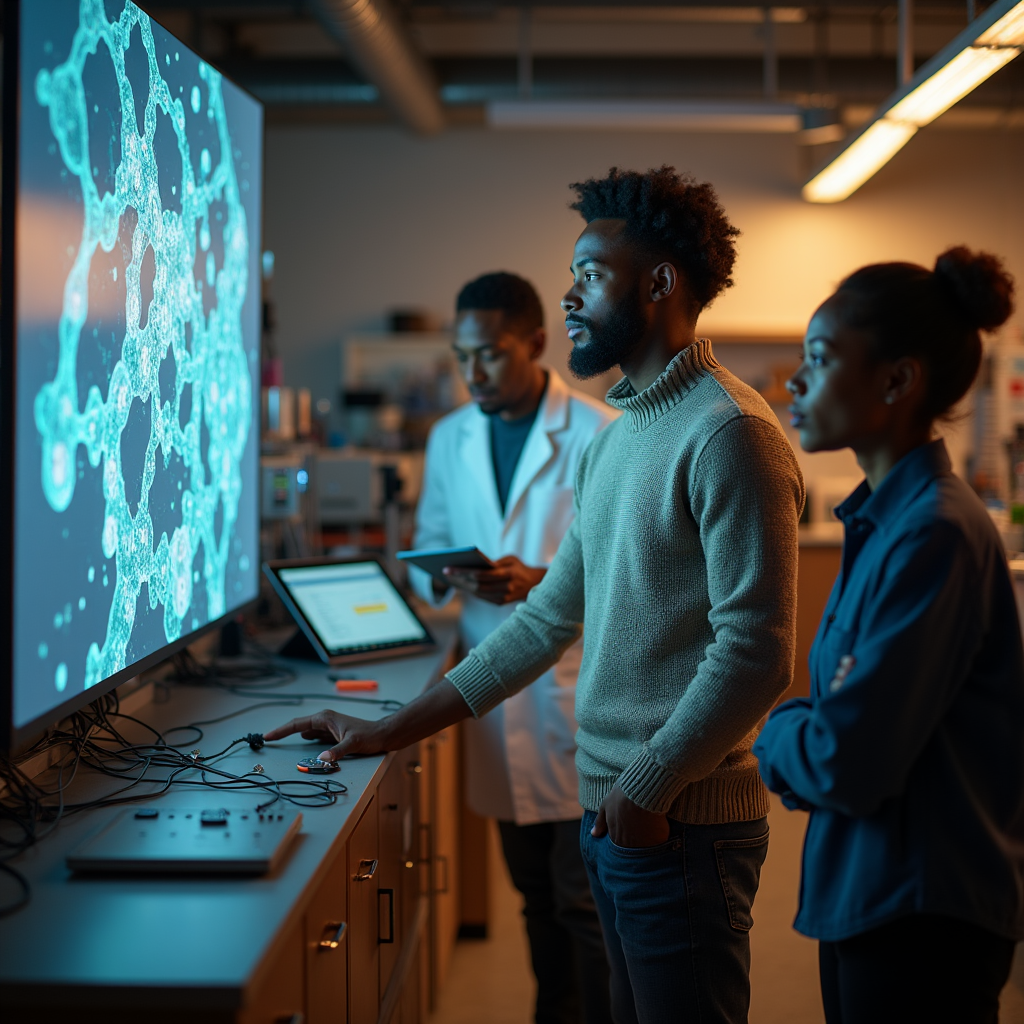
We always thought evolution was this…thing. Something happening *out there*. Natural selection playing its long game over millennia, shaping organisms according to forces we could only observe, never truly influence. Like watching a glacier carve a valley – powerful, undeniable, but completely beyond our control. And for so long, that’s how science approached enzymes too: find ‘em, study ‘em, maybe tweak ‘em a little bit, and hope for the best. It felt like a passive pursuit, a hunt for secrets already written in stone.
I been thinking about momentum lately. About what it feels like when things are actually *going*. For six months straight, I just felt…stuck. Beats piling up on my hard drive, posts floating out into the digital void, all that effort feeling like it was bouncing off a wall. Nobody was hitting me up, nobody was really seeing what I was putting in, and doubt started to creep in—the kind of doubt that tells you you made a bad choice dropping everything. That whole period felt more like fighting against gravity than building anything.
Then came September, and that first placement. Six hundred dollars might not seem like much to some folks, but it felt tectonic. It wasn't just the money; it was proof. Proof I was heading somewhere. The speed was still slow—it still is—but at least now I knew the direction was right. And what those scientists are doing with enzymes? That feels similar – cracking open a door to possibilities we never thought possible.
What they’re doing now isn't about passively observing anymore. It’s like taking evolution itself and putting it on a timer, setting it to fast forward in a lab. They’re creating conditions where enzymes don’t just change over decades; they transform within weeks, responding directly to what scientists need them to do. Imagine needing an enzyme to break down plastic waste faster—you don't wait for nature to eventually figure it out. You *make* it happen.
Think about the impact on everything from medicine to manufacturing. Enzymes are already crucial - industrial processes, digestion, drug development - all reliant on these tiny biological machines. Now, imagine custom-built enzymes optimized for tasks we haven’t even conceived of yet. We talking cleaner energy solutions, more efficient biofuels, customized medicines tailored to an individual's biology... that shifts the playing field completely.
It hits different when you know you're not just watching, but participating in creation. I remember being frustrated after a particularly long coding session, feeling like my beats weren’t connecting with anyone. That little placement? It felt like proving something – validating the hours put into craft. These scientists are feeling that same validation on an entirely different level, pushing boundaries and creating possibilities from scratch.
Of course, messing with evolution always raises questions. There's a responsibility to consider. What happens when we start playing God? What unintended consequences might arise? It’s something I grapple with in my own work too – the pressure of influence, the potential for harm alongside the opportunity for good. The six-month period taught me that even positive impact comes with responsibility and careful consideration.
It's a new era of scientific methodology—one where we move from passive observers to active architects. It’s a shift as profound as the difference between watching a glacier carve a valley and actually *shaping* the landscape ourselves. And seeing it unfold, knowing that humanity has entered this next level? That inspires something inside – a belief that even slow progress, fueled by consistent effort, can reshape our world.