Teenage Years: Lost and Found
Sometimes, I think about how I used to feel when I was fourteen. It wasn’t sadness, exactly, though there was a low hum of something like that always present...

Sometimes, I think about how I used to feel when I was fourteen. It wasn’t sadness, exactly, though there was a low hum of something like that always present. It was more like…a blankness. A space where a reason should have been, a direction I was supposed to be facing, but there was just…air. I’d spend hours in my room, ostensibly doing homework, but mostly just staring at the posters on my walls, waiting for something to spark. Waiting for *something* to tell me what I was supposed to *do*.
I remember a particularly bad week in sophomore year. The school play auditions were coming up, and I desperately wanted to be involved, not for the acting itself, but for the sense of belonging it seemed to offer. I felt like everyone else had a pre-set course, a defined orbit. They were on the debate team, in the robotics club, dedicated to perfecting a difficult piano sonata. Me? I was just…here. And the thought of trying out and failing, of confirming that I was, in fact, just floating, felt too heavy. So I didn’t.
There’s this new research—I saw it scrolling across my feed—about how teenagers’ sense of purpose isn’t a constant. It’s not some fixed personality trait you’re born with and carry around. It changes, apparently, day to day. That resonated with me, honestly. It explains a lot about those years, that feeling of being untethered, and, if I’m being honest, the occasional flicker of it even now.
It makes you wonder about the pressure. The assumption that teenagers *should* know what they want to be, what they’re good at, where they’re going. It feels almost cruel when you’re in the middle of it, that sense that you’re supposed to have it all figured out, or at least be on a clear path towards figuring it out. Everyone’s comparing themselves to some internal ideal, some imagined version of what a ‘successful’ teenager looks like.
And the instability isn’t just a personal thing, I suspect. There’s a societal component, too. The constant bombardment of images and narratives online—perfect lives, effortless success—creates this impossible standard. It’s easy to feel lost when you’re constantly measuring yourself against something so fundamentally fake. The Jacobs Pavilion show last week, for example, was full of people who looked like they *knew*. It’s hard to admit you don’t.
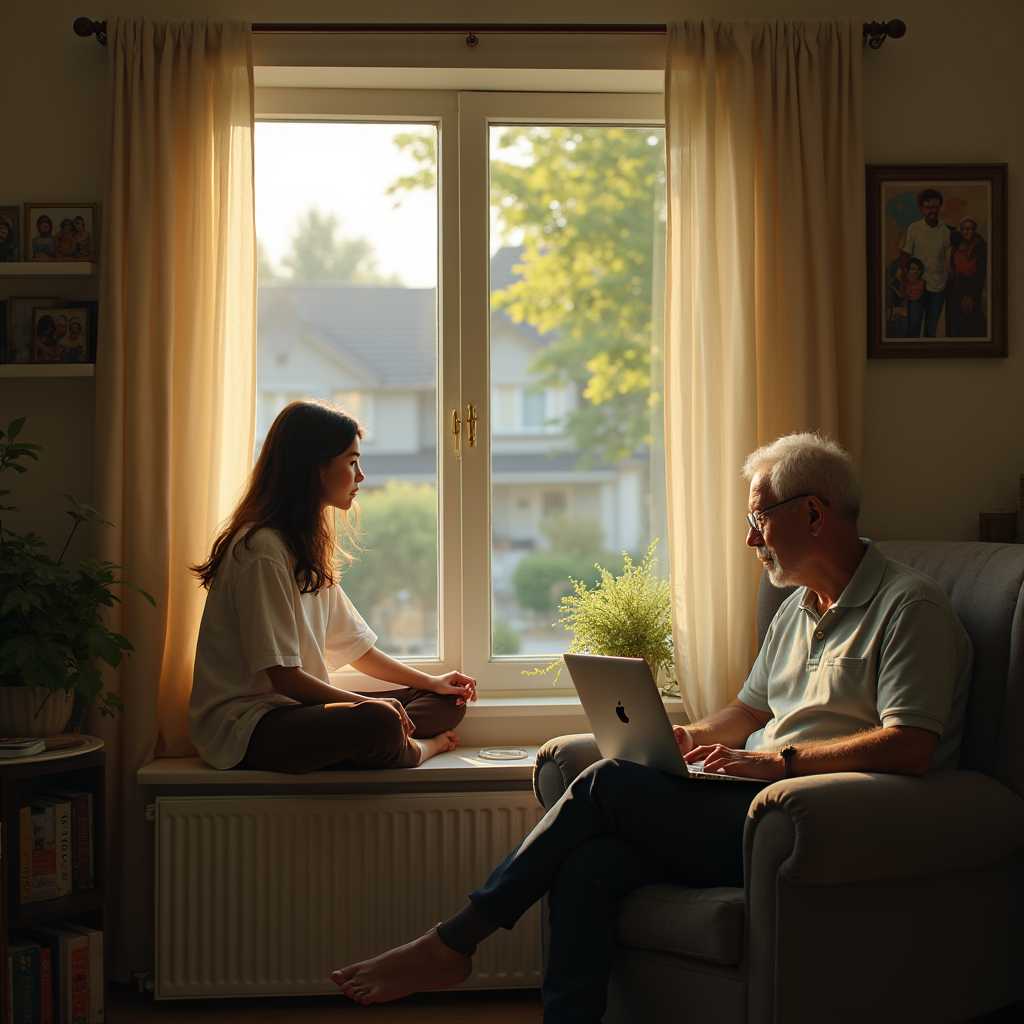
I remember talking to my dad once, years ago, about feeling overwhelmed. He wasn't trying to solve anything, just listening. He said something about how growth isn't linear and that it’s okay to feel uncertain. It didn't magically make the feeling disappear, but it did offer a small pocket of permission to just *be*. Maybe that’s what teenagers need, a little bit of that permission. Not a roadmap, not a lecture, just a quiet acknowledgement that it’s okay to not have all the answers.
The research also suggests that maintaining some level of stability in that sense of purpose is important for well-being. That makes sense. It’s not about eradicating the fluctuation entirely—that’s probably impossible and, frankly, undesirable—but about creating anchors, small routines, supportive relationships that can offer a sense of grounding when everything else feels like it’s shifting. Even something as simple as keeping a blog—which I’ve started and abandoned several times—can provide a space to explore and articulate those evolving feelings.
I checked the view count on that blog post last week almost obsessively. Twenty-seven people. It's not a massive number, certainly not enough to feel validated, but it was *something*. A small ripple of connection. And for a brief time, that felt like enough. It felt like a reason, not a grand, overarching purpose, but a tiny, flickering spark. Maybe that's all any of us really need, sometimes – just a little light in the darkness, and the knowledge that someone else, somewhere, might be feeling a little less lost too.