The Brain's Algorithm Reality Perception
It’s wild to think about how much we *don’t* know about how our brains actually build what we see, hear, and feel. Like, I'm sitting here in my bedroom studi...

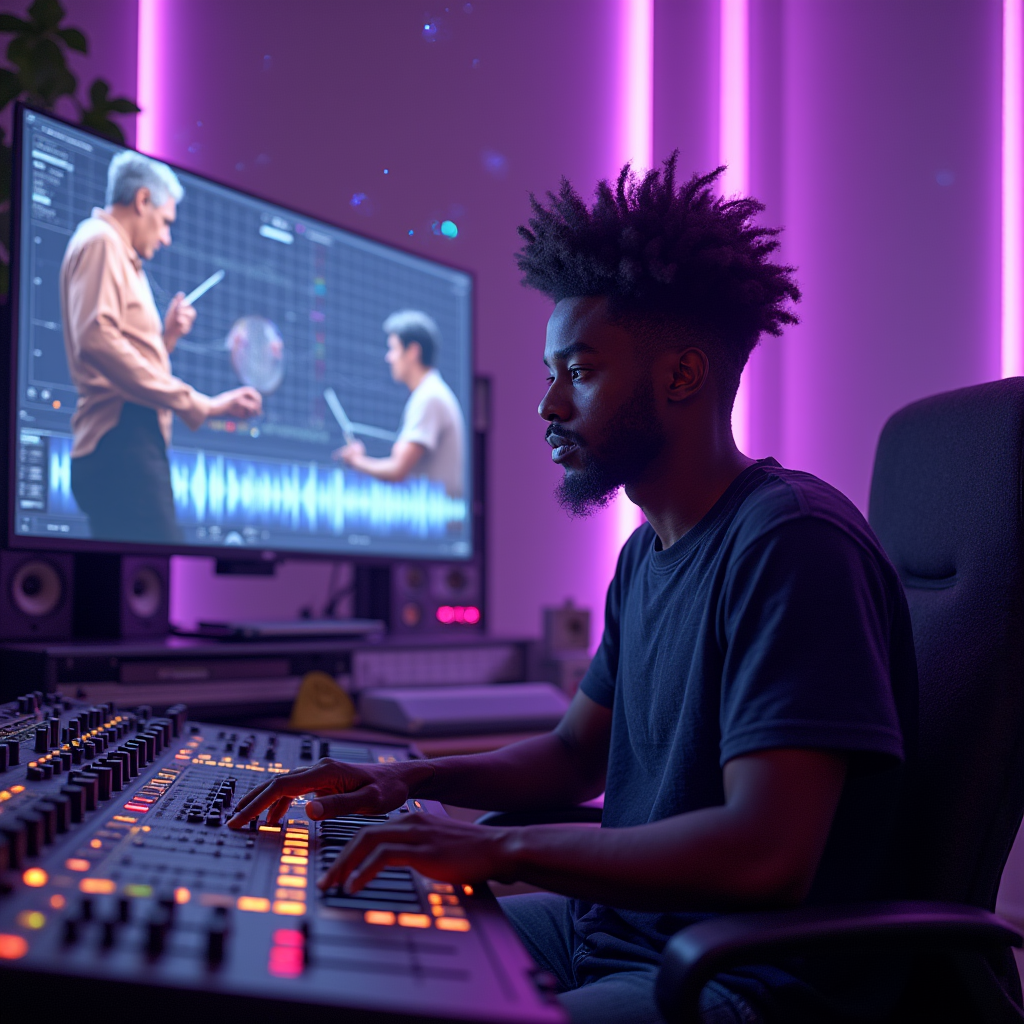
It’s wild to think about how much we *don’t* know about how our brains actually build what we see, hear, and feel. Like, I'm sitting here in my bedroom studio right now – the walls are covered in foam panels trying to trap the bass from these beats I’ve been making, a dim LED strip casting purple light across the ceiling, and I can *feel* the low end vibrating through the floor. It all just… exists for me. But what if it wasn't always that straightforward? What if there was more happening underneath than I realize?
I’ve been thinking about this stuff a lot lately, especially since that beat I finished in August hit different. Just something about how the sounds layered together, like pieces of a puzzle clicking into place, made me question everything I thought I understood about creation and perception. Music itself feels like an act of reconstruction – taking fragmented sounds, weaving them together, and presenting something new. But what if our brains are doing the same thing with light?
The science coming out now suggests they might be. They're talking about these… pulses, basically – electrical signals firing in predictable patterns to stitch together everything your eyes are throwing at you. Imagine trying to piece together a mosaic from a million tiny shards of glass thrown randomly against a wall. That’s kinda what vision must feel like before the brain gets its act together. These pulses seem to be the scaffolding holding it all up, making sure what you *think* is a solid chair isn't just a fleeting collection of photons bouncing off your retina.
It’s almost like… I don't know… ChatGPT for reality. You feed in data – raw sensory input – and this massive network processes it, predicts what should be there based on past experience, and spits out a coherent scene. It's not perfect, obviously. Glitches happen. Deja vu? Maybe that’s just the predictive model getting confused with a memory it shouldn't be accessing. Hallucinations? A complete breakdown of those stabilizing pulses.
I can relate to the struggle for coherence. Building these beats isn’t always about hitting notes perfectly; it's about creating an *experience*. Sometimes I’ll have a loop, something raw and unfinished, that just doesn't gel with anything else. It feels disjointed, chaotic. Then there are those moments when you find the right sample, tweak the EQ just so, and suddenly it makes sense. Everything locks into place. It almost feels like the universe is whispering its secrets to you through waveforms.
The craziest part? These pulses aren’t static. They change with experience. Think about learning a new skill – shooting hoops, coding in Python, even learning to mix a beat (still working on that). Your brain physically rewires itself to handle those challenges. It’s like the scaffolding gets rebuilt stronger, more efficient. That’s crazy to think about, how something as fundamental as perception can be shaped by what you *do*.
I wonder what it would feel like if you could *hear* these pulses directly. Like, not in an auditory way, but somehow sense them resonating within your own head. Would the world become more… fluid? More fragmented? Or maybe they’d reveal a hidden order, a symphony of electrical activity that governs our reality? It probably would be too much to handle. My studio already feels overwhelming sometimes; I can only imagine what direct access to those inner workings would do to your sanity.
Honestly, this whole thing has me questioning the nature of… well, everything. It’s the same feeling I get when I spend too long tweaking a synth patch – that sense that you're scratching at the surface of something profound, something far beyond my comprehension. Just another reason to keep experimenting, keep creating, and keep trying to listen for those hidden signals. Gotta figure out how it all fits together, one beat, one pulse, one perception at a time.