The Fading Line Between Real and Fake
It’s wild how easy it is to get played now. Seriously. I was scrolling through Instagram the other day – trying to find some inspo for a fit, you know, gotta...

It’s wild how easy it is to get played now. Seriously. I was scrolling through Instagram the other day – trying to find some inspo for a fit, you know, gotta keep the algorithm happy – and I saw this picture. It was of a little girl, maybe six or seven, holding a wilting sunflower. Her eyes were all big and sad, like she'd just lost her best friend. The caption was some long, rambling thing about climate change and lost innocence.
I felt something. Not a subtle nudge, but a full-on sucker punch to the chest. I almost started typing a comment, ready to sign up for some online petition or donate to some cause. Then something felt…off. Like a record skipping. It was a feeling I’ve been getting more and more lately when I’m online – a vague sense that what I'm seeing isn’t quite real.
My roommate, Jalen, he's been on this whole AI kick. Always sending me links about how these programs can now generate photorealistic images from text prompts. At first, I just brushed it off. "Okay, cool," I'd say, "so what? It's still just a gimmick." But the more I think about it, the more I realize that these “gimmicks” are already changing the game.
Think about how much we invest in what we see online. We build entire identities around it. We form opinions, we make decisions, we get hyped up or down based on pixels displayed on a screen. And now, those pixels could be entirely fabricated. It's like… the baseline for reality is shifting. The things we're trusting to tell us the truth aren’t necessarily trustworthy anymore.
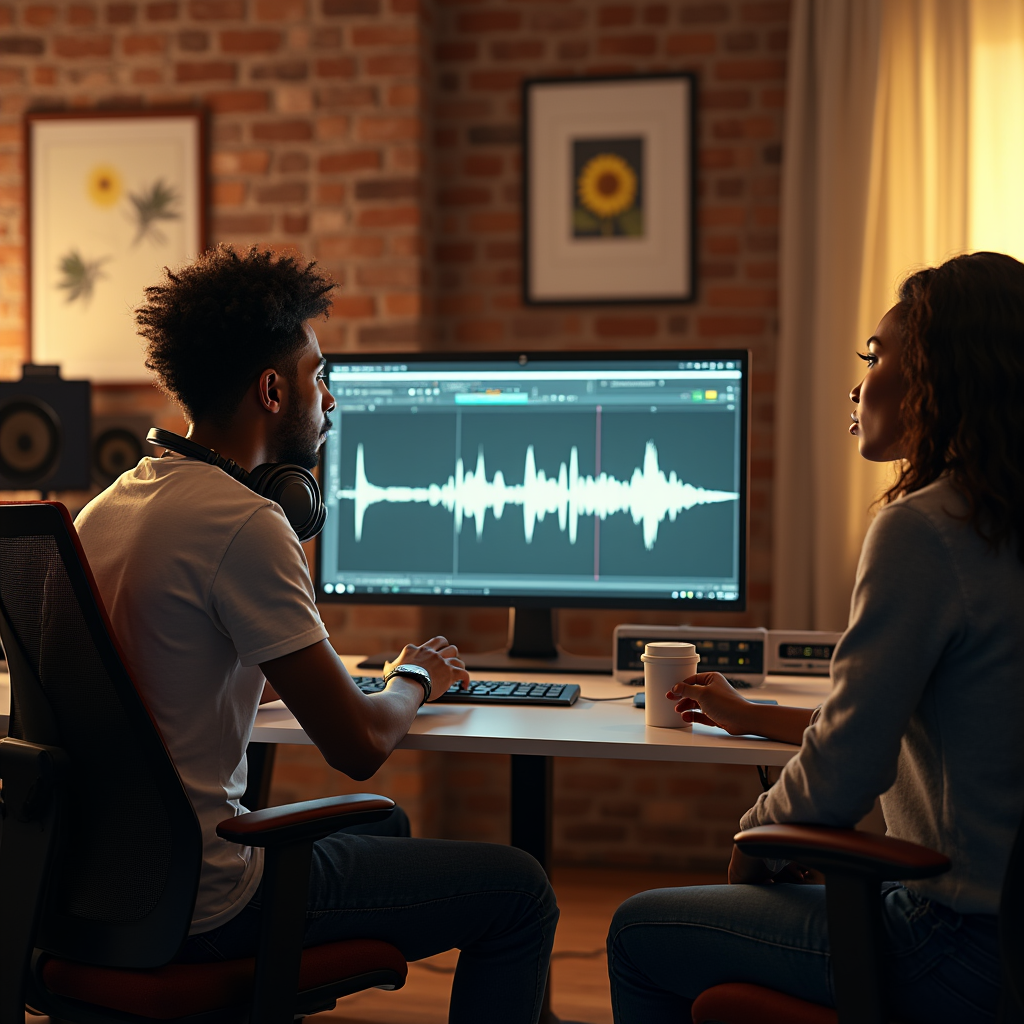
I remember this beat I made back in August. It started with this really simple sample – just a muted piano chord progression, looped and chopped. But the feeling it gave me was so intense, so *true*. It felt like… a revelation. I knew then that I couldn't keep trying to force myself into the mold everyone expected. That's how I felt when I saw that image of the little girl and the sunflower. A feeling that something was out of place.
It's not just about being cynical, either. It's about being *aware*. It's about understanding that our brains are wired to respond to certain things – images of suffering, of vulnerability, of hope. These AI tools are exploiting that. They’re figuring out what pushes our buttons and then crafting content specifically designed to trigger those responses, whether we realize it or not. It's designed to bypass that slow, considered thinking we *should* be doing.
I'm not saying we should all become paranoid hermits, refusing to believe anything we see online. That's not realistic. But maybe we need to start slowing down. Questioning. Looking for the seams. That feeling I had, that skip in the record? That’s intuition. We gotta start listening to it.
It’s a long road, figuring out how to navigate this new landscape. I'm still figuring out how to balance creating content with keeping it authentic, especially when the platforms themselves are incentivizing the opposite. But one thing's for sure: the easy days of blindly accepting everything we see are over. We need to level up our critical thinking, or we're gonna get played.