The Math Behind Holiday Traffic Frustration
It’s always holiday weekend traffic that gets to me. Last year it was driving back from upstate after Thanksgiving – a solid four hours for what should have ...

It’s always holiday weekend traffic that gets to me. Last year it was driving back from upstate after Thanksgiving – a solid four hours for what should have been two and a half. The constant stop-and-go, everyone inching forward, then slamming on brakes again. And the *lane changes*. Oh god, the lane changing. It feels like some sort of synchronized (but utterly pointless) dance everyone engages in out of sheer frustration. Everyone thinking they're gaining ground, but mostly just jostling for position within a collective mess.
My dad always said you needed to “be aggressive” on the road. I think he meant proactive, making sure people knew you were there and not getting taken advantage of. But that kind of assertive driving feels especially grating when everyone else is doing it too, creating this weird echo chamber of impatience. It's like a reflex: see slower traffic ahead, jerk the wheel to the next lane, hoping for some miracle escape route.
What’s fascinating – and what I stumbled across while trying to distract myself from the current gridlock—is how mathematically unsound that whole strategy often is. There’s this equation, *q = ρv*, that basically describes traffic flow: flow equals density times velocity. Density being, well, how many cars per mile. Velocity? Speed. Makes sense, right? More cars, slower speed. Simple stuff.
The kicker is that changing lanes doesn't actually change the density of vehicles *overall*. You’re just temporarily shifting them around a little. The density remains roughly the same, meaning your speed isn’t really improving that much either. In fact, often it makes things worse! That lane you desperately maneuvered into? Five seconds later, someone else is trying to do the exact same thing, creating its own mini-wave of disruption. It's this feedback loop of frustration, amplified by individual actions that seem perfectly reasonable on their own.
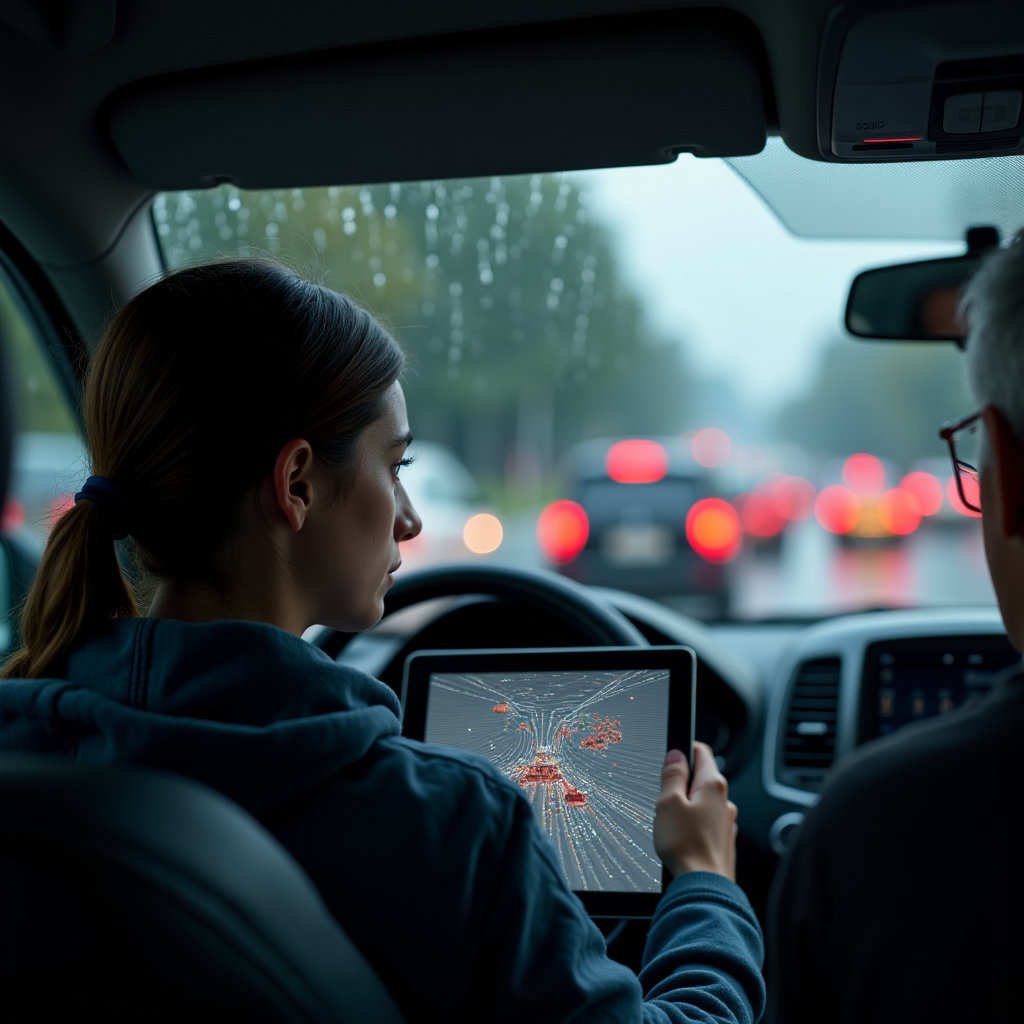
I remember staring at a screen full of these simulations once – some professor was explaining it during a particularly boring afternoon in calculus. He ran scenarios with thousands of cars, and showed how “rational” drivers constantly switching lanes just created more unpredictable congestion waves. Each lane change creates a tiny ripple effect that propagates backward, slowing everyone down. It felt so counterintuitive at the time – like he was telling me something I *knew* wasn’t true – but there it was in black and white.
It's similar to how people flock to concerts for validation. You go hoping to experience something special, and you end up feeling more distant from everyone else because you are surrounded by people looking for the same thing. That intense need to escape, to be *better* than what’s directly in front of you – it often just reinforces the shared reality you're trying to avoid. The drive to change lanes is the traffic equivalent of that, I think.
I wonder how much of this can be factored into transportation systems going forward. Autonomous vehicles feel like they have a real potential here—not because they’ll magically make traffic disappear (though even small improvements would be amazing) but because they could coordinate movements in a way humans simply can't. Imagine a system where cars communicate with each other, adjusting speed and lane position to minimize disruption, preventing those unexpected congestion waves from forming in the first place. It’s probably years away from being anything beyond a research project, but thinking about it is kind of exciting.
Right now, though, I'm just staring at my rearview mirror, willing that minivan to move faster. Maybe if everyone just stayed put… maybe then we could all actually get somewhere on time. And honestly, the small chance of that happening feels more valuable than another desperate lunge for the next lane.