The Power of Playful Learning
Sometimes I think about room 214 and how much gets packed into those four walls – not just desks and a rug, but a whole bunch of learning. You see these kids...

Sometimes I think about room 214 and how much gets packed into those four walls – not just desks and a rug, but a whole bunch of learning. You see these kids, you watch them wrestle with numbers or try to tell a story, and you realize they’re building something bigger than any worksheet could ever hold. It's about more than getting the right answer; it’s about how their brains are putting things together, figuring out the world bit by bit. And that’s where sensory play comes in, quiet as it may seem when everyone else is shouting for tablets and cartoons.
My grandma used to say, "A little dirt never hurt nobody." She wasn't talking about something profound—she was just showing me how to make a pie crust from scratch. But I realized she had this understanding of *doing*. You can’t learn how dough should feel – the way it yields and stretches - by reading about it in a cookbook. You gotta get your hands messy. Same with kids. They need that stuff, those opportunities to really *feel* things out, not just watch them happen on a screen.
I see it every day now. These families, they're stressed. Working parents trying to juggle everything, and the guilt about letting the little ones stare at screens—it’s real. It hangs in the air like those stale pizza smells you get after a class party. They want their kids to be learning *something*, so they stick them in front of an educational game or two. And it's not wrong, exactly. But I think about that Sunday gravy project – my grandmother teaching me how to coax flavor out of tomatoes and pork—and realize the value isn’t just what ends up on your plate; it’s *how* you got there.
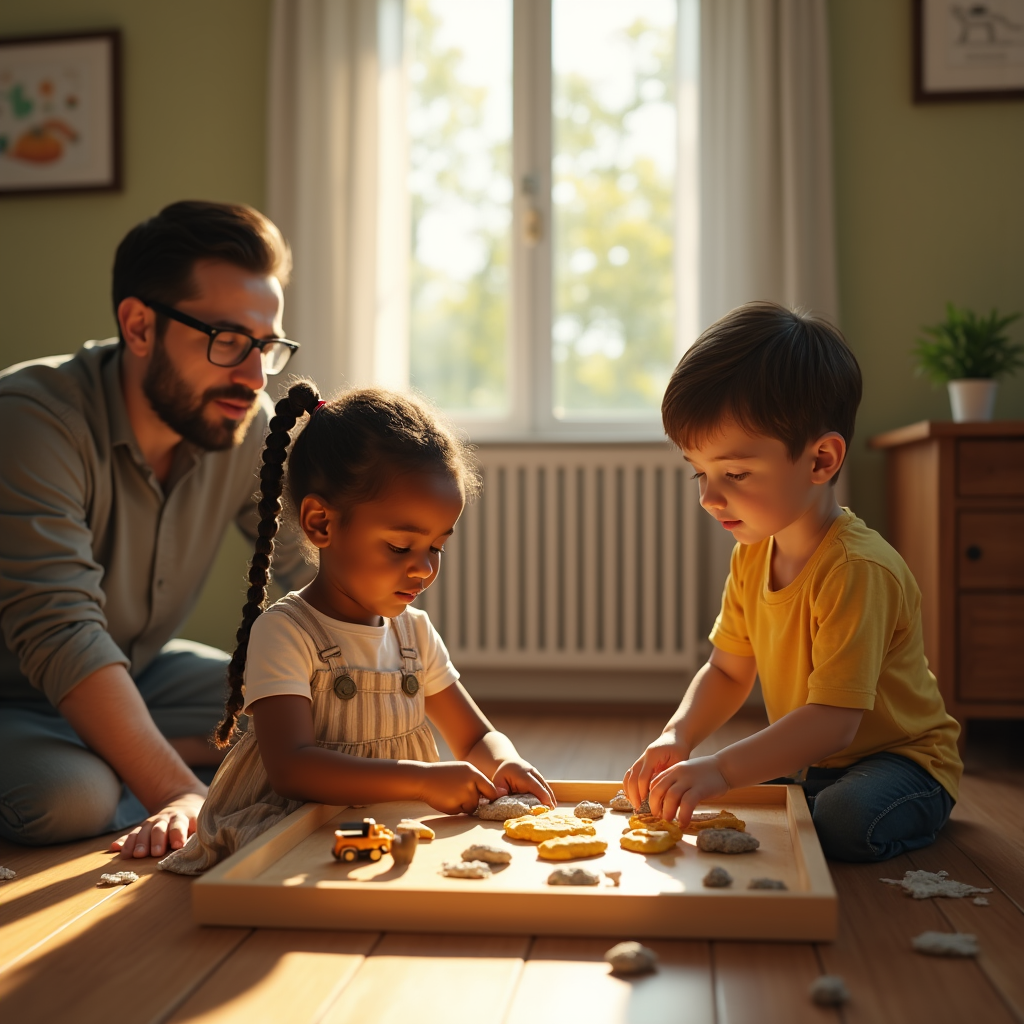
This year at school we added a little sensory table—mostly beans, water, some sand—simple stuff. Nothing fancy. At first, not everyone knew what to do with it. A few of them looked at me like I was crazy when I suggested they just…play. But then? You see this tiny hand reach into the beans and disappear. A giggle bursts out. And suddenly they're building cities or digging for treasure. It’s fascinating, watching how their brains work around it—they figure out how to scoop, pour, mix. They create elaborate stories based on whatever bits of stuff are in front of them.
There was this one girl, Maria, quiet as a mouse when she first came into the class. Never volunteered an answer. Always seemed to be observing everything from behind her hands. She’d sit near the window and draw these incredibly detailed pictures of the trees outside. Then we brought out the playdough, and something shifted. She started making animals—tiny squirrels and little birds. Each one carefully crafted, each with its own personality. That quiet focus? It wasn't just about the playdough; it was a way for her to communicate, to explore, to be herself in a room full of unfamiliar faces.
My cousin Lena’s got a little boy now – Liam. He’s two and a half, completely obsessed with trucks. I watched him the other day, meticulously arranging rocks and twigs around his toy dump truck. Building roads, creating landscapes—he wasn't just playing; he was engineering something. He didn't need instructions or an app telling him what to do. He was following his own plan, adapting as he went along. That’s the kind of problem-solving that sticks with you, longer than any screen time ever could.
It’s not about denying them technology—that’s just not realistic. It’s about finding balance. A little bit of structured learning is important, sure. But kids also need room to make a mess, to experiment without consequence, to discover things on their own. To feel the texture of sand between their fingers, or see what happens when they mix water and paint – those moments are building blocks, forming connections in a way that just isn’t possible staring at pixels.
And honestly, it's good for us too—the adults. Sitting with them while they play is surprisingly calming. Watching them focus, invent, and explore—it reminds you of the simple joy of discovery. Just like watching Sunday gravy simmer on the stove, knowing something beautiful is coming from a process that’s patient and true. That's what I try to bring back to room 214 every year – not just lessons, but opportunities for those quiet moments, those messy discoveries, that build more than any textbook ever could.