The Quiet Ache of Fourth Grade Hope
It always feels like a climb, doesn’t it? Room 214 this year – fourth grade – you see them looking up at someone else, wishing they were closer to the top of...

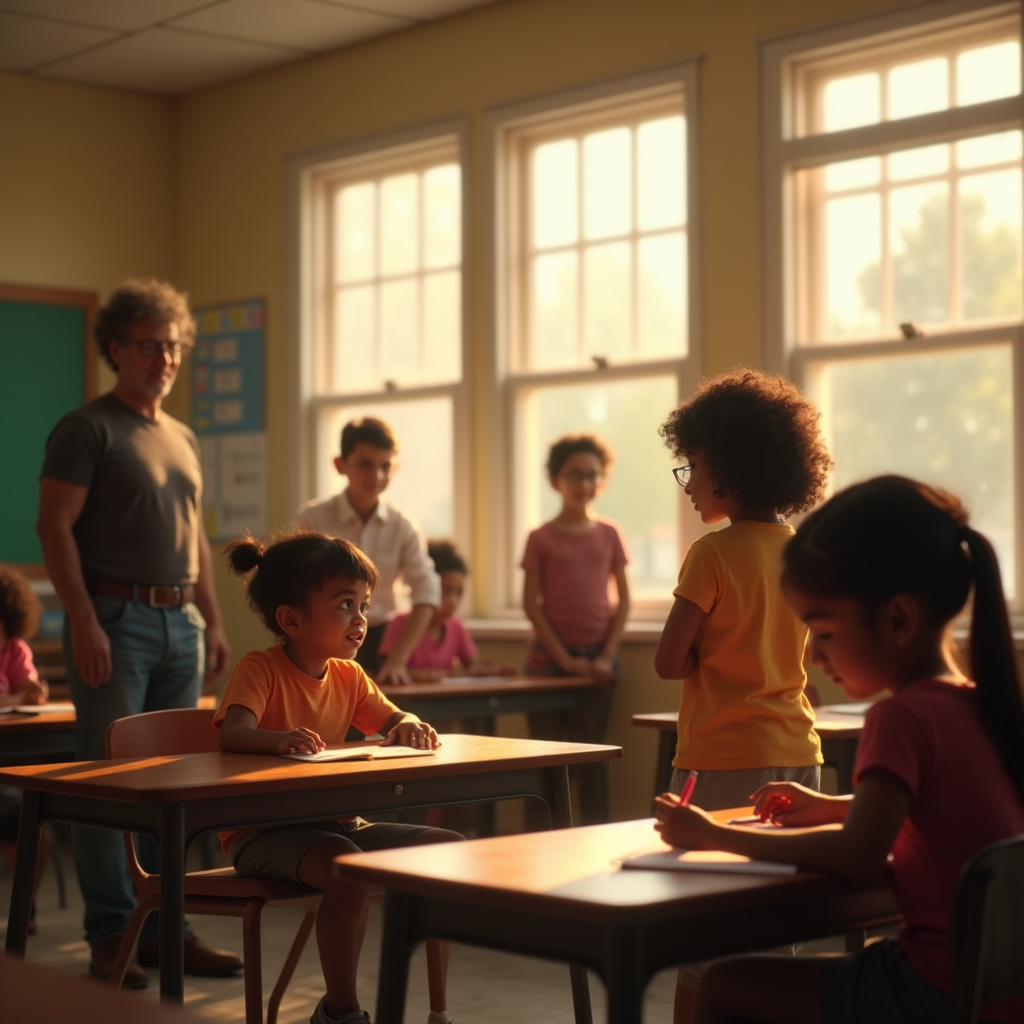
It always feels like a climb, doesn’t it? Room 214 this year – fourth grade – you see them looking up at someone else, wishing they were closer to the top of whatever imaginary mountain they've built in the playground. It wasn’t always so obvious when I was their age, but now, seeing it firsthand…it's a quiet ache. They want to be near Maya and her crew; the ones laughing loudest during recess games, the ones whose parents pick them up in SUVs with tinted windows.
I remember wanting *that*. Not necessarily Maya specifically – she’d probably have ignored me anyway – but just *that*. The feeling of belonging to a group that everyone else seemed to admire from afar. It wasn't about popularity itself; it was the perception of ease, of having everything figured out. Back then I thought if I could just get close enough, some of that easy certainty would rub off on me.
You see them trying, too. Hanging around by their lockers after school, offering to carry books, volunteering for extra chores in class – anything to be noticed. Sometimes it works, a brief flicker of acknowledgement. A smile. A shared joke. But mostly, it doesn’t. And the disappointment…that's the part you don't see in the hallways; that settles into their shoulders and makes them shrink just a little bit.
I used to think these kids were calculating, strategically picking their targets for friendship based on some unseen algorithm of social power. But really, it's something simpler, I think: hope. A desperate desire to be seen as valuable, interesting, worthy of connection. They look at those kids and assume that if they just *were* like them, the world would feel a little less chaotic, a little more predictable.
My grandmother used to make Sunday gravy every week, started it early Saturday afternoon and let it simmer all day on the stove. The smell alone was enough to draw you in. You'd think you understood her recipe just by smelling it, but there were tiny things – a pinch of this, a secret ingredient she’d only tell me when I was old enough to really listen—that made it something special. She used to say that the best things take time; they need to develop slowly. Relationships are like that gravy, you can’t rush them.
The kids who try too hard rarely succeed because they're focusing on *becoming* someone else instead of being themselves. You see it in how they mimic the popular girls’ hairstyles or repeat phrases they overhear in the cafeteria. It’s a little heartbreaking to watch, honestly. Because real connection isn’t built on imitation; it’s built on shared moments, laughter that comes from deep down, and vulnerability – something you can't fake.
There was this boy in fifth grade, Kevin, who desperately wanted to be friends with Daniel. Daniel was good at everything: soccer, math, drawing cartoons. Kevin would follow him around constantly, trying to get Daniel to notice him. It never really worked. Daniel wasn’t unkind; he just didn't *see* Kevin. But Kevin had this incredible sense of humor, dry and self-deprecating, that would have made anyone laugh if they’d given him a chance. He spent years chasing someone who wouldn't notice him, missing out on the quiet friendships that were there all along.
It’s my job, I suppose, to remind them that building your own mountain is a lot more satisfying than climbing someone else’s. To point out those kids in Room 214 who are quietly kind, genuinely funny, and offer real connections – even if they aren't on the top of any imaginary social hierarchy. It takes patience. And sometimes, just like with my grandmother’s gravy, it takes a lot longer than you think.