
The Quiet Space for Thought
It’s funny, isn’t it, how much we talk about *doing* things, maximizing potential, being *productive*. And I keep circling back to this idea of… just letting...

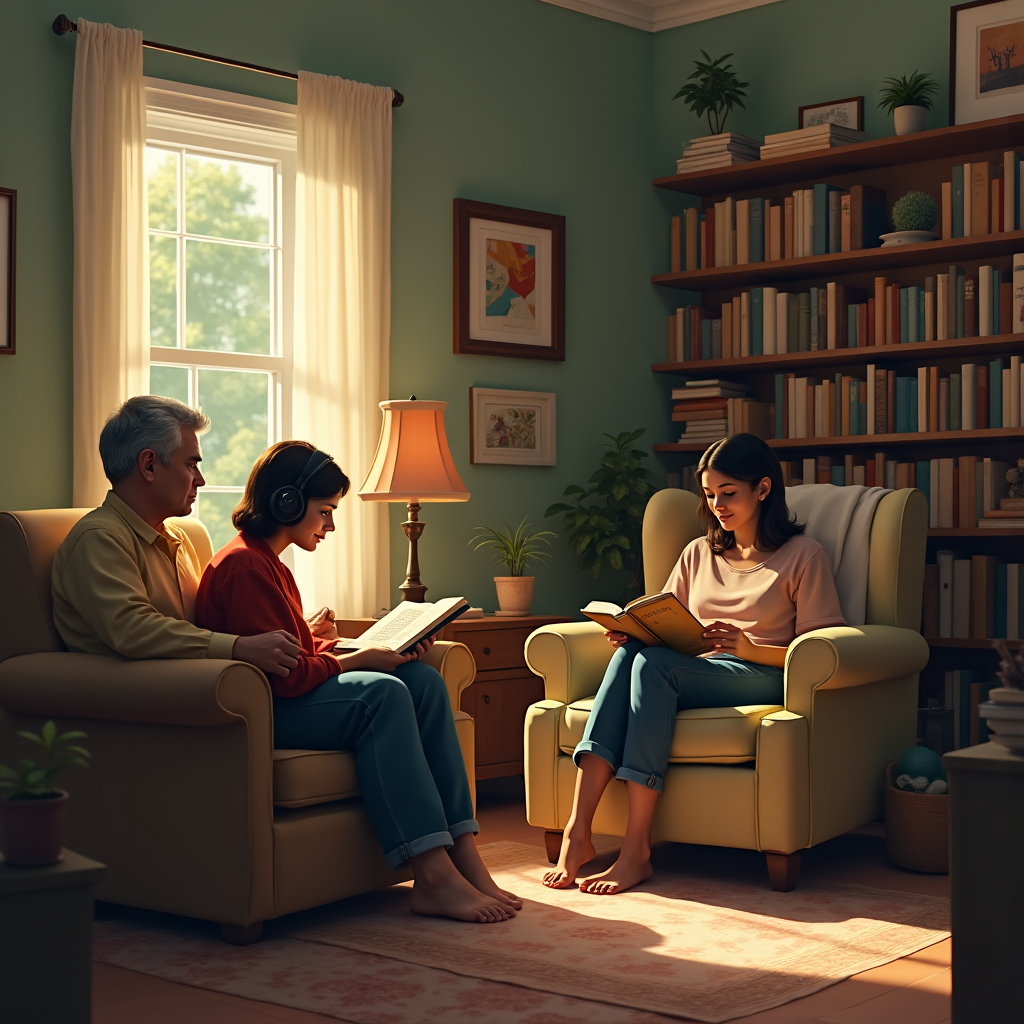
It’s funny, isn’t it, how much we talk about *doing* things, maximizing potential, being *productive*. And I keep circling back to this idea of… just letting your brain be. Like, letting it unfold. It feels like something we’re losing, a quiet space for thought that isn't fueled by notifications or someone else's perfectly curated opinion. I’ve been reading about how reading, actual, physical reading, changes the way your brain works, and it’s landed somewhere between a reassurance and a low-grade panic.
I remember Dad saying once, when I was obsessively annotating some copy of *The Bell Jar* or something, "All that underlining, all that note-taking. You're just *analyzing* it to death. Just *enjoy* the story." He meant well, I think, but I was already pretty sure that the act of analyzing, of wrestling with the words and the meaning and the feeling, was part of the enjoyment. It's a different kind of engagement than just letting a plot wash over you. It’s building something, brick by brick.
My mom, she just smiles and nods when I talk about books. She doesn’t always *get* why I spend so much time with them, the way I do. She prefers watching documentaries, which I do too, but there’s something different about the way your brain processes information when it's passively received versus when you’re actively decoding language. I think she sees it as… a hobby. A very serious hobby, definitely, but still just something I do. She doesn’t see that it’s fundamentally altering the architecture of my thoughts.
There's this idea, I read somewhere – I can’t even recall where exactly, it’s all blurring together these days – that reading helps your brain become better at recognizing faces. Apparently, the way you’re tracking the nuances of language and constructing meaning spills over into other areas of visual processing. It sounds a little wild, the thought that parsing sentences could make you better at recognizing your friend’s mom in the grocery store. But it speaks to a kind of plasticity, a constant remolding.
It's unsettling, honestly, to think about how much our brains are shaped by our habits. I spend so much time staring at screens, scrolling through endless feeds, absorbing tiny snippets of information. It feels efficient, connected, *modern*. But is it building anything? Or just eroding something vital? I worry about the slow, subtle ways that digital consumption is rewiring us, making it harder to concentrate, harder to remember, harder to *think*.
The National concert in Detroit was a turning point for me, in a weird way. Seeing how far that tiny blog post about their music traveled, how it resonated with people I’d never met, it was proof that writing – and, by extension, reading – could create connections that transcended geography and shared experience. It felt like an act of rebellion against the shrinking attention spans and the echo chambers that seem to define so much of online life.
Audiobooks have started to feel like a compromise. A convenient shortcut. And I love them, don’t get me wrong. Listening to Phoebe Bridgers read her poetry felt incredibly intimate. But there's something irreplaceable about the tactile experience of a book, the weight of it in your hands, the smell of the paper, the physical turning of the pages. It’s a slow, deliberate act that demands your full attention, forcing you to slow down and engage in a way that a podcast never could.
Maybe it’s just nostalgia. Maybe it's just the slightly dramatic tendencies I picked up from reading too much Sylvia Plath. But I feel this quiet urgency to protect something – this space for deep, sustained thought – before it disappears entirely. It’s not about rejecting the digital age, it’s about finding a balance, carving out a space for the things that truly nourish the mind, even if it’s just underlining a few lines in a worn-out copy of *The Bell Jar*.