The Quietness of the Turquoise Hives
The hum has always been a background noise. Not unpleasant, exactly – more like white noise, comforting in its consistency—the kind you only notice when it’s...

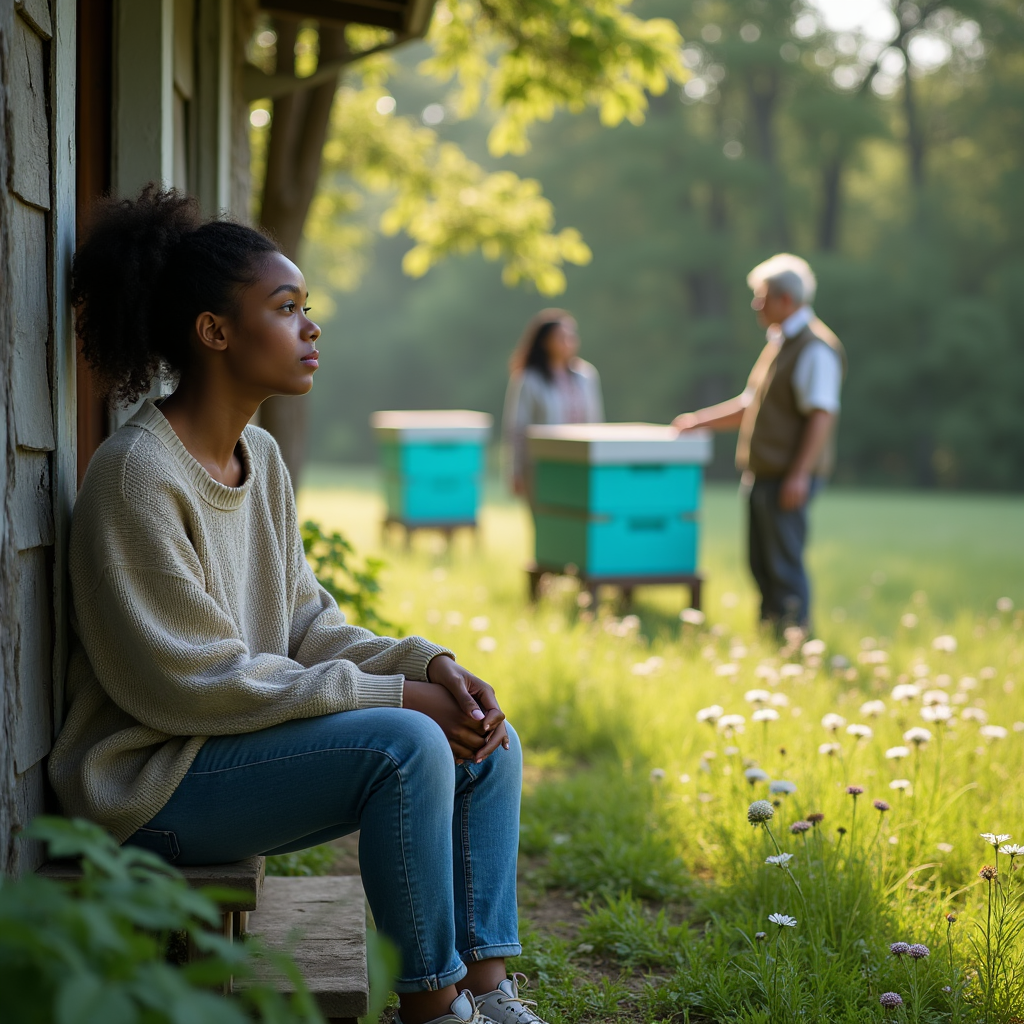
The hum has always been a background noise. Not unpleasant, exactly – more like white noise, comforting in its consistency—the kind you only notice when it’s gone. My grandfather kept bees. Not commercially, not for honey really (though we had plenty). Just… because. He built the hives himself, stained them a ridiculous shade of turquoise that clashed with everything else in his garden. I spent summers trailing after him, clumsy and fascinated by the way sunlight fractured through the honeycomb.
It wasn't a hobby he explained much. "They just *are*," he’d say, shrugging off my endless questions about their society, their purpose. That simplicity was part of his charm, I think. He didn’t need to intellectualize beauty; he experienced it directly. When I went away to college, a couple of states over now, that turquoise hum felt like a fixed point in the changing landscape of my life, something reliably constant.
There's been a lot written recently about bee populations declining. It feels… distant at first, an abstract problem alongside climate change and plastic waste. But then you start noticing things. Fewer bees buzzing around the clover patches near campus. A friend’s father, who runs a small orchard, talking about erratic pollination cycles, unpredictable yields. It's become increasingly difficult to ignore.
I came across some research—serious stuff, equations I barely understood—about how certain herbicides are affecting bee brain chemistry. The way they interrupt the signals bees use to navigate, to find food, to communicate within their hive. It’s not about a sudden die-off; it's something slower, more insidious. A gradual erosion of cognitive function that makes survival increasingly difficult. The implications are unsettling.
It reminds me of that feeling after Jacobs Pavilion last month. I’d been trying to write something for ages – just… something real. It felt clumsy at first, like putting together a puzzle with half the pieces missing. Then it clicked, and suddenly there were sentences that made sense, paragraphs that resonated. Twenty-seven people read it. That's... fine. Enough to know I wasn't entirely wrong about the direction. This bee research feels similar – a slow, quiet realization of something complicated and deeply concerning.
The agricultural impact is obvious, of course. Our food supply depends on pollinators. Farmers already face so many challenges—weather patterns, commodity prices, rising costs—and now this. It's another layer of uncertainty, another potential threat to livelihoods that are often precarious anyway. And it extends beyond the farm, doesn’t it? It impacts everyone who eats.
There’s a sense of frustration simmering under everything. Not anger, exactly – more like a low-level worry. The kind you feel when you realize something is fundamentally wrong but aren't entirely sure what to do about it. It feels important to move beyond the headlines and recognize this isn’t just another environmental tragedy; it’s an unraveling of intricate systems.
I think my grandfather would have understood. He wouldn’t have needed a scientific paper or statistics. He would have simply noticed the quietness, the absence of that familiar hum. And he would have known something was wrong. Maybe, just maybe, paying closer attention—really *seeing* what's around us—is the first step toward finding a solution. Perhaps a re-evaluation of how we manage land is in order—a shift away from blanket chemical applications and towards more sustainable practices. The turquoise hives are still there, thankfully, but I feel compelled to be more vigilant, not just for them, but for everything that depends on their quiet industry.