The Science of Beauty and Belonging
It’s weird to think about beauty as something quantifiable. Like a science experiment. I saw this study circulating online – another one of those things my m...

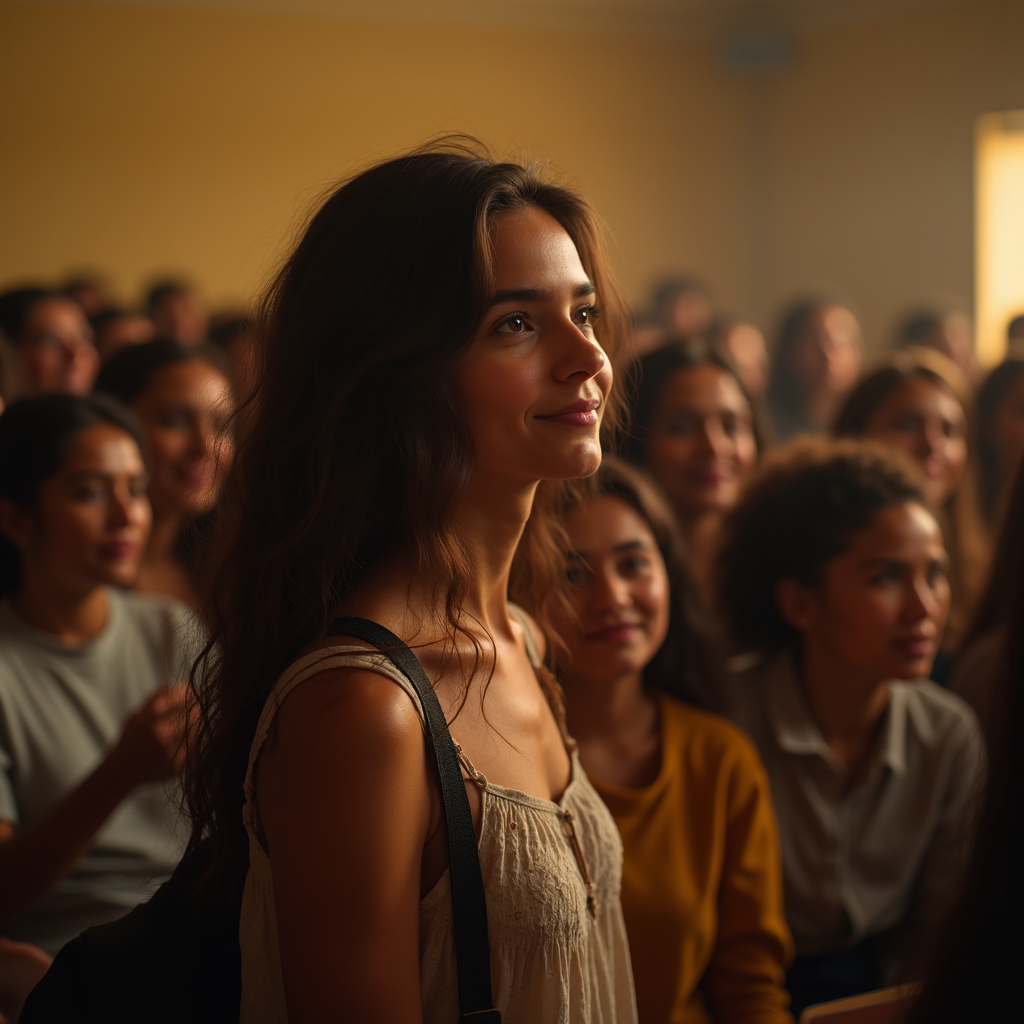
It’s weird to think about beauty as something quantifiable. Like a science experiment. I saw this study circulating online – another one of those things my mom probably would have forwarded me with a “Did you see this, sweetie?” attached. The premise was… unsettling. Apparently, across cultures and generations, female faces are consistently rated as more attractive than male faces.
It felt so obvious, which made it even stranger. Not because I disagree – honestly, scrolling through Instagram is basically proof of that every day - but because the sheer *scale* of the consistency reported in these studies is disquieting. Like a truth you already knew, hammered into something tangible and undeniable by researchers crunching numbers. My dad would probably scoff and say it just proves what he’s always known: people are predictable.
I remember once trying to explain Phoebe Bridgers' appeal to him. It wasn’t about conventionally beautiful features – although she *is* pretty, I guess - but something else entirely. The vulnerability in her voice, the sadness that felt both profound and intimately familiar… he just didn't get it. He was looking for a different kind of 'attractive.' Something measurable. This research feels like someone quantified exactly what he thinks is obvious.
The really bizarre part was learning about how women themselves were involved in evaluating these faces. It’s one thing to read that men find female faces more attractive – that almost feels like… expected? But the idea that *women* are contributing to this perceived difference, unconsciously perpetuating a standard, felt heavy. Like an echo chamber of societal conditioning. I think about my friends back home, and how we all pore over photos, measuring our angles against some invisible benchmark. It's casual, it’s normal, but…
There was another aspect that threw me completely. The self-assessment thing. When women rate *their own* attractiveness compared to men, the gap disappears. It's as if the internal critic is quieter when the lens isn't held up by external judgment. Sometimes I wonder if that’s true for everyone. Maybe we all have a little voice in our heads arguing against the pressure to conform, especially when it comes to something as arbitrary as physical appearance.
The closest I ever felt to escaping that kind of relentless evaluation was at the National show last year. It wasn't about anyone being more or less attractive – it was just...music. Pure energy connecting people in a space bigger than any small-town Ohio classroom. For those few hours, none of the carefully constructed facades mattered. Suddenly all I saw were faces – some tired, some excited, all caught up in something larger and real.
I wish there was an easy answer to what this all means. If beauty really *is* so deeply ingrained, is it inevitable that we’ll always see a difference? Or are we capable of shifting those perceptions, subtly but surely? Maybe the act of questioning—the discomfort I feel just reading about these studies—is the first step toward actually changing things.
Maybe my mom doesn’t understand Phoebe Bridgers' music either, but she *does* believe in me, even when what I’m doing seems a little strange or pointless. And maybe that kind of unwavering belief is more valuable than any universally-accepted standard of attractiveness anyway.