The Stories We Tell Ourselves
Sometimes, I worry about the stories we tell ourselves. Not the big, sweeping narratives of nations – though those certainly deserve scrutiny – but the small...

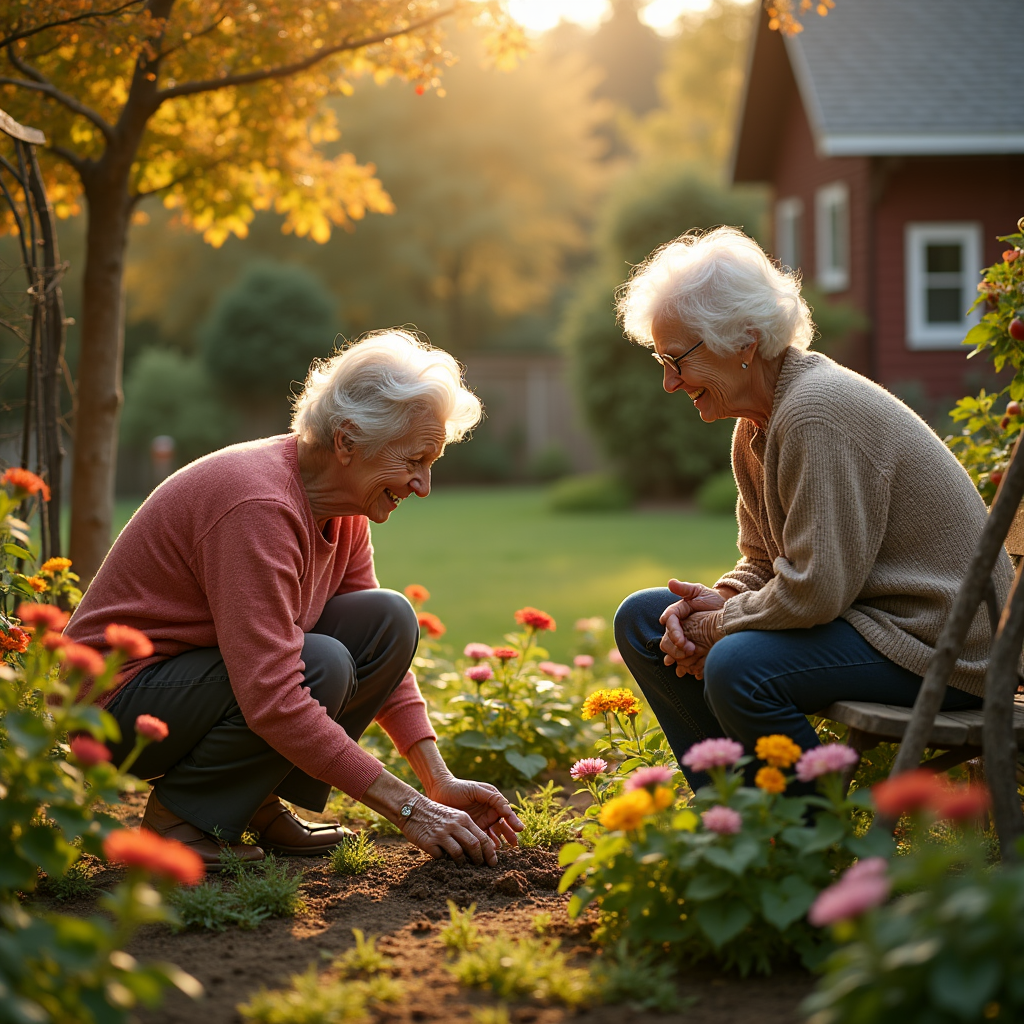
Sometimes, I worry about the stories we tell ourselves. Not the big, sweeping narratives of nations – though those certainly deserve scrutiny – but the smaller ones, the ones we hold close, the ones we think of as *our* truth. I find myself thinking about them particularly as autumn approaches, that time of year that always seems to press down with a certain gravity. The backyard equinox gathering with Phyllis last year felt like a turning point, a quiet recognition that the past isn’t a fixed thing, like a pressed flower in a book.
It's unsettling, you know, to realize how easily memory bends. I thought I held a clear picture of my father’s views on a particular political matter, based on conversations I recalled from my childhood. Years later, sorting through old letters after his passing, I discovered a completely different perspective – a perspective I’d somehow erased, or perhaps never truly registered. It wasn't a deliberate deception on his part, or on mine. It was simply… a reconstruction, a story I’d built from fragments.
And those fragments are so often filtered, colored by the lens of the present. The anger I felt as a young woman, observing injustices in the world, seems muted now, softened by years of what I can only describe as weary acceptance. Is that wisdom, or simply the dulling of conviction? I honestly don’t know. It’s a question that keeps me awake some nights, staring at the ceiling and wondering if I’m simply forgetting how to be outraged.
Bernard, bless his heart, has always been more pragmatic than I am. He’ll say, “Well, you learned from it, didn't you? That’s what matters.” And of course, on a practical level, that's true. We all make mistakes. We all stumble. The important thing is to adjust course. But sometimes, I feel like there's more to it than that. There's a… a residue, a feeling that simply correcting the outcome isn't enough.
I’ve noticed, too, how readily people latch onto convenient explanations for historical events. A narrative takes hold – a simplified version of what *really* happened – and it’s repeated and repeated until it becomes accepted as fact. It’s easier, I suppose, than grappling with the messiness of truth, the uncomfortable ambiguity of human motivation. It feels almost… purposeful, this rewriting of the past to fit a present agenda.
The planting this year has been particularly soothing. Digging in the earth, feeling the cool soil between my fingers, it's a grounding experience. A reminder of the rhythms of the world, the cycles of growth and decay. It makes me think of the old journals I keep – not meticulously detailed diaries, but more like containers for impressions, for the way things *felt* at a particular moment. Not just what I did, but the taste of the air, the quality of the light. Those are the things that seem to slip away.
I used to rely on memory as a kind of intellectual exercise, a way to analyze and understand. Now I’m beginning to value something else: the ability to recall a feeling, a sensation, a moment of pure, unfiltered experience. The scent of lilac in my grandmother’s garden. The warmth of the sun on my face during a summer picnic. Those moments, those primary memories, seem to hold a truth that the narratives, the carefully constructed stories, often miss.
Perhaps that's why I’ve felt drawn to astrology lately. It’s not about predicting the future, of course. It's about understanding the underlying currents, the forces that shape our lives. It’s a map, of sorts, not of where we *are*, but of where we *come from* and where we might be going. And it reminds me, constantly, that even the most carefully preserved memories are just interpretations, shadows of a reality that can never be fully grasped. And that maybe, just maybe, the most important thing is to keep digging, to keep searching for the feeling, the sensation, the raw experience that lies beneath the surface.