
The Unseen Costs of What We Breathe
Sometimes, I think about the things you can’t see, the things that settle in and change you without you even knowing it. It's not always loud, dramatic stuff...

Sometimes, I think about the things you can’t see, the things that settle in and change you without you even knowing it. It's not always loud, dramatic stuff. Sometimes, it's just a little something hanging in the air, and if you don't measure it, if you don’t check it, it just becomes part of the background noise. You start to think that’s just how things *are*.
I remember, back in South Jersey, we had this one maintenance guy, Mr. Henderson. He was a quiet fella, always tinkering with something, fixing a leaky faucet, replacing a lightbulb. He complained of a cough, a persistent tickle in his chest, but he just shrugged it off. “Just gets worse in the winter,” he'd say. Nobody bothered to really check what he was breathing in while he was down there, fixing things. Nobody had the equipment, or the time, or maybe just the inclination. It just wasn't… prioritized.
Here, in West Philly, things feel different. It's a change I feel more than I understand, like the way the sunlight hits the classroom in the afternoon, just a little different than back home. We’re more focused on the invisible stuff. There's a real emphasis on making sure the air is clean, the dust is down. Not just because it’s the right thing to do, though it is. But because, frankly, someone’s going to be held accountable if things go wrong. And I don’t want that to be us.
I was helping out with some routine testing last week, watching the industrial hygienist work. It's surprisingly complex, this whole calibration thing. It’s not just about making sure the machines are reading numbers; it’s about making sure those numbers *mean* something. He was explaining how each piece of equipment needs to be checked, regularly, against some known standard. It's like making sure your ruler is actually measuring an inch, you know? If your ruler is off, every line you draw is off too.
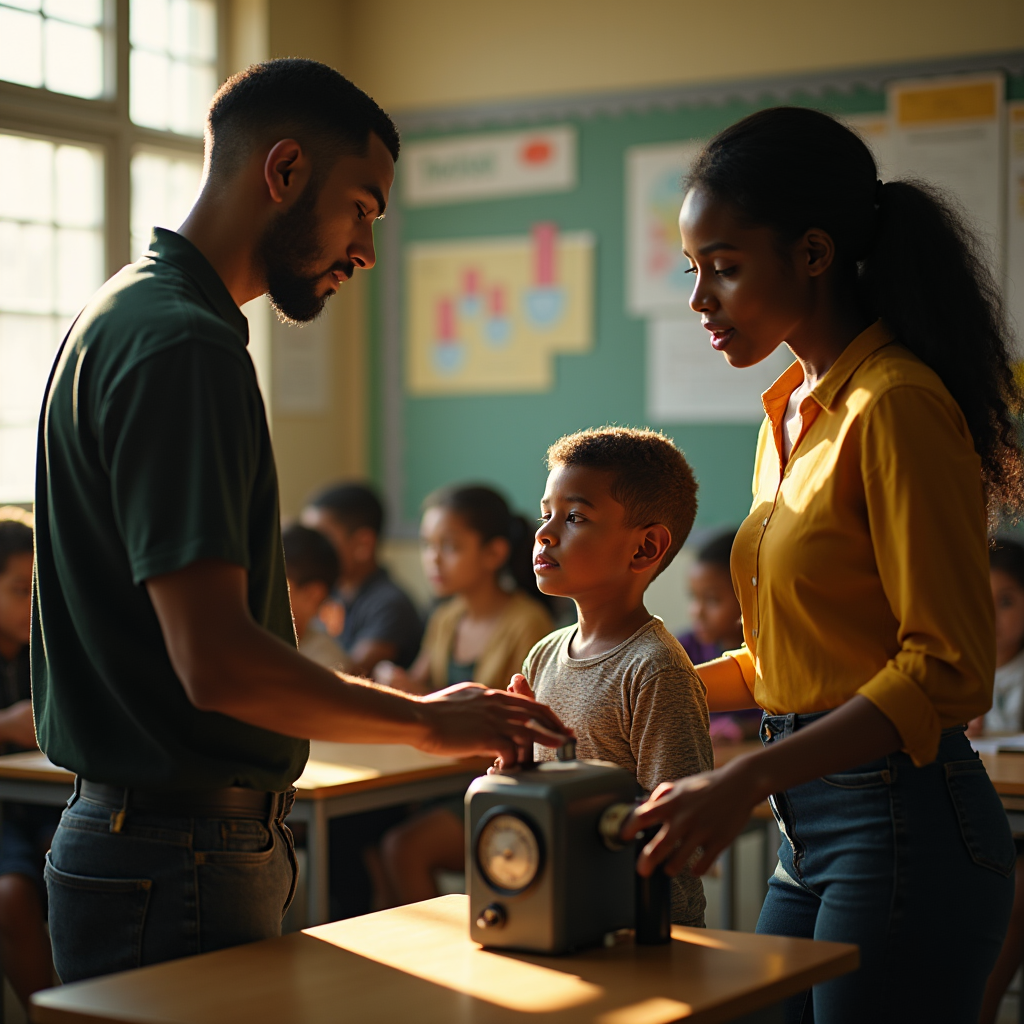
He was showing me how they calibrate the air sampling pumps. Little things, really. Adjusting a dial here, checking a flow rate there. But those little adjustments, they add up. They’re the difference between saying, “Everything’s fine” and actually *knowing* everything's fine. It’s the difference between a shrug and a record, a written assurance, backed up by data.
One of the kids, Mateo, he’s got a real knack for noticing details. He noticed the hygienist adjusting something and piped up, "What are you doing, Mr. Henderson?" (A weird coincidence, right?). The hygienist smiled and explained, in a way Mateo could understand, that he was making sure the tools were working correctly. Mateo’s eyes lit up. He just gets it. He understands that precision matters. It’s something I'm trying to get across to all the kids, in all sorts of ways.
It's not cheap, this regular calibration and testing. There's a cost associated with it. But I keep thinking about Mr. Henderson and that cough. What’s the cost of *not* doing it? What’s the cost of a preventable illness? What's the cost of a lawsuit? Sometimes, the things that seem like expenses are actually investments. Investments in people, in their health, in peace of mind.
The hygienist, he said something that stuck with me. He said, “You can’t improve what you don’t measure.” It's a simple sentence, but it holds a lot of truth. Not just in the world of industrial hygiene, but in everything. It’s the same principle I try to instill in my students. You can't learn if you don’t assess. You can't grow if you don't look closely at where you are. And you can’t keep anyone safe if you don’t know what’s in the air they’re breathing.