The Weight of Knowing
The thing is, they tell you it’s good to look inward. To understand yourself better. Like a sculptor chipping away at stone, refining the form until it truly...

The thing is, they tell you it’s good to look inward. To understand yourself better. Like a sculptor chipping away at stone, refining the form until it truly reflects what's inside. But sometimes, that chiseling becomes relentless, doesn't it? It starts with a gentle curiosity, a thoughtful pause after a difficult conversation or a particularly beautiful sunset. And then…it just keeps going.
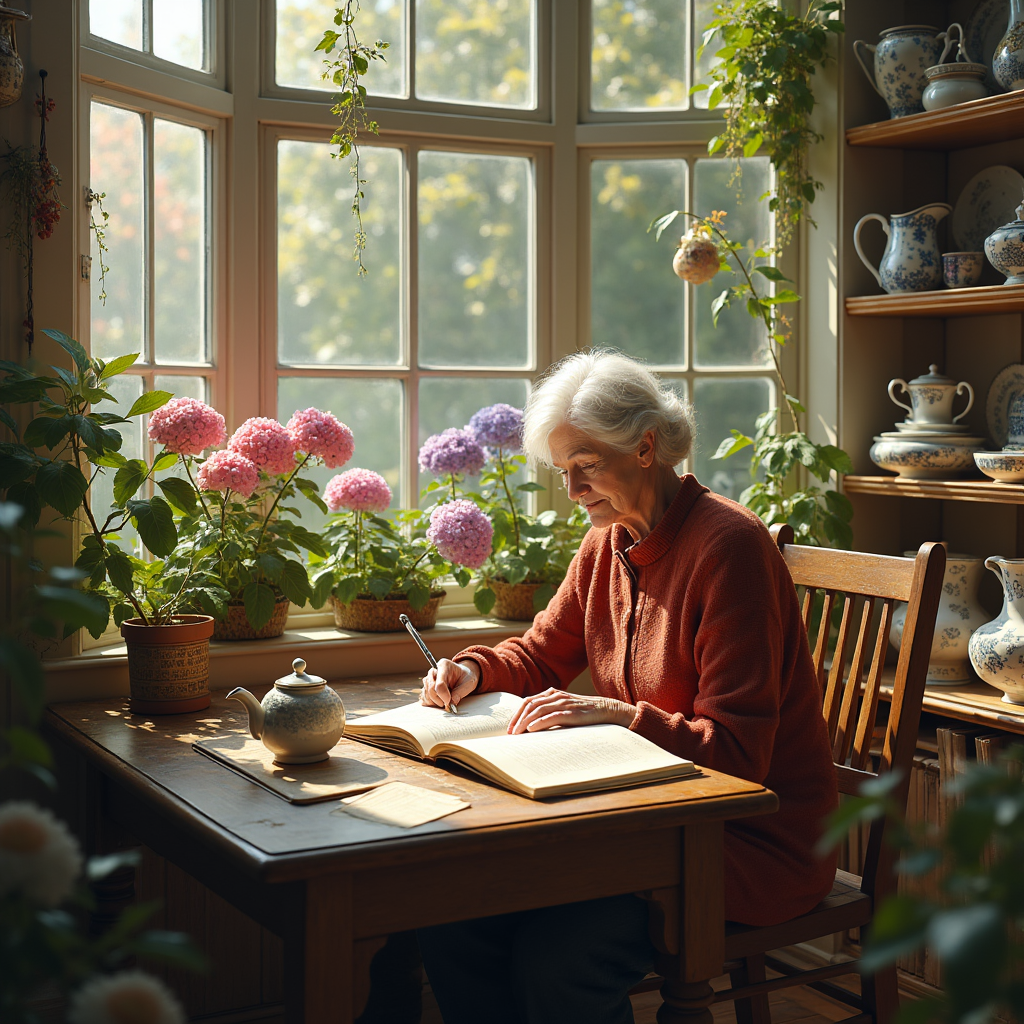
I’ve been wrestling with this myself, lately. After Bernard passed, there was so much quiet. So many days spent simply *being*, which I hadn't allowed myself before. It felt…right, in a way. A chance to catch up on things, to finally indulge in the interests that had been pushed aside for thirty-four years of directing a small, perfectly ordered school. I planted more than usual, you know? Hydrangeas mostly – their color shifts with the weather like a mood. I read, too. Dickens, mostly, though he can be a bit much sometimes.
But then came the astrology. It began as a casual interest, really, spurred by Phyllis’s enthusiasm at that autumn equinox gathering. Suddenly, it wasn't just something on the periphery; it became…the center. And with that shift in focus, I found myself looking for patterns, seeking explanations where perhaps there weren't any. Not *seeking* to find answers exactly, but analyzing, dissecting – a habit developed over decades of grading essays, of course. It was as if every experience demanded an explanation, every feeling needed justification.
It’s like arranging china, you see. Beautiful pieces, painstakingly collected over time—each dish holding a memory or a story. But when you start rearranging them constantly, trying to find the *perfect* placement, attempting to control where everything goes, it can become… unsettling. The beauty is lost in the anxiety of maintaining that precarious order. I found myself thinking about my family – all those expectations, unspoken and otherwise - as if they were a collection of fragile china I was desperately trying to keep perfectly aligned.
And that’s when it hit me: the pressure to understand *everything*. To explain *why* I felt a certain way, *how* this experience related to everything else I'd ever done. It became exhausting, a constant calculation, as if my very existence required a detailed report. It was remarkably similar to “Chinese Parents” - the elaborate game of managing hopes and demands. This intense need for control, born from years of being told what to do, what to feel, wasn’t just a quirk; it felt like an entire way of existing.
You know how sometimes you get so caught up in figuring out *what* happened that you forget to actually *live* through it? That's the danger. It becomes less about experiencing something and more about analyzing the experience. It can steal your joy, rob you of spontaneity. The moment is lost before you’ve truly grasped it.
I think what Viktor Frankl said – the drive for meaning isn’t found in endless introspection. It's found in *doing*, in engaging with the world around us. You don't dissect a garden to understand beauty; you simply walk through it, breathe in its scent, and feel the warmth of the sun on your face.
Sometimes, I think the most important thing is not to look harder at ourselves but to look more outward—to see what’s happening *around* us, what’s worth caring about. Maybe we need a little less staring inwards, and a whole lot more simply…being.