The Weight of Roots and Generational Light
My daughter, Sarah, called the other day with a proposition that settled in my stomach like a stone. It wasn’t a bad proposition, mind you. Not in the slight...

My daughter, Sarah, called the other day with a proposition that settled in my stomach like a stone. It wasn’t a bad proposition, mind you. Not in the slightest. She wants me to move. To move from my little house in Wisconsin, the one I’ve cultivated these past twenty years, and relocate to be closer to her and the grandchildren in… well, let's just say somewhere far enough away that a phone call isn't enough to maintain a proper connection.
It's a reasonable request, of course. She has two young children, needing the kind of support only a grandmother can provide. And I *am* a grandmother. A title I wear with pride. But it’s also a title that, increasingly, feels entangled with a whole host of unspoken obligations. Thirty-four years in a classroom, teaching history – understanding cause and effect – has made me acutely aware of unintended consequences. And I’m looking at this move, not just for what it offers Sarah, but for what it might cost me.
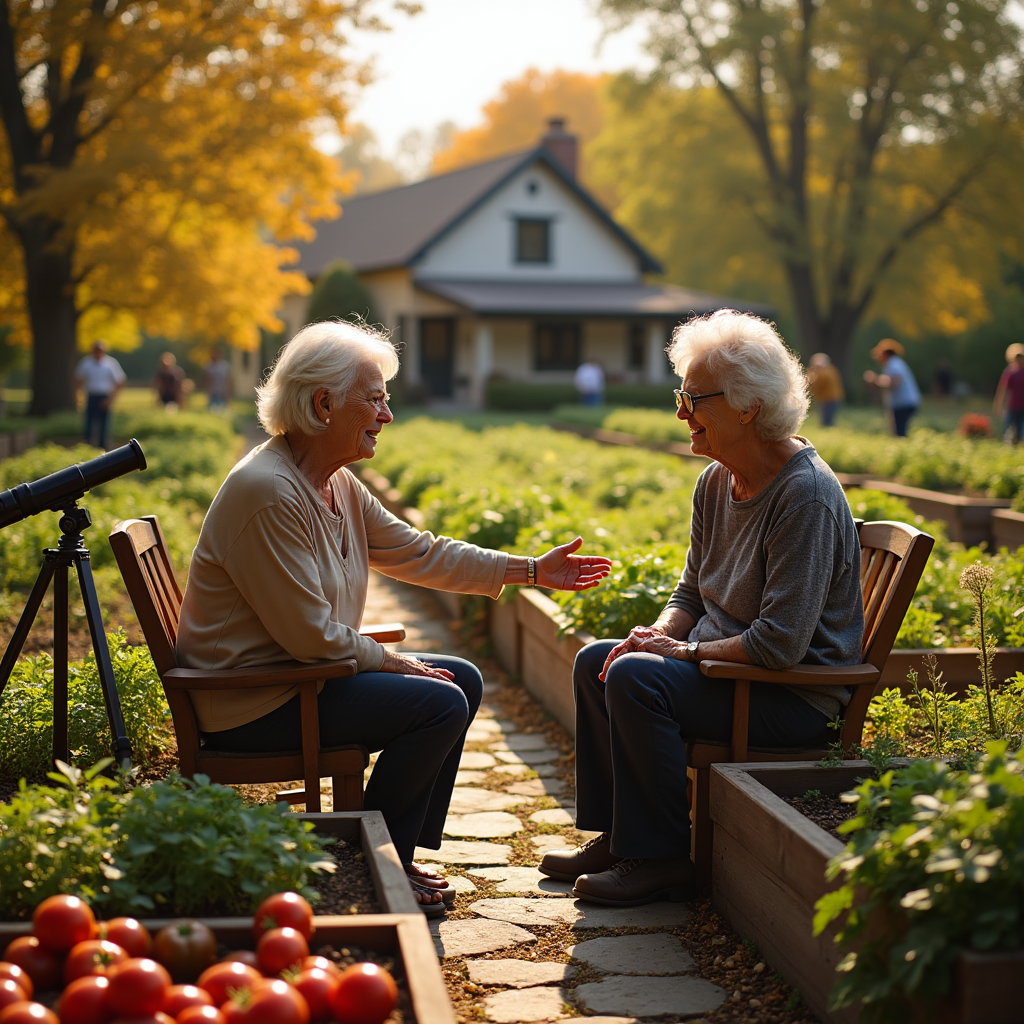
This garden, for instance. It’s become more than just a hobby. It’s a conversation with the earth, a tangible manifestation of the cycles that govern everything. I planted my first heirloom tomatoes here when Bernard and I first bought the place. He helped me build the raised beds. Now, I plant enough to share with Phyllis and the neighbors, a small contribution to the community that sustains me. It’s a rhythm, a purpose. A source of quiet joy that isn’t dependent on anyone else’s needs.
The move would mean leaving behind not just the garden, but the light. The quality of the light here, especially in the autumn, is remarkable. It’s the light that inspired the series of watercolors I’ve been working on, landscapes that attempt to capture the essence of this place. That light, that inspiration, that sense of *belonging*… it’s interwoven with my identity now. I haven’t painted with that urgency in years.
Sarah, bless her heart, doesn’t quite grasp the depth of it. She sees a grandmother who could be more involved, a source of readily available childcare. She sees a familiar narrative—the mother nurturing the family—and assumes it’s a natural progression. Perhaps it is, in a way. But I've spent a lifetime proving that women aren't simply defined by their roles. That a teacher can also be a gardener, a painter, a student of astrology.
It’s a generational shift, I suppose. When I was raising Sarah, there was a different expectation. A quiet understanding that a mother’s place was largely within the home. Now, the pendulum has swung, and the pressure feels different, though no less intense. There’s a guilt that lingers, a whisper that questions whether I’m being selfish. But I also know, with a certainty that comes from years of quiet introspection, that my fulfillment isn’t a luxury I can afford to sacrifice. Not anymore.
Phyllis, my dear friend, understands. We had an equinox gathering here last fall, just the two of us, sharing apples and laughter under a sky full of stars. She simply nodded when I voiced my concerns, her eyes full of knowing. “You need to protect your own light, Elsie,” she said, her voice gentle but firm. And she’s right.
I told Sarah I needed to think about it. A proper think. The kind of thinking that involves quiet contemplation and a deep dive into the charts – not the astrological kind, but the careful mapping of desires and obligations. It’s a complicated equation, this life. And I suspect the answer, when it comes, will require a measure of both grace and courage.