
Traffic: The System's Subtle Song
Man, holiday traffic. It’s a special kind of hell, right? You’re already stressed about getting to your family or that trip you booked months ago, and then y...

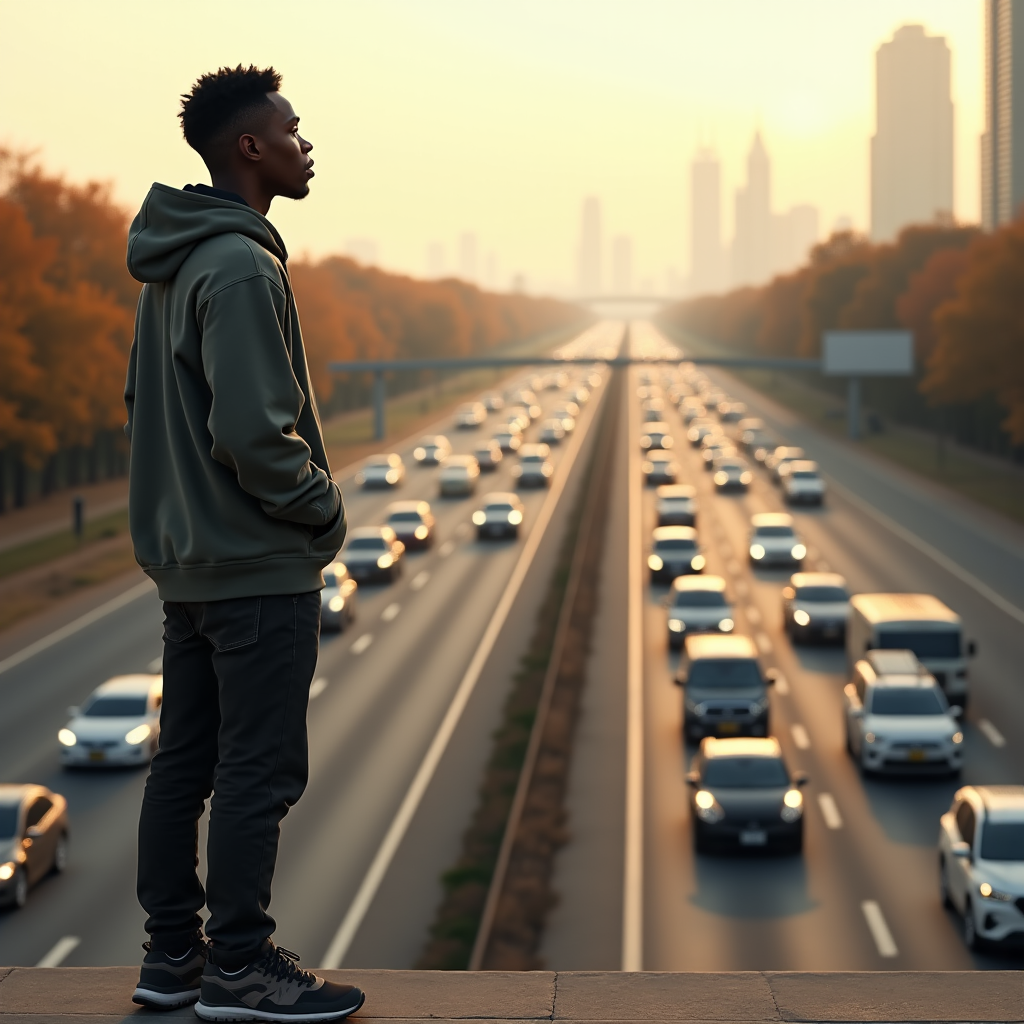
Man, holiday traffic. It’s a special kind of hell, right? You’re already stressed about getting to your family or that trip you booked months ago, and then you hit this wall of red brake lights stretching as far as you can see. That feeling—that primal urge to *do* something—it hits hard. My first instinct is always the same: find a faster lane. Merge. Conquer. But I've been thinking about it differently lately.
It started with making beats, ironically enough. When things were rough after dropping out, just building something – anything – felt good. I learned that sometimes, fixing one tiny detail can throw everything off balance. It’s the same principle in music production; a slight shift in a kick drum or a misplaced hi-hat can ruin an entire track. And then it hit me: maybe traffic works like this too.
We see those lanes moving faster, and we *think* that’s progress. The logic seems solid – if everyone just finds the most efficient route, everything would flow smoothly. But mathematically speaking, it's more complicated than that. Imagine a river. Water flows at a certain speed, depending on its depth and width. Now picture people constantly darting to the "fastest" part of the river. What happens? It creates ripples and turbulence. Those ripples slow *everyone* down, even the people trying to get ahead.
It's about density, really. Think about it like this: If you have a certain number of cars crammed onto a highway – let’s say 100 cars per mile – they will all move at a specific speed based on that density. Now, some folks start shifting lanes thinking *they* found the escape hatch. But each lane shift adds to the overall density in those surrounding areas. It's like squeezing toothpaste – you push on one end, and pressure builds up everywhere else.
I remember hustling in Atlanta, grinding for placements, feeling like I was moving ten steps forward only to slide back five. It felt personal—like people were actively trying to hold me back. But what if it wasn’t about individual resistance? What if it was just the system itself? This traffic stuff is kinda like that; you can feel frustrated, but sometimes your efforts are just feeding into a larger pattern.
There's this concept in systems thinking – essentially, how different parts of something all interact and influence each other. It’s simple to understand: a change in one area has ripples elsewhere. So when everyone tries to optimize their own trip by changing lanes, they’re collectively making the entire system *less* efficient. It's funny—we want the best for ourselves, but our individual actions can actually make things worse for everybody.
Now, I ain’t saying we should all just sit there and accept gridlock. But maybe instead of constantly chasing that elusive faster lane, we could focus on bigger picture solutions. Smart traffic lights that adjust in real time based on flow, connected vehicles sharing information about speed and congestion – those are the kinds of things that can actually make a difference. Like how I learned to tweak my beats, not just force them—make small adjustments for huge impact.
The future is going to be wild. Self-driving cars could totally revolutionize this, using complex algorithms to optimize traffic flow based on data we can’t even imagine right now. It feels like something out of a movie, but honestly, it's the only way we’re going to make holiday travel less stressful—for real. Less frantic lane changes, more smooth cruising. That’s the dream, and I think we’re getting closer to making it a reality, one adjustment at a time.