
Understanding Kids and Their Big Feelings
It's a tough thing, seeing a kid lose it. You know, the kind of lose it where they're red in the face, screaming, maybe even hitting. It doesn't feel good to...

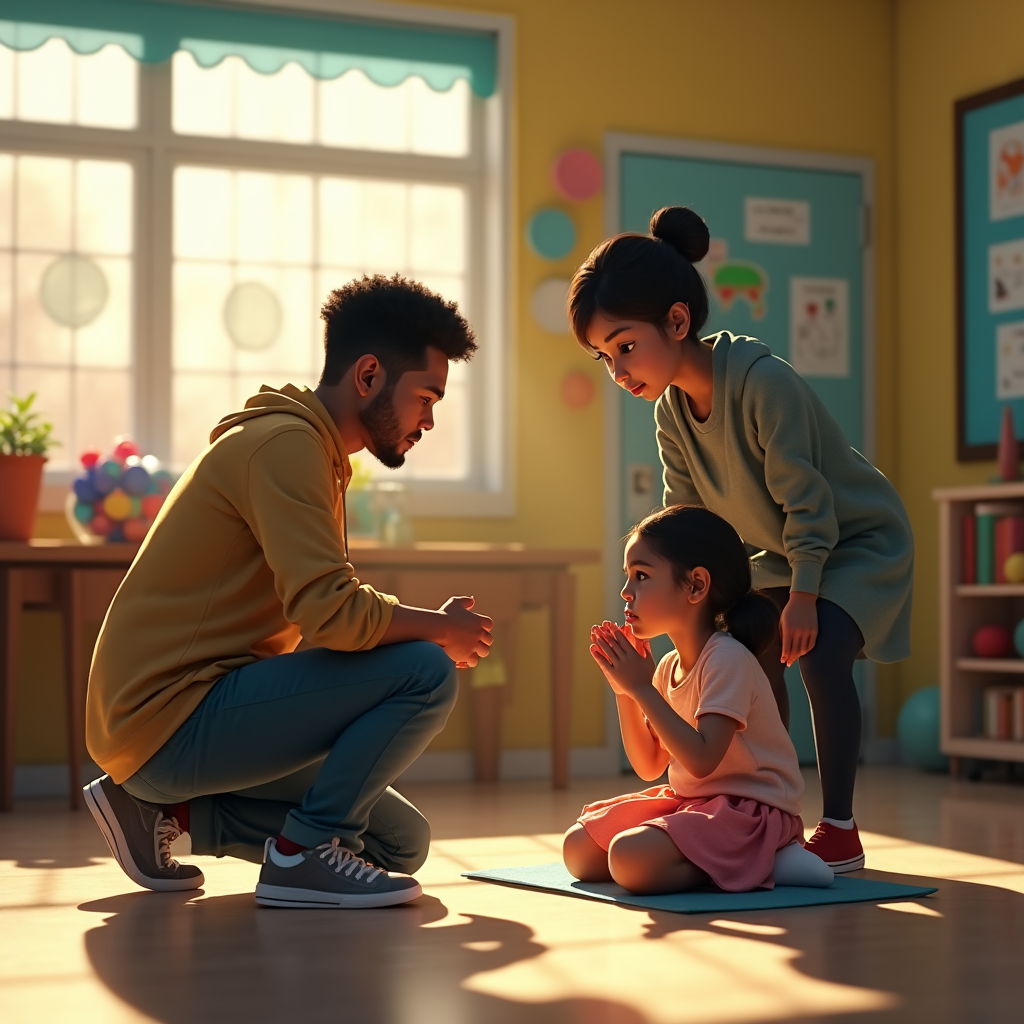
It's a tough thing, seeing a kid lose it. You know, the kind of lose it where they're red in the face, screaming, maybe even hitting. It doesn't feel good to witness, and I know it feels even worse to be on the receiving end – whether you’re the parent, the teacher, or, most importantly, the kid who's completely overwhelmed. I see it a lot in room 214. Sometimes it's a full-blown meltdown over a misplaced crayon. Sometimes it's a quiet, simmering frustration that erupts into a slammed door.
You see, kids don’t come equipped with all the parts they need right away. It’s like a car rolling off the assembly line – it's got the engine, but the steering wheel might be a little shaky, the brakes might need a few adjustments. That “steering wheel” part, the place in their brains that helps them calm down, think things through, and choose how to react – that’s the prefrontal cortex. It’s important, and it's one of the very last things to fully develop. Think about it: a five-year-old's brain isn’t the same as an adult’s, and expecting them to handle big feelings the same way just isn't fair.
I remember one afternoon last year, a little girl, Maya, was having a really hard time. She was struggling with a math problem, and the frustration built and built. She started to cry, then the tears turned into shouting. I could see her face, tight with anger. Her mom was there for volunteer time, and I saw the look on her face - a mix of exhaustion and sadness. It broke my heart, seeing that. It’s a familiar look, honestly. I’ve seen it on my own mom’s face more than once.
The easy thing to do is to just *stop* the behavior. To tell them to calm down, or to send them to their room. But that doesn't actually teach them anything. What it teaches them is that when they feel overwhelmed, they get shut down. It’s like putting a bandage over a wound – it might stop the bleeding for a bit, but it doesn't actually heal it.
What I've found works best, and what I'm starting to see work with the kids in my classroom, is to help them understand what's happening *inside* them. It’s about naming the feeling. “I see you’re really frustrated, Leo.” Or, "You look like you’re feeling really angry right now, Sophia." Just acknowledging it, putting a word to it, can sometimes take some of the power out of the feeling. I try to do that with them, and I’ve started trying to do it with myself, too.
And then, helping them find a way to let that feeling *out*. Not through hitting or yelling, but through something else. Deep breaths. Counting to ten. Squeezing a stress ball – we have a whole bin of them in room 214. Sometimes, just a hug can make a world of difference. It's about finding what works for *that* kid, because what works for one might not work for another. It’s not a one-size-fits-all situation.
I think about my own mom sometimes, and how she always tried to validate my feelings, even when I was being a real brat. She didn't always *like* my behavior, but she made sure I knew that she understood *why* I was acting that way. That made all the difference in the world. It made me feel seen, and it made me feel like I could actually learn from my mistakes.
It’s not a quick fix, though. It takes time, and patience, and a lot of understanding. But seeing a child slowly learn to navigate those big feelings, to find their own way to calm down and cope – that's one of the most rewarding things I get to witness. That’s the stuff that makes me glad I drove out here to West Philly every morning, that little bit of hope you feel when a kid starts to understand themselves a little better. It's the difference between a car that's barely running and one that's finally finding its way.