Unearthing Silence Breaking Walls Connection Found
It’s funny, the way loneliness can feel like a low hum you’ve just accepted as background noise. For a long time, that’s what it was for me. Just *there*. Pa...

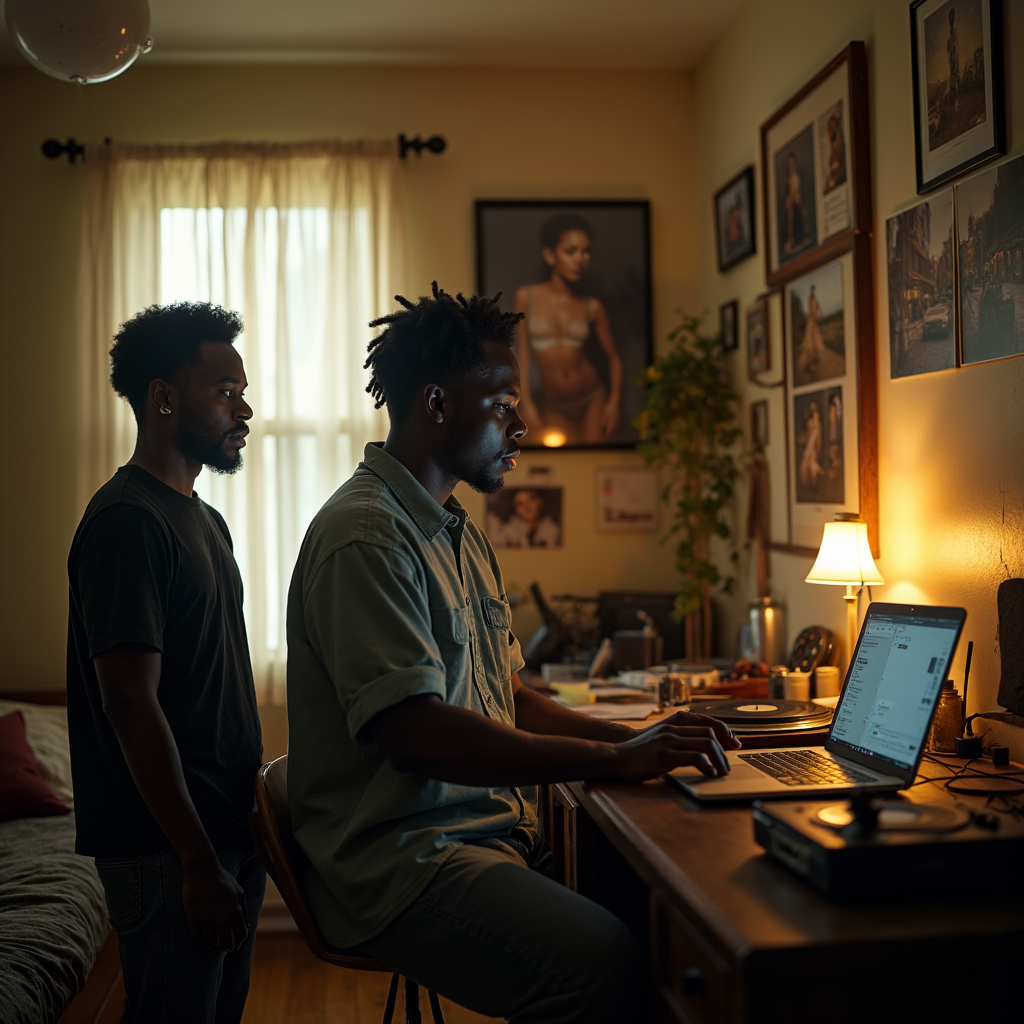
It’s funny, the way loneliness can feel like a low hum you’ve just accepted as background noise. For a long time, that’s what it was for me. Just *there*. Part of the city’s soundtrack, the clatter of the El train, the distant sirens. I thought everyone felt it, this constant thrum of… distance. Now, looking back, I realize it wasn't universal. It was a direct line to something missing, something I didn't even know I was missing until recently.
I used to see it in relationships, the way I pushed people away before they could get too close. It wasn't intentional, not in a malicious way. It was more like… a reflex. A deep-seated fear of disappointment, disguised as a need for independence. I’d build walls, brick by brick, carefully constructed to keep the world at arm's length. My bedroom studio became the fortress. The beats, the fits I posted—they were all a form of insulation. Anything to avoid the potential pain of being truly seen.
My pops always told me I was “too independent.” He meant it as a compliment, I think. But in retrospect, it felt like he was acknowledging something he didn’t quite understand. It wasn't independence I was striving for; it was protection. A shield against the possibility of someone not meeting an unspoken expectation – an expectation born from a silence I hadn’t even recognized until a few months ago. The silence of unfulfilled needs.
It started to click when I was working on that beat in August. This hard, driving rhythm just poured out of me, raw and honest. It felt like the sound of something breaking free. After that, I started noticing patterns. The way I'd automatically assume people were going to let me down, the way I’d subtly sabotage connections before they could deepen. The way I’d interpret kindness as obligation. These weren't my beliefs; they were echoes, inherited from somewhere else.
There's this one time I was trying to learn a new editing technique for my fits. I kept failing, messing up the color grading, the transitions – everything felt off. I was about to quit, convinced I just wasn’t cut out for it, when my neighbor, Marcus, saw me struggling. He could've just passed by, kept minding his own business. Instead, he stopped and showed me a simple trick, just a tiny adjustment. And suddenly, it made sense. It was like he saw the problem I couldn’t see myself. That moment felt massive, a challenge to the internal narrative that I wasn't capable of mastering anything.
I think about that now, about how I approach relationships. I automatically assume I need to figure everything out myself, that asking for help is a sign of weakness. That’s a lie, though. A belief that keeps me isolated, keeps me from experiencing the richness of genuine connection. The truth is, vulnerability isn't weakness; it’s courage. It's allowing yourself to be seen, flaws and all.
Breaking free from these ingrained patterns isn't easy. It’s like learning to walk again. The other day, I was supposed to meet up with a friend, a girl I’ve been building a connection with. My first instinct was to flake. To conjure up a last-minute excuse. I almost did it. But then I remembered Marcus and the editing trick. I remembered that reaching out, even when it’s terrifying, can lead to something beautiful. So I showed up. Just showed up. And that, in itself, felt like a victory.
The hum of loneliness hasn’t completely disappeared, but it’s quieter now. It's less of a constant and more of a reminder – a reminder of the work still to be done, of the walls I’m slowly, painstakingly dismantling, brick by brick. And with each brick I remove, a little more light gets in.