Unlocking a Love of Reading: Let Them Read
What’s a kid supposed to read? I get asked that a lot, especially now that it's almost back-to-school time and parents are starting to think about all those ...

What’s a kid supposed to read? I get asked that a lot, especially now that it's almost back-to-school time and parents are starting to think about all those things they *should* be doing with their kids over the summer. They mean well, of course. Usually, it comes from a place of wanting to set them up for success—make sure they’re “on track.” But I’ve learned in room 214 that sometimes, "on track" can feel more like being put on a leash.
I remember Mrs. Davison, my fifth-grade teacher, who had this whole list – *the* list - of books every kid should read before middle school. Historical fiction was good. Classic literature was essential. Anything with magic or spaceships? A distraction from the serious business of becoming a reader. I devoured those books on that list eventually, don't get me wrong, but what really hooked me wasn’t a carefully curated selection; it was a dog-eared copy of *The Hobbit* my uncle brought back from England.
It had swords and dragons, yeah, but mostly, it had adventure. My cousin showed me the graphic novel adaptation too. I didn't feel guilty for reading that either. It wasn’t “serious literature,” but those pictures kept me turning pages when I was tired or felt like giving up on the actual words. Reading isn't a test to be passed; it’s an escape, a window, a way to think about things differently. If you make it feel like homework, you lose all of that.
This summer, some kids in Fishtown were obsessed with the Phillies. Completely consumed, and I don’t blame them. The energy was infectious. There's this whole thing going on now, the Summer of Sport, where libraries are partnering up with sports teams to get kids reading about their favorite players, their favorite games. It's not about some fancy novel; it's about connecting a kid’s interest—anything that sparks that kind of passion—to something they can read and understand. A player bio. An article on the history of batting averages. Even a comic book featuring their heroes.
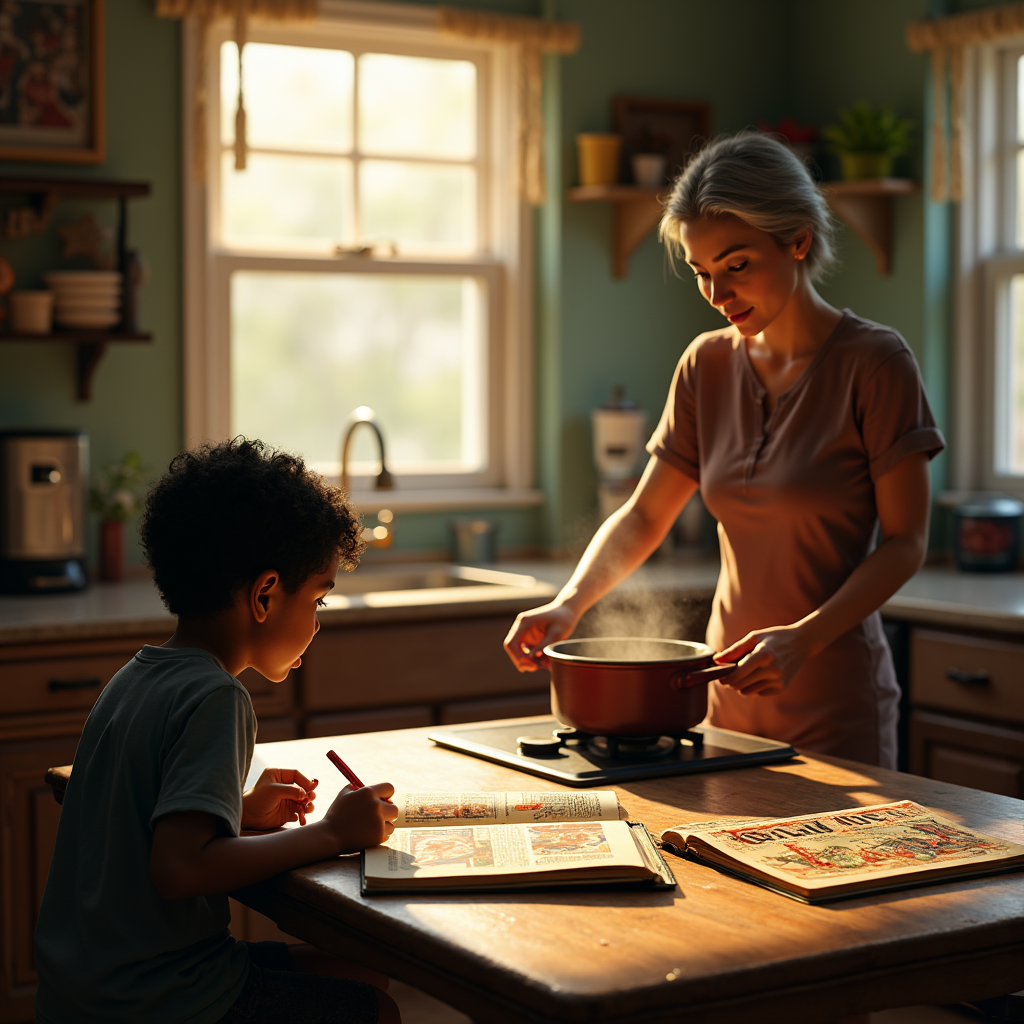
I thought about my own grandmother, who didn’t have time to push reading at me; she was busy putting food on the table and keeping our house running. But Sundays were for gravy—a whole day dedicated to simmering tomatoes, meat scraps, and herbs into something incredible. I'd sit with her, watching, asking questions. She didn’t say “read more,” but she did offer a space where curiosity was rewarded, not measured by some arbitrary standard. The smell of that gravy? That’s the memory I associate with learning, with paying attention, with wanting to understand *how* something works.
The thing is, kids are already reading. They're reading social media posts, texting their friends, figuring out how to navigate YouTube. We just need to redirect that energy towards things that offer a little more substance or spark a different kind of curiosity. It’s not about denying them the “good” books; it’s about meeting them where they are and expanding their horizons from there. There's no shame in reading a graphic novel, or a magazine about racing cars, or even a website dedicated to Minecraft tutorials.
What I see in room 214 is that judgment can be a real roadblock. A kid feels like what they’re reading isn’t “good enough,” and suddenly, they don’t want to read at all. It's heartbreaking. Reading shouldn’t be about pleasing someone else; it should be about the joy of discovering something new, even if that discovery is just a particularly clever pun in a comic book caption.
Look, I know everyone wants what's best for their kids. But sometimes, "best" isn't about following a prescribed path. It’s about fostering a love—a genuine interest—in the world around them. Let them read whatever they want, and find ways to connect that passion to something more. Maybe that's a book, maybe it's an article, maybe it's even just a website filled with baseball statistics. Just let them read. That’s all we can really do.