
Words Matter: Grandparenting With Intention
Sometimes, I think about the things I said when my students were little – not my own grandchildren, mind you, but the children who came through my classroom ...

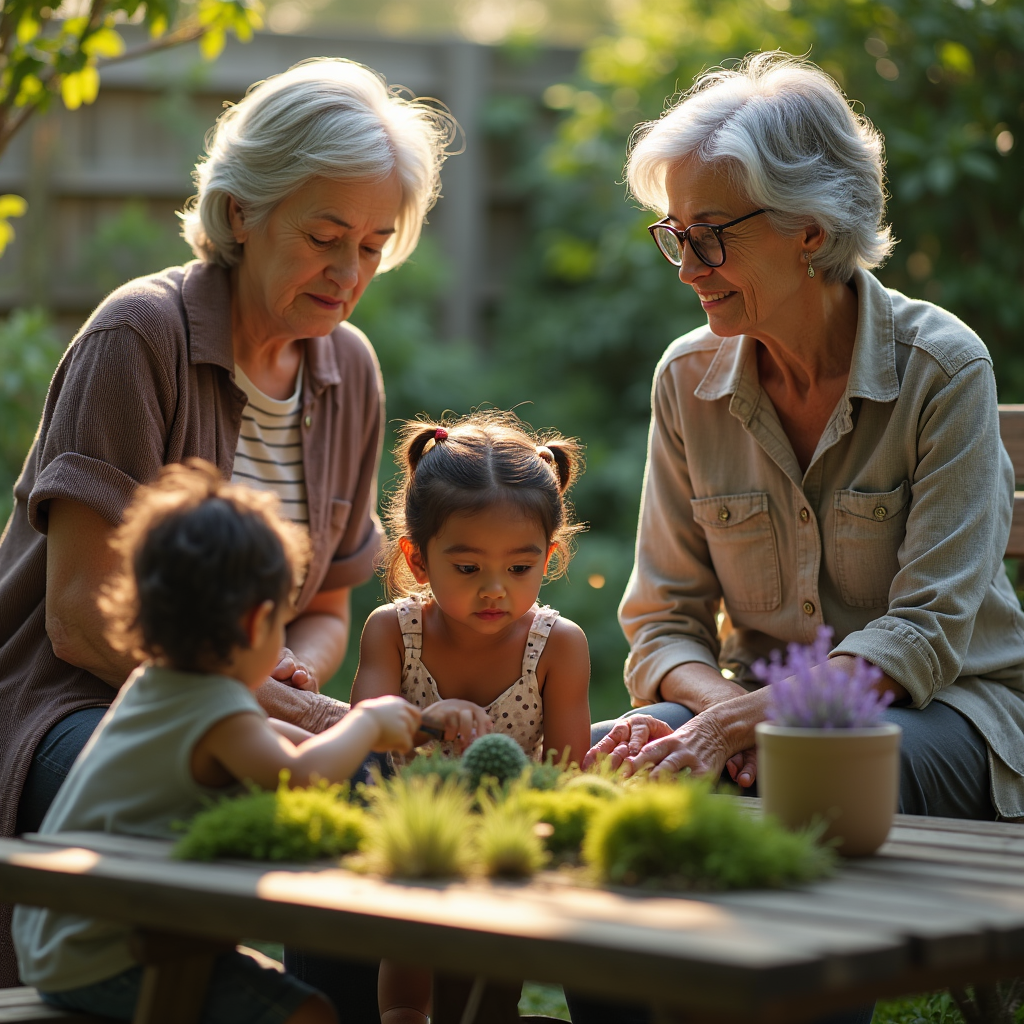
Sometimes, I think about the things I said when my students were little – not my own grandchildren, mind you, but the children who came through my classroom over those thirty-four years. We all say silly things, don’t we? Little slips and reassurances that we meant well by, but which, looking back now, might have landed a bit…off. It's a humbling thing to realize how much impact our words can have, even the seemingly smallest ones. Now, with more time for reflection – retirement being what it is – I find myself considering those moments with my grandchildren too.
It began, really, after Phyllis and I had that little autumn equinox gathering last year. Just us two in the backyard, the scent of rosemary hanging heavy in the air, and a quiet sense of contentment settling over everything. We were talking about our families, naturally, and she mentioned something her son had said about how his children reacted to certain phrases their grandparents used. It got me thinking. My Bernard – bless his heart – he’s full of those sorts of well-meaning but potentially sticky pronouncements.
He has this habit of saying things like, "You're so clever for a little girl!" which sounds supportive on the surface, I suppose. But what does it really mean? Does it imply that cleverness is somehow limited by being small? Or worse, does it set her up for feeling like she *has* to be clever all the time, lest she disappoint? It’s not malicious – he means well, truly – but those little qualifiers can do real damage. I've always believed children need room to simply *be*, without constant assessment and labeling.
Then there’s the “You’ll understand when you’re older.” Oh, that one! It's a conversation-stopper more than anything. As if their feelings – whatever they may be – are invalid because they haven’t lived as long as I have. It discounts their experience entirely. When I was teaching primary school, I learned to listen deeply, to meet children where *they* were, not where I assumed they should be based on my own life history. That principle applies just as much, if not more so, when it comes to our grandchildren.
Another phrase that bothers me – and I hear it quite a bit from other grandparents too – is something along the lines of, “You’re being silly now.” Silly! What’s wrong with silliness? Children need to play and imagine and be frivolous. It's how they learn and explore the world. To dismiss their joy as mere silliness feels…dismissive. It subtly reinforces a sense that there's a "right" way to behave, when childhood should be a glorious mess of make-believe and laughter. I’ve made it a point to encourage my grandchildren’s silliness; Bernard just chuckles and shakes his head.
What I've found works better is simply listening. Really listening. Not formulating an answer or a lesson in your head, but truly hearing what they are saying—and feeling what they’re expressing. Acknowledging their feelings, even the uncomfortable ones. If one of them is upset about something – a scraped knee, a lost toy, a disagreement with a friend – I try to reflect back their emotions: “That sounds really frustrating,” or “It must have felt sad to lose that.” It’s not about fixing anything; it's about validating their experience.
Bernard and I had a conversation the other day. He was saying something about how he wanted them to be "strong" and "resilient," and it occurred to me that sometimes we confuse those qualities with an absence of vulnerability. Real strength isn’t about never feeling sad or disappointed; it's about having the courage to face those feelings, to talk about them, and to learn from them. I suggested he try saying something like, “It’s okay to feel sad right now. Let’s figure out what you need.” It seemed to resonate with him.
Perhaps that’s all we can do as grandparents: be mindful of our words, listen more than we speak, and create a space where our grandchildren feel seen, heard, and loved – imperfections and all. The long summer days I have now are filled not just with gardening and reading but also with this quiet work—this tending to the emotional soil in which my grandchildren will grow. And that, it seems to me, is a rather beautiful thing indeed.