Beyond Trauma: Reclaiming Strength and Resilience
Sometimes I worry about the language we use. Not just how we say things, but the weight those words carry, the narratives they build. Lately, it’s been swirl...
Sometimes I worry about the language we use. Not just how we say things, but the weight those words carry, the narratives they build. Lately, it’s been swirling around in my head, particularly as I see the “trauma healing” industry grow – a booming field offering promises of profound transformation. And while I believe deeply in the power of healing, I’m also increasingly uneasy about the way challenging experiences are being framed and, frankly, commodified.
It’s not that suffering isn't real. It’s profoundly real. The past few months, watching my dad navigate a stroke, seeing my mother's worry etched into every line of her face… those were heavy days. The fear is a physical thing, a tightening in your chest that makes it hard to breathe. I learned a lot about resilience then, not from a book or a workshop, but from the quiet strength of my parents, and the way they leaned on each other. But I also saw how easily vulnerability can be exploited.
We’ve created a culture where every difficulty is labeled a trauma. And while acknowledging and processing challenging experiences is absolutely vital, constantly framing life through the lens of trauma can be… paralyzing. It can strip away agency, the very feeling of being in control of your own story. It risks transforming people into perpetual victims, defined by their pasts instead of their potential.
I remember a few weeks ago, speaking with a parent – a lovely woman, truly – who was convinced her child’s minor social struggles at school constituted a deep-seated trauma. She’d devoured a series of online courses, each promising to unlock the key to her child's healing. My pediatrician’s instincts kicked in, of course. I listened. I validated her concerns. But I also gently reminded her that children are resilient, that navigating social complexities is a fundamental part of growing up. It doesn't require a complete overhaul of their emotional landscape.
There's an insidious comfort in believing you're "broken," in finding a definitive path to "fixing" yourself. The trauma healing industry thrives on this comfort. It offers a clear, often expensive, solution to an inherently messy, complex problem. It promises answers when often, the answers lie within, in the quiet whispers of our own innate capacity to heal. My own work, seeing kids and families navigate so many things, has taught me that resilience isn’t a destination; it's a process, a muscle you build one small step at a time.
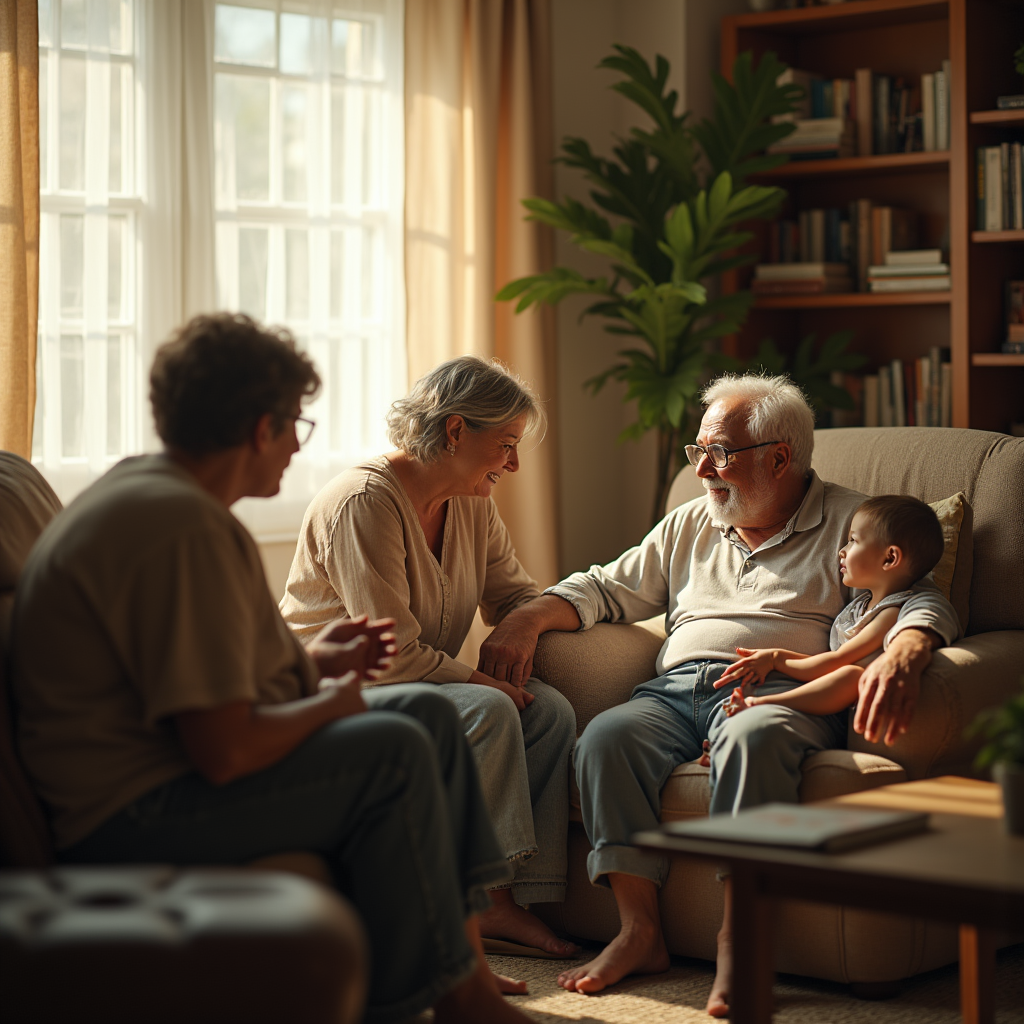
My father’s stroke, as terrifying as it was, also brought that into sharp focus. He didn’t need a guru or a multi-step program. He needed connection – my mother’s hand in his, the silly jokes my kids told him, the simple act of driving him to the store. He needed to be reminded of his strength, his humor, his *life* beyond the event. And he had it, already. We all do. We’re designed to adapt, to overcome, to find meaning in the midst of difficulty.
Consider, too, the research highlighting the astonishing capacity of many individuals to bounce back from significant adversity. It's not about denying the pain, or minimizing the impact. It’s about recognizing that inherent strength, that underlying belief in one’s own ability to cope and grow. It’s about finding the small pockets of joy and connection that fuel that resilience. It's the small things, the things we sometimes overlook in our rush to "fix" ourselves.
I'm not advocating for ignoring challenging experiences. I'm advocating for reclaiming our agency, for challenging the narratives that tell us we are defined by our past. For remembering that the most powerful healing often comes not from external interventions, but from within – from connection, from hope, from the unwavering belief in our own capacity to rise, again and again. And sometimes, the simplest act of kindness – a listening ear, a warm hug, a shared laugh – can be the most profound healing of all.