
Echoes in the Static
The fridge hums, a low throb that’s somehow become the dominant note of my life lately. It's not loud, not really, but it’s *there*. Like the subtle vibratio...

The fridge hums, a low throb that’s somehow become the dominant note of my life lately. It's not loud, not really, but it’s *there*. Like the subtle vibration from the traffic outside, or the distant pulse of construction – invisible frequencies building up, layering themselves into this persistent sense of…unease. I used to think it was just anxiety, a natural byproduct of being twenty-two and navigating everything, but now I wonder if it's something deeper, something actively *caused*.
I’ve started trying to track it, really. Not in a scientific way – I don’t have the equipment or the patience for that – but through observation. Keeping a journal, mostly filled with frustrated sketches of waveforms and increasingly desperate questions about why things feel perpetually…off. The algorithms on my phone know me better than I do, it seems. They feed me perfectly tailored snippets of sadness disguised as nostalgic longing, expertly crafted disappointments delivered with the cheerful veneer of social validation. It’s exhausting.
It's like a mirror reflecting back not just my desires, but the echoes of patterns I didn’t even realize I was repeating. Every promising connection, every shared laugh over lukewarm coffee, inevitably dissolves into this same familiar frustration—a subtle disappointment that settles in your chest and quietly whispers you’re chasing something just out of reach. It's less about their flaws, actually; more a frustrating recognition of my own tendencies.
I spent the whole weekend trying to isolate it, really focus on the low-frequency sounds as if they were the source of the problem. I went for a walk in what *should* have been a calming forest—the rustle of leaves, birdsong—and still felt this underlying tension. The city seemed to amplify everything, turning everyday noises into irritating reminders of a world that feels increasingly disjointed, particularly when coupled with AI's vacant smiles and programmed empathy.
Then I read about these hobbyists – people dedicating themselves to things like pottery or knitting – and it hit me differently. Not as an escape *from* something, but as a way of actively building calm, focusing my attention on something tangible, something that doesn’t demand the constant, frantic search for dopamine hits offered by…well, everything else. It feels almost radical, this idea of deliberately seeking out practices designed to reset your nervous system.
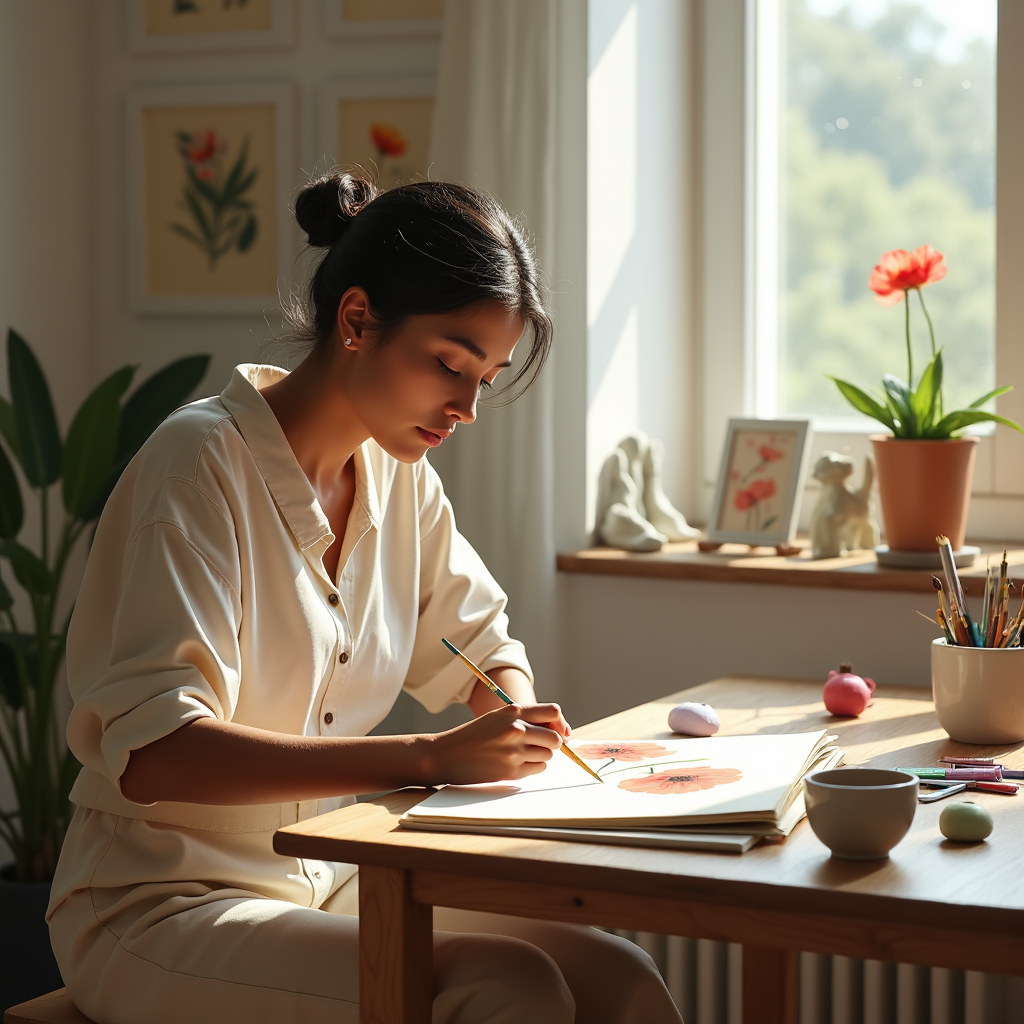
I've started with simple things: trying to paint a single flower from a picture in a book, focusing on the way the brush strokes build up color, letting my hand move without judgment. It’s surprisingly effective – not because it produces anything beautiful (far from it), but because it forces me to be *present*, to notice the subtle shifts in light and shadow, to ignore the insistent buzz of my phone.
There's a certain grounding effect, too, I think. The repetitive motion is almost meditative; a way of anchoring myself in the physical world when my mind feels like it’s spiraling out of control. It’s not about achieving some grand accomplishment—it’s about finding a quiet space within the chaos.
It’s funny how something so simple can feel…transformative. Maybe it’s just the feeling of actually *doing* something, of engaging with my hands and mind in a way that isn't dictated by an algorithm. Or maybe, just maybe, it's about acknowledging these invisible vibrations—and finding a way to not let them dictate my mood.
I don’t know if I'll ever truly understand the connection between those subtle sounds and this persistent feeling of unease, but for now, I’m content with the quiet rhythm of the clay beneath my fingers, the slow accumulation of color on paper, finding a small sense of control in a world that feels increasingly uncertain.