Echoes of Loss
It’s Monday, and Mrs. Davis is already bouncing off the walls at Room 214. Seventh graders don't *do* bouncing, not usually. But something about the quiet hu...

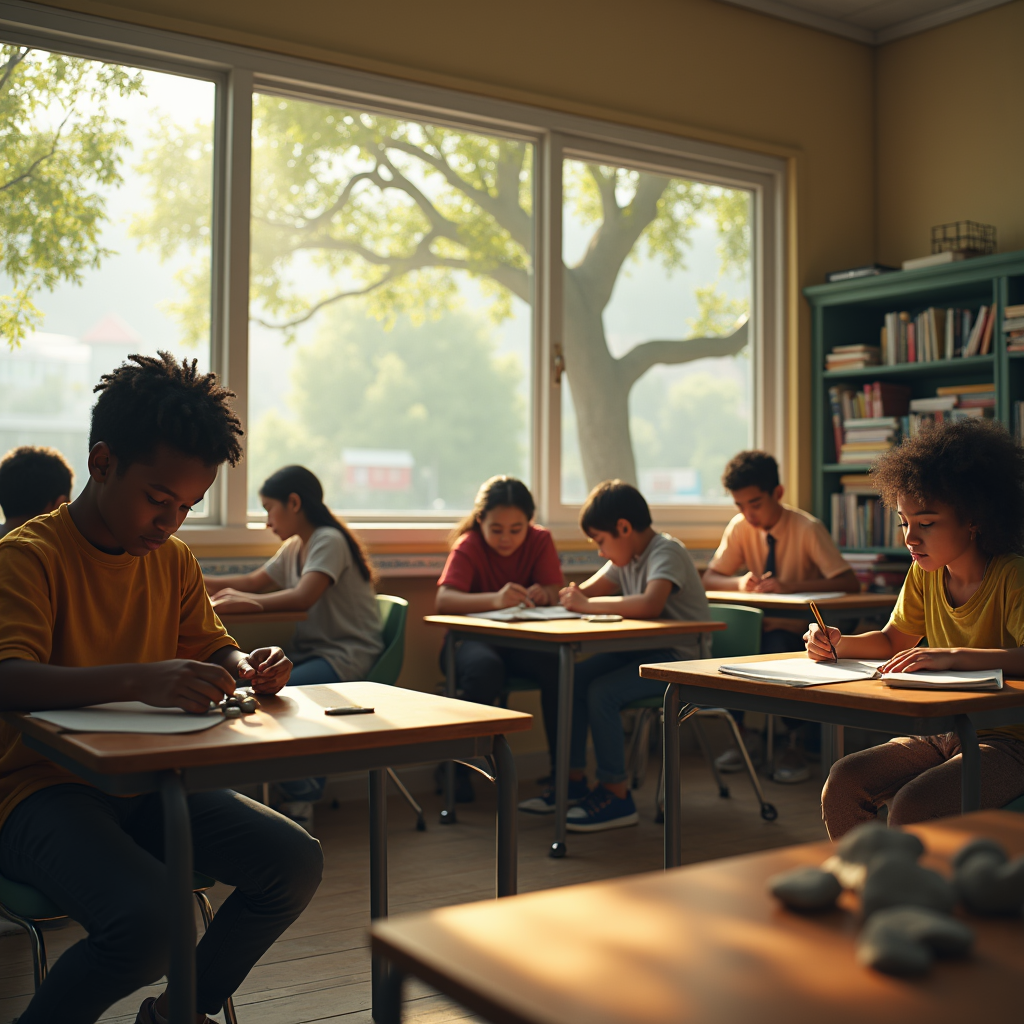
It’s Monday, and Mrs. Davis is already bouncing off the walls at Room 214. Seventh graders don't *do* bouncing, not usually. But something about the quiet hum of this week – a Tuesday news story about another cancer diagnosis, a whispered conversation between two kids about their grandfather – has shifted things. I find myself thinking about it a lot, you know? About how these kids see things, how they hold onto moments, and how… well, how *we* hold on.
I’ve been watching Leo, he's in my study group, since his dad died last year. He used to talk about basketball constantly – the scoring, the strategy, the feeling of being part of something bigger than himself. Now? Mostly just silence. Not sad silence, exactly. More like… suspended. It struck me the other day that maybe it's not about *feeling* sad, but about the space where the “dad” used to be. That space is still there, you know? A little echo in the way he moves, the things he doesn’t say.
It’s funny what people talk about when they’re hurting. I had a meeting with Sarah's mom last week - she lost her father six months ago. She wasn't talking about grief, not really. She kept mentioning this amazing antique clock his dad made – said it was ticking away, just like time. Like it could somehow fix things or… remind her of what *was*. It felt so honest, that quiet need to cling to something tangible, something that connected her to him before it was gone.
I’ve been reading a little about this “post-traumatic growth” thing – the researchers call it that. It sounds almost too neat, doesn't it? Like there’s some kind of formula for bouncing back, for finding a new appreciation for life after something… devastating. But what I think is true is that it’s not about *finding* anything, but about noticing what was already there.
It’s like when you’re building with Legos – you start with this big box of bricks, and at first, you just try to make the coolest spaceship or castle. And then, eventually, you realize all those little pieces could be something else entirely. Maybe a simple flower. A quiet moment. A deeper understanding of how fragile things can be.
I talked to Mr. Henderson, he teaches history down the hall and I mentioned Leo’s silence. He said something that stuck with me: “Sometimes,” he said, “the biggest growth happens when you're not even trying.” It just… resonated. Like grief isn’t about forcing yourself to be happy or strong—it’s about letting yourself *be*. Letting the space open up.
The thing I keep coming back to is this idea of stories. Everyone builds their own story around a loss, and it shapes how they understand everything else. My students are already doing it – constructing narratives out of fragments of memory, searching for meaning in what feels utterly senseless. And maybe that’s the point: it's not about finding *the* answer, but creating *an* answer, one that feels true to them at this moment.
It’s a messy business, isn’t it? This whole human thing. Trying to make sense of things when you can't. But Room 214 – and sometimes just looking out the window on a Monday morning – reminds me that even in the quietest moments, there’s always a little bit of growing happening.