Healing Through Art and Hope
--- Liam, 10, sat with his head in his hands, meticulously tracing patterns on the worn wooden table. It had been six months since the flood in Cedar Creek, ...
---
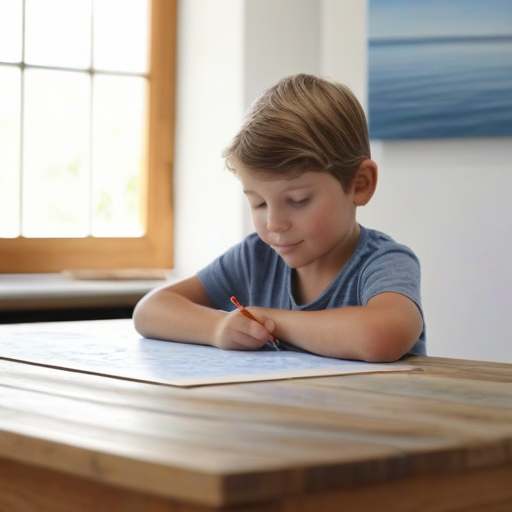
Liam, 10, sat with his head in his hands, meticulously tracing patterns on the worn wooden table. It had been six months since the flood in Cedar Creek, six months since everything changed. Before, he’d been a whirlwind of energy, building elaborate Lego castles, racing his bike down the hill, always eager for the next adventure. Now, he barely spoke, just shifted his weight and stared out the window, a landscape of quiet sadness. His mom, Sarah, had brought him to me hoping I could help him find a way back to himself, back to the boy who loved to laugh. The initial sessions were…difficult. He’d offer a mumbled “thank you” when I asked how he was, and that was about it. It felt like he was building a wall around himself, a silent fortress protecting a heart overflowing with unspoken grief. I knew, instinctively, that he wasn’t sharing because he didn’t feel he had the right, didn’t feel equipped to carry the weight of what he’d experienced.
I started simply, offering him crayons and paper. Just letting him draw whatever came to mind. He initially drew grey washes, chaotic swirls, shapes that seemed to represent the churning water, the loss of his family’s garden, the feeling of utter helplessness. It was raw, it was unsettling, but it was *something*. I didn’t push him to talk, didn’t try to interpret the images. I just sat there, quietly observing, offering a gentle presence. It was about establishing a safe space, a place where he could begin to express himself without judgment. I reminded him that everyone grieves differently, and there’s no right or wrong way to feel.
Slowly, subtly, things began to shift. He started adding small details to his drawings – a tiny blue sailboat on the grey water, a single red rose blooming amidst the devastation. He was still hesitant to speak, but he began to narrate the scenes he was creating. At first, it was just brief descriptions: “The water…it was angry,” or “The rose…it’s for my dad.” But with each drawing, with each whispered observation, a little bit of the fear began to dissipate. It was about recognizing that even in the midst of destruction, there was still beauty, still hope.
I explained to Liam that sometimes, when we experience something incredibly traumatic, it's as if our brains are trying to protect us by shutting down. It's a natural, albeit painful, defense mechanism. But just because it's a defense mechanism doesn't mean it's a permanent one. “Think of it like a tangled knot in a rope,” I said, “You don’t just throw the rope away. You patiently work to untangle it, strand by strand.” We began to explore the images, not to fix them, but to understand them, to give them meaning. We talked about resilience, about the strength of the human spirit.
Over the next few weeks, Liam's drawings became increasingly optimistic. He started adding elements of rebuilding – a small house, a newly planted tree, a group of children playing. He even began to incorporate elements of his favorite things – a bright yellow kite soaring through a clear blue sky. It was like he was actively rewriting his story, reclaiming his narrative. "I'm making it better," he whispered one day, pointing to a drawing of a vibrant community. “I’m making it better.”
The key, I realized, was to empower him, to give him a sense of control. Trauma often leaves us feeling powerless, like we’re just victims of circumstance. But it’s important to remember that we always have agency, even in the darkest of times. “It’s not about forgetting what happened,” I reassured him. “It’s about deciding how that experience shapes who you become.” We worked on identifying his strengths, his passions, the things that brought him joy.
Now, Liam volunteers at the local community center, helping children who have experienced loss. He even started a small garden, planting flowers and vegetables – a tangible reminder of the beauty that can emerge from devastation. "I still miss everything," he admits, "but I'm not letting it control me anymore." His recovery wasn’t a sudden transformation, but a gradual process of healing, of rebuilding, of reclaiming his life, one drawing, one word, one small act of hope at a time.
And that’s the thing I always tell my young patients – and their families – it’s a marathon, not a sprint. It's about patience, kindness, and unwavering belief in their ability to heal and grow. It’s about honoring their pain while simultaneously celebrating their strength. It’s about remembering that even the smallest spark of light can push back the darkness.