Learning Beyond the Textbook’s Walls
Room 214’s seen a lot of things, you know? Mostly kids, mostly messes, mostly the quiet kind of confusion that settles in when you realize you don’t *really*...

Room 214’s seen a lot of things, you know? Mostly kids, mostly messes, mostly the quiet kind of confusion that settles in when you realize you don’t *really* know what’s going on. I spend my days watching them, mostly, and listening. It’s the best education I’ve ever gotten. People… they just *are*. They’re a tangle of wants and worries, mostly about things that seem huge when you’re staring at them, but turn out to be smaller when you look away.
I was thinking about this last week, after little Mateo brought in a worm he’d found in the mulch. He was *serious*, you understand? Like, this wasn't just a curiosity. This was a whole thing. He’d named it Winston, and he was convinced Winston was trying to tell him something about the rain. I didn't try to tell him it was just a worm, or that the rain was just… rain. Just let him talk about it. That’s when it hit me: a lot of what we’re trying to teach, a lot of what we’re *expecting* from kids, is built on assumptions.
And assumptions, well, they’re a dangerous thing. They can blind you to the actual, messy, complicated truth. Take the whole “science” thing, for instance. We talk about “learning” science, like it’s a collection of facts you gotta memorize. But what if learning science is just… *seeing*? Like Mateo seeing Winston and thinking about the rain. It’s not about textbooks, it's about looking.
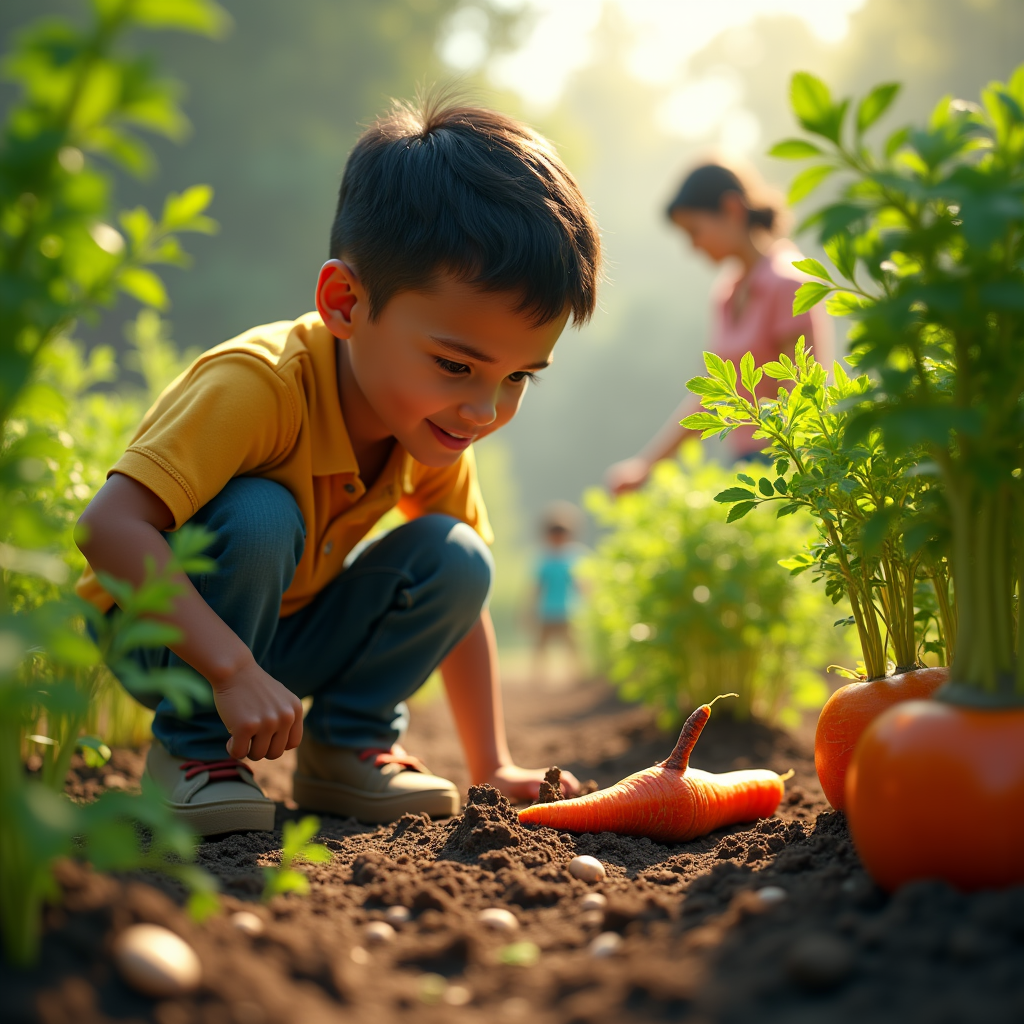
Then there's the whole agriculture thing. Folks always think of farms as these huge, orderly places with perfectly planted rows and tractors and, you know, *management*. But I've been watching the kids in the school garden, and it's… different. It’s a chaotic mess, frankly. Seeds scattered everywhere, weeds popping up like they're having a party, kids digging with their hands, getting dirt under their nails. And you know what? They’re learning more about soil, about how things grow, about what needs what, than they ever would from a lecture.
It's about connection, isn't it? A connection to something real, something tangible. Something that smells like dirt and sunshine. You can’t really explain the feeling of pulling a carrot out of the ground, the surprise of its length, the way it’s still a little bit warm. It’s a lesson in patience, too. It takes time for things to grow. You don’t get to rush it.
And that’s what I tell them, mostly. It's not about right answers. It’s about asking questions. It’s about observing. It’s about, frankly, just *being* in the moment. Because the most important things, the things you *really* need to know, they don't show up in the curriculum. They're in the dirt. They're in the conversations. They're in the look on a kid’s face when they finally understand something, even if it’s just that a worm named Winston has something to say.
I was talking to Mrs. Rodriguez the other day – she volunteers in the garden – and she said something that really stuck with me. She said, "The garden doesn't care if you get it right. It just *is*.” And you know, that’s a pretty powerful thing to hear, especially when you're trying to teach kids about anything.
It makes you think about all the pressure we put on them, all the expectations we have. Do they need to be perfect? Do they need to get the "right" answers? Or do they just need to… explore? Do they just need to see?
Because frankly, I think the world needs more people who can just *see*. More people who aren't afraid to get their hands dirty. More people who understand that the most important lessons aren't always found in a textbook.