Love’s Language: A Biological Bond Story
The scent of lavender always reminds me of Leo’s first few months. It’s a silly thing, really – the memory clinging to a specific fragrance – but it feels…si...

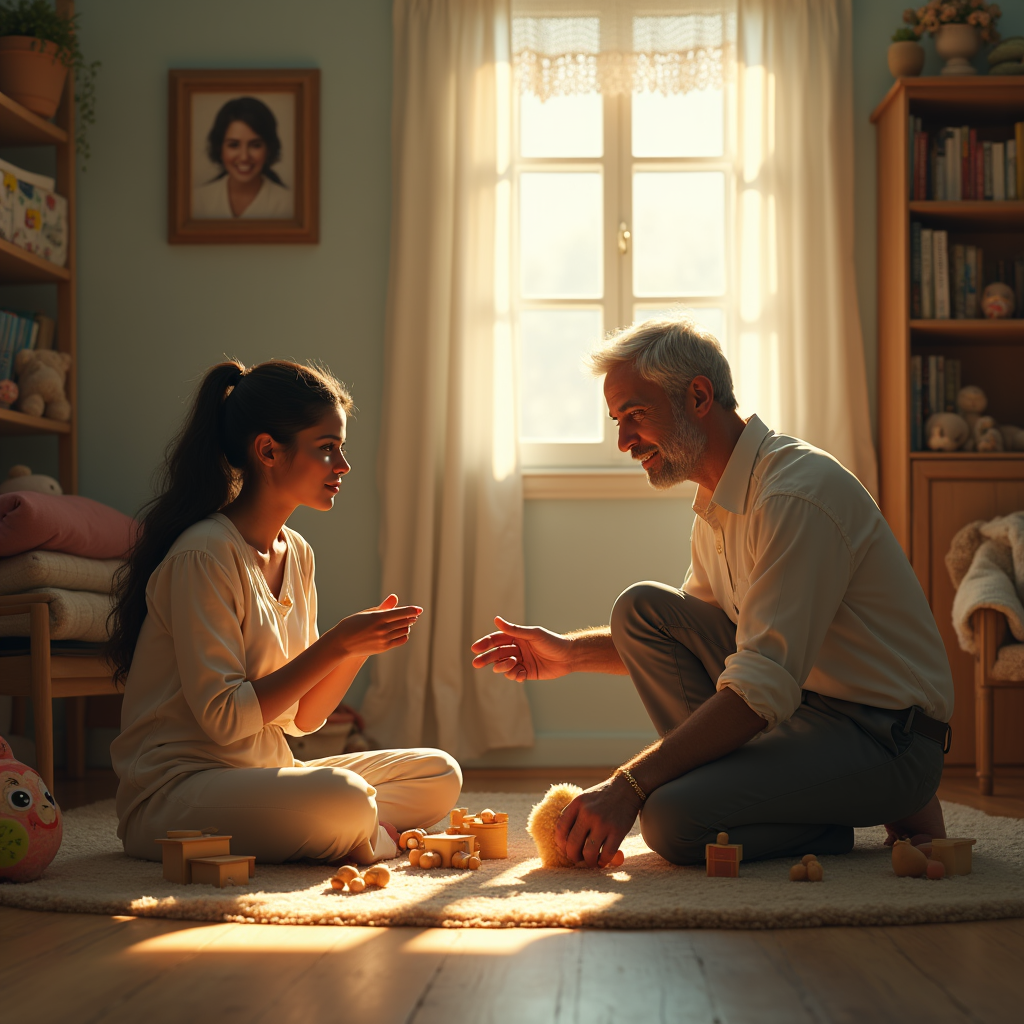
The scent of lavender always reminds me of Leo’s first few months. It’s a silly thing, really – the memory clinging to a specific fragrance – but it feels…significant. My husband, Mark, and I were completely bowled over when he arrived. Suddenly, our world was filled with this insistent need for connection, a constant reaching out, that tiny hand grasping at every fold of fabric. And I realized, almost immediately, that my body was changing too.
It wasn’t just the physical adjustments, though those were astounding. It was this strange, persistent warmth in my chest, a gentle hum that seemed to intensify when Leo was nearby. Mark noticed it, of course. He said I looked perpetually relaxed, almost serene, which is…well, it felt *right*. I started thinking about all the research on oxytocin – the “love hormone,” they call it – and how deeply ingrained it is in our maternal instincts. It struck me as utterly fascinating that we could potentially measure this subtle shift in our physiology.
The idea of collecting hair samples seemed so…unassuming, didn’t it? A tiny snip, a simple lab test, and suddenly there was a window into something profoundly personal: the very fabric of our bond with our child. It felt less intrusive than a blood draw, less demanding than endless questionnaires about our feelings. And the fact that hair grows steadily – like a little biological record book – just seemed so elegant, so perfectly suited to capturing this slow-burn development.
I remember the initial excitement in the lab, seeing those first data sets come in. The correlation between Leo’s levels and my own was startlingly clear. It wasn't about me *trying* to be a good mom; it felt like our systems were inherently attuned, gently nudging us toward that deep, reciprocal connection. It was as if the universe was quietly saying, “You’re meant for this. Let go.”
Of course, there were moments of quiet frustration when I realized how complex things could be. The study highlighted that a high baseline in one person doesn't automatically guarantee a perfect relationship—the child’s own inherent biology played a huge role. It felt like sometimes you can nurture and encourage, but ultimately, you’re dealing with an individual temperament, a unique way of experiencing the world.
What really resonated was this sense that our family dynamic wasn't just about *me* reacting to Leo; it was about us co-creating a space of mutual understanding and support. It highlighted that being a parent isn’t about controlling or imposing—it’s about fostering an environment where both individuals can thrive, where their needs intertwine and inform each other.
Thinking back on the study’s limitations – the small sample size, the need for further investigation – it felt strangely comforting. Science is rarely definitive, isn't it? It's a process of continual discovery, of refining our understanding through observation and experimentation. The fact that we were still learning, still uncovering new facets of this ancient connection, made me feel more grounded than any single "proven" theory ever could.
I often think about the generations before us who relied solely on instinct, on intuition to guide their parenting. It’s humbling to consider how much has been understood and validated through scientific inquiry – and yet, there remains so much that we simply don't know. Perhaps the true beauty lies not in finding definitive answers, but in appreciating the profound mystery of human connection.
Ultimately, this hair-sample study wasn't just about measuring hormones; it was about recognizing the powerful, unspoken language of love – a silent dialogue played out across generations, rooted in biology, shaped by experience, and fueled by the enduring need to belong.