Navigating Truth in a Digital World
It's fascinating, isn't it, how we perceive the world? I've been thinking about this a lot lately, likely because I've been spending a great deal of time ref...


It's fascinating, isn't it, how we perceive the world? I've been thinking about this a lot lately, likely because I've been spending a great deal of time reflecting on how *I* perceive the world, and how that's shifted over the years. And, of course, how my kids perceive it – which feels, at times, wildly different. My middle child, Sarah, has been having some trouble navigating the social dynamics at school. Her teacher called last month, concerned about her tendency to quickly adopt the opinions of her peers, even when those opinions seem…well, not entirely grounded in reality.
There’s a certain quickness to it, a snap judgment, an almost immediate assimilation of whatever's trending. And I think it’s partly a reflection of the constant barrage of information, the relentless cycle of opinions, that’s shaping their understanding of everything. My own kids, growing up with social media, are immersed in a world that moves at a pace I sometimes struggle to comprehend. It’s not that they’re *bad* kids, not at all. They're smart, kind, and funny. But I worry that their ability to truly evaluate information, to form their own considered opinions, is being subtly eroded.
I remember a time when news came from a few reliable sources – newspapers, the evening news. You could disagree with what they said, certainly, but there was a shared understanding of what constituted a fact. Now, everyone is a publisher, everyone is a commentator, and the lines between truth and opinion have blurred to the point of near invisibility. It’s not just political, either. It’s about everything – music, fashion, even what constitutes a good lunch.
My dad’s recent health scare has also highlighted this generational gap. My mother, bless her heart, went straight to Facebook groups dedicated to stroke recovery. She found a sense of community and shared experiences, which was valuable, I think, but also created an echo chamber of anxieties. I tried to steer her toward more reputable sources, evidence-based articles from medical professionals, but it felt like I was fighting a losing battle against the comforting reassurance of shared experience, however skewed that experience might be. He's doing remarkably well, thankfully, but those weeks were…intense.
It’s tempting to just dismiss it all as the inevitable consequence of the digital age. “Kids these days,” we sigh, shaking our heads. But I think it’s more complex than that. There’s a certain vulnerability in constantly seeking validation, in needing to belong, that’s amplified by social media. And it's not just the kids. I've noticed my own tendency to reflexively share articles, to adopt opinions, without taking the time to critically examine them. It’s easier to simply go along, to be part of the conversation.
I’ve been thinking a lot about how to foster critical thinking in my own children. It’s not about telling them *what* to think, but teaching them *how* to think. How to question assumptions, how to evaluate sources, how to recognize their own biases. The teacher, Mrs. Davison, is trying something similar in Sarah’s class, leading discussions about media literacy and encouraging them to consider different perspectives. It's a slow process, I know. Changing habits, especially deeply ingrained ones, takes time and effort.
What I’ve realized is that it’s not enough to just lament the state of things. It's about modeling the behavior we want to see. Taking the time to really *read* an article, to consider the author’s perspective, to seek out alternative viewpoints. It's about admitting when we're wrong, being willing to change our minds. It’s about creating spaces for open and honest conversations, even when those conversations are uncomfortable. And it’s about remembering that nuance and complexity are often more important than being “right.”
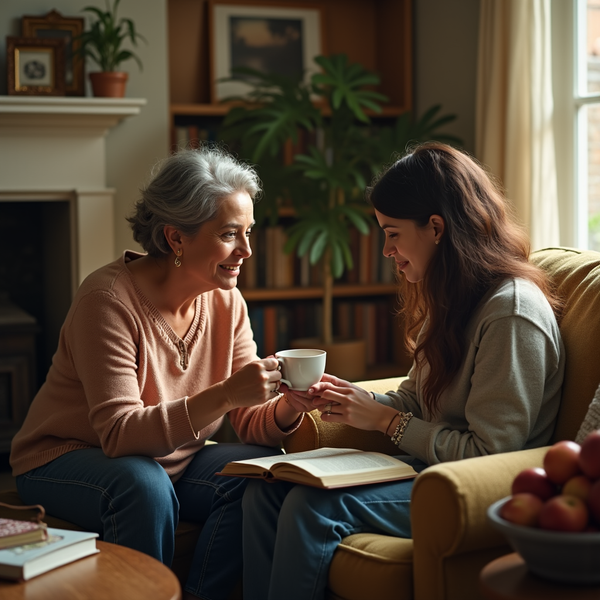
This whole experience, seeing my dad struggle and recover, watching my children navigate a world so different from the one I grew up in, has underscored the importance of connection – not just online connections, but real, human connections. Conversations over a cup of coffee, a walk in the park, a shared moment of laughter. Those are the things that ground us, that remind us of our shared humanity, that help us navigate the complexities of the world with a little more clarity and a little more grace.