Re-routing Life One Bloom at a Time
Well. That’s a curious thing to say, isn't it? “Well.” It just sort of tumbled out when I sat down at the kitchen table Monday morning, after that lovely lun...

Well. That’s a curious thing to say, isn't it? “Well.” It just sort of tumbled out when I sat down at the kitchen table Monday morning, after that lovely luncheon with the ladies from church. Retirement, they call it. Seems less like stopping and more like…re-routing.
For so many years, my life was a series of syllabi, lesson plans, assessments. A constant march toward a clearly defined goal: helping those children understand fractions, analyze Shakespeare, appreciate the beauty of a sonnet. Now? Now the destination is…well, whatever I decide it is. And deciding, you see, requires a certain amount of looking around.
Marcus’s family needed me this summer. Brooklyn doesn't slow down for anyone, not even a grandmother who wants to bake cookies and tell stories. There were babies needing cuddles, teenagers needing someone to listen, adults needing just an extra pair of hands unpacking boxes and figuring out new routines. It was the right thing to do, plain as that. But moving across state lines? It wasn’t something I'd imagined doing so readily.
I remember when Jerry first started tending his roses. He wanted prize-winning blooms, huge, perfect specimens gracing every bloom. The first year, he just followed instructions—fertilizer this, pruning that. He ended up with some pretty flowers, yes, but nothing spectacular. Then he started experimenting. A little less sun for one bush, a different type of soil for another. Some thrived, some didn’t. He lost a few plants along the way, I recall his disappointment keenly, but he learned something from each loss.
Now, those roses are magnificent. They spill over the trellis, a riot of color and fragrance that draws neighbors in. Jerry doesn't strive for perfection anymore; he understands it’s not about never failing, but about finding what works *for that particular rose*. It's the same with learning anything worthwhile—whether it be fractions or family dynamics.
I taught mathematics for thirty-five years. There was a girl, Sarah – bright as a button, nervous as a hummingbird. She’d get bogged down in algebra, convinced she simply couldn’t grasp it. "It's just too hard," she would say, her voice tight with frustration. I didn't tell her to buckle down or try harder. Instead, I gave her slightly different problems—ones that built on what she *did* understand. Small steps. Tiny victories.
Eventually, those tiny victories added up. She wasn’t suddenly a math whiz, mind you. But she found confidence. She learned the satisfaction of conquering something just beyond her grasp. And more importantly, she learned she was capable of more than she thought.
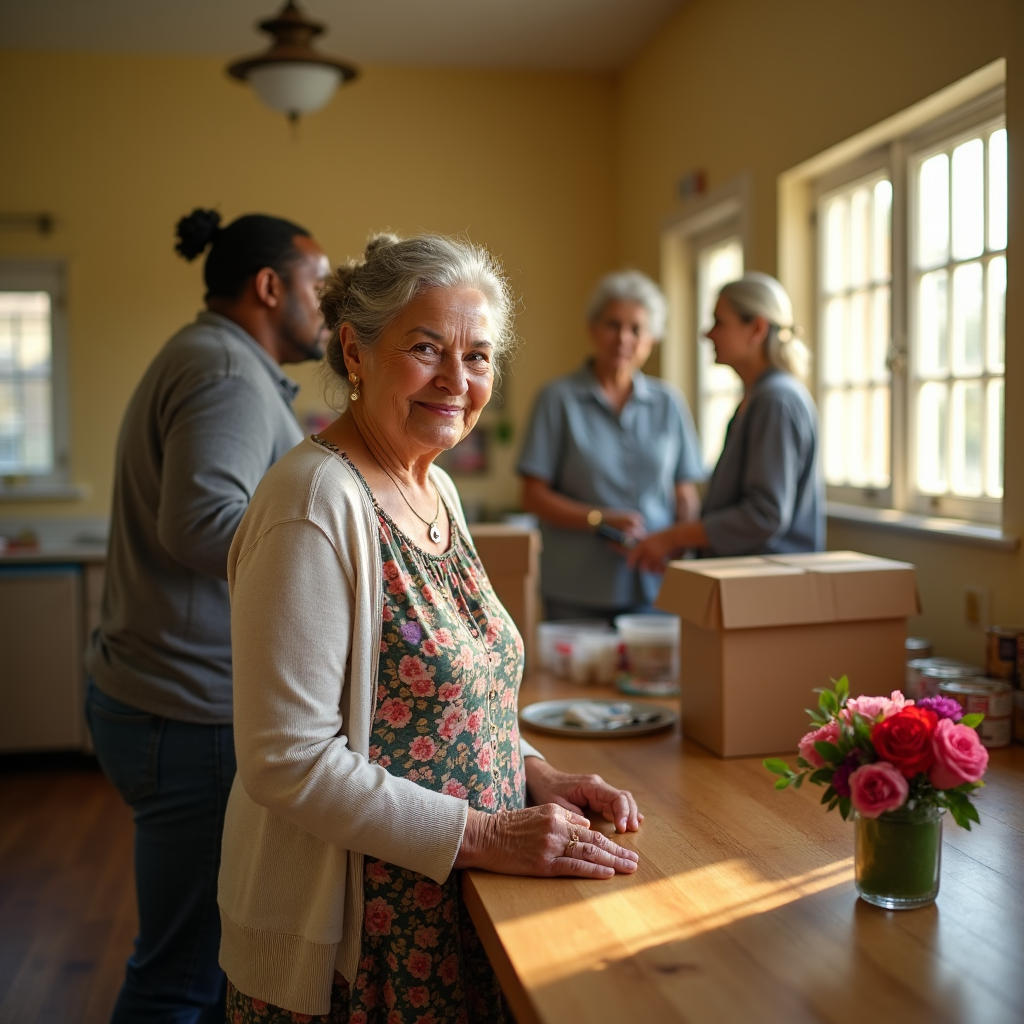
The food pantry is proving to be…a different kind of classroom. The challenges aren’t academic; they are practical – logistics, relationships, finding a balance between dignity and need. I started out helping with sorting donations, something comfortable and familiar. But then Mrs. Rodriguez, who runs the place, asked if I could help organize their volunteer schedule. Suddenly, I was grappling with personalities, availability, conflicting priorities.
It's uncomfortable, stretching yourself like that. There’s a pull to retreat back into what you know, where things are predictable and manageable. But growth rarely happens in comfortable spaces. The roses wouldn’t be so beautiful if Jerry hadn't risked losing a few along the way. And Sarah? She wouldn't have learned anything at all if I hadn’t given her those slightly harder problems. A little discomfort, a little struggle—it’s where the real learning takes place. It’s where we discover who we truly are and what we are capable of becoming.