Seeing Beyond: Intuition and Connection
Room 214 has a way of doing that to you, you know? Makes you see things… different. Like, you’re sitting there, grading papers about, I don’t know, “systems ...

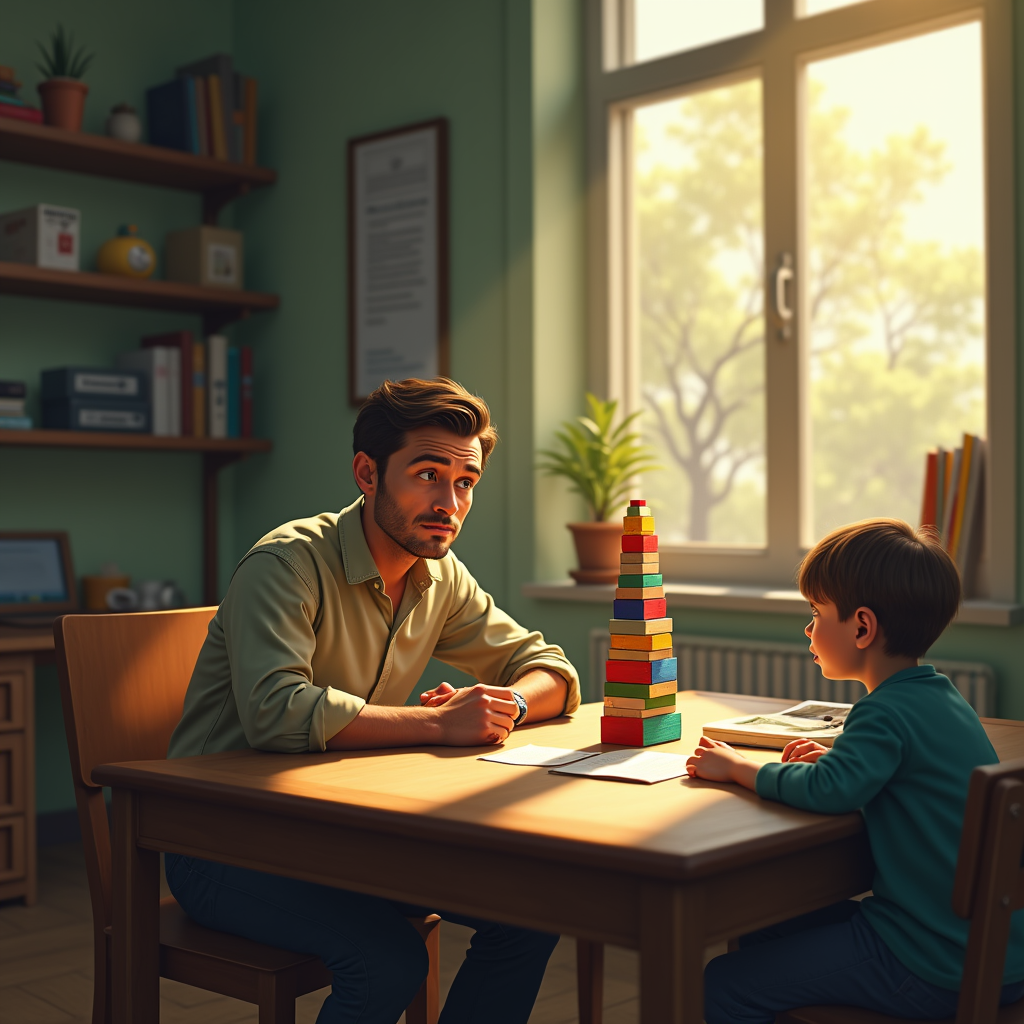
Room 214 has a way of doing that to you, you know? Makes you see things… different. Like, you’re sitting there, grading papers about, I don’t know, “systems thinking” or whatever, and you think, “Man, these kids, they’re *already* figuring this stuff out. Just… differently.” It’s not about being smarter, not really. It’s about how they look at the mess.
I was thinking about this the other day, about how kids, especially, seem to just *get* cause and effect. Like, I'll tell a kid, “If you don’t water the plant, it’s gonna die.” And they’ll just… *look* at me. Like, “Yeah. Obvious.” It’s like they're built with this little, internal algorithm, always checking for the connection. And adults? We’re so busy trying to explain *everything*, we sometimes forget to just *see* it.
It’s not always neat, though. It’s messy. Like, you try to explain the concept of “feedback loops” to a seven-year-old, and suddenly you’re arguing about whether a dog chasing its tail is a good example, or if a kid throwing a ball and catching it is better. And you realize, the point isn't the *specific* example, it’s the *understanding* of the loop itself. The idea that something causes something else, which then affects the first thing. It’s… persistent.
And it’s not just kids, you know? I saw a woman at the farmer’s market the other week, haggling over the price of tomatoes. Not aggressively, just… quietly, patiently, pushing back until she got what she wanted. It wasn't some grand strategy, just a slow, steady acknowledgment of the value of something, and a willingness to adjust that value until it felt right. It felt… intuitively correct.
The thing is, we talk a lot about “rationality” and “logical reasoning,” and it sounds so… clinical. Like you’re supposed to analyze everything down to its smallest component, like you're building a Lego set. But a lot of what I see—what I observe, what I hear—suggests there’s a deeper process happening there, one that’s less about *thinking* and more about… *feeling* the connection.
I started thinking about this in relation to, well, just, like, how people respond to situations. A little push, a little encouragement, and suddenly someone's going to try something new. A little criticism, and they shut down completely. It's not always about the words, is it? It's about the *weight* of the reaction.
It makes you wonder about all those “expert” theories out there – the complicated models, the fancy equations. Maybe they’re just… overcomplicating things. Maybe the real answer is just in watching. Watching how people behave, how they react, how they find their way through the stuff. Like a kid figuring out how to build a tower out of blocks—it's not about the instructions, it's about the trying, the adjusting, the eventual collapse, and then trying again.
And that’s kind of beautiful, isn’t it? This constant process of testing, adjusting, and learning. It's the quietest wisdom, the one you find when you’re just… paying attention. It's not about knowing *more*, it's about seeing *better*.