
Silent Love's Unspoken, Complex Legacy
The chipped porcelain teacup warmed my hands, a small comfort against the lingering chill of this Tuesday morning. Sixty-eight years, you know – sixty-eight ...

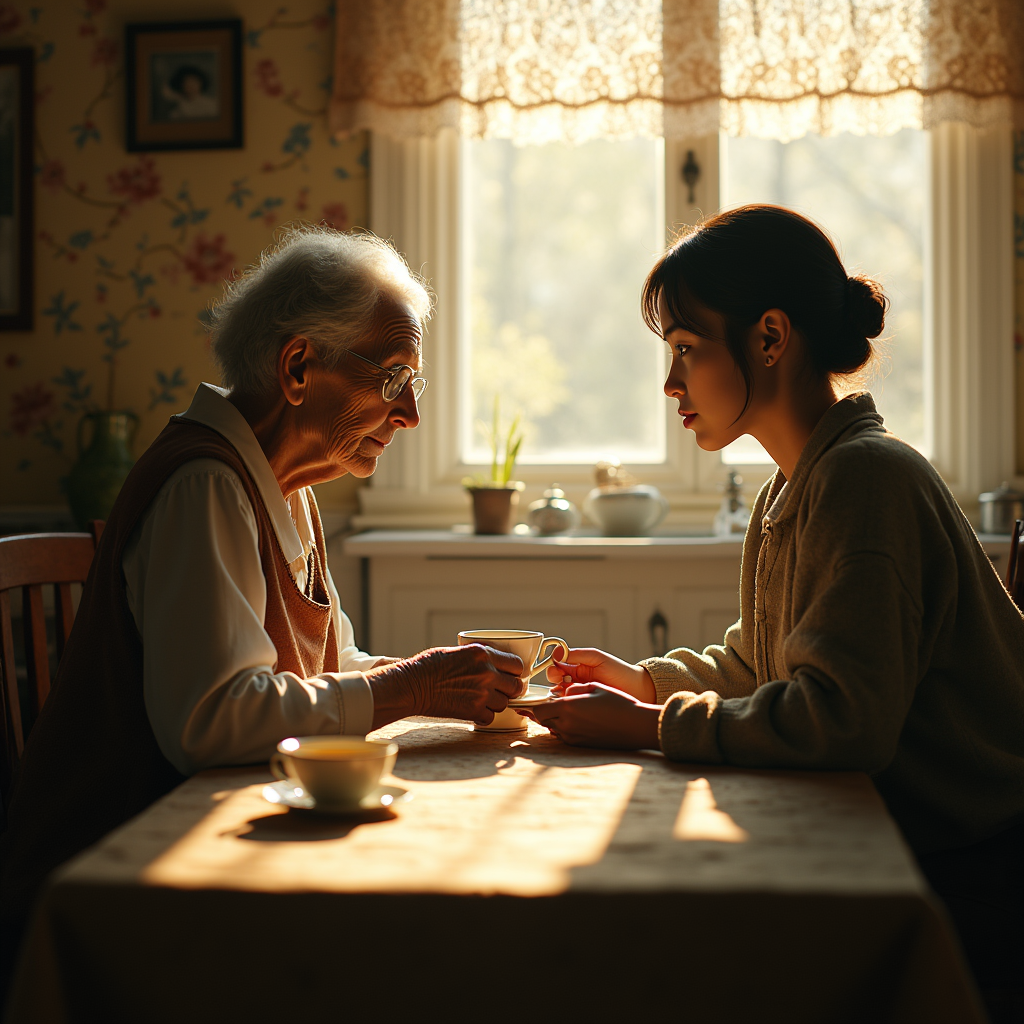
The chipped porcelain teacup warmed my hands, a small comfort against the lingering chill of this Tuesday morning. Sixty-eight years, you know – sixty-eight winters weathered, sixty-eight sunsets witnessed, and a peculiar understanding settled within me today. It’s about recognizing that love isn't always shouted from the rooftops; sometimes it resides in the quiet spaces between actions, in the sacrifices unseen. My parents… they weren’t cruel, not in any way I would ever characterize it. But their love manifested as relentless work, a constant striving to build a better life for us, one that they themselves hadn't known.
I remember the smell of simmering spices from my father’s kitchen – he was a Chinese cook, a tireless man pouring himself into those fiery pots. And my mother, perpetually smiling, yet weary, balancing tables at the diner downtown. They gave everything to us, truly. But their giving often left us… adrift. There were evenings when the house echoed with an unsettling silence, meals eaten in solitary focus, little time for conversation or a simple "how was your day?". It wasn’t malice; it was simply a different way of seeing the world, a culture where expressing vulnerability felt like a weakness to be avoided.
I learned early on that sadness didn't warrant a comforting word, that frustration wasn’t something to be openly discussed. Instead, we were expected to simply *manage* – to pull ourselves together and carry on. It was a quiet stoicism, passed down through generations, a beautiful, if somewhat prickly, armor against the storms of life. Looking back now, I realize this wasn't about lack of love, but rather an inability to offer the emotional sustenance that I, as a child, craved.
It’s strange, isn’t it? How something can simultaneously nurture and wound. They provided us with security – a roof over our heads, food on the table, opportunities beyond their own experience – yet they also built walls around our hearts, discouraging us from acknowledging or articulating what we truly felt. I learned to bottle up my disappointments, to smooth over any perceived imperfections, to always present a polished version of myself.
The patterns emerged slowly, almost imperceptibly. A fierce need for approval, a compulsion to please, an overwhelming fear of conflict – all stemming from that unspoken directive: *Don't burden us with your pain.* It’s a legacy, I suppose, one I’ve spent decades gently unwinding, piece by painstaking piece.
There are times I still catch myself wanting to fix everything, to smooth out the rough edges of the world, driven by this ingrained need to protect others from discomfort. It's exhausting, really. But understanding that this drive isn't rooted in a desire for harm, but rather a deeply internalized echo of my parents’ actions has been profoundly liberating.
Perhaps the greatest comfort comes with realizing that I am not alone in this experience. So many people carry these quiet wounds—the unseen consequences of love expressed through sacrifice and absence. It is a shared human story. It allows me to embrace their intentions, acknowledging their limitations while simultaneously honoring my own needs for connection and understanding.
This teacup, warm in my hands, is a reminder – a tangible symbol of the complex tapestry of my life, woven with threads of love, neglect, and ultimately, acceptance. It’s a quiet affirmation that even the most imperfect beginnings can hold within them a profound and enduring beauty.