Small Shifts, Big Life Changes
It’s funny, isn’t it? How something so…small can shift everything. It wasn't a big argument, not a diagnosis, just those Sunday mornings starting to feel lik...


It’s funny, isn’t it? How something so…small can shift everything. It wasn't a big argument, not a diagnosis, just those Sunday mornings starting to feel like my own again. I used to dread them, caught in the current of emails and the anticipatory buzz of the week ahead. Now, it feels like a deliberate act—a quiet anchor against the tide. My practice isn’t a chase anymore; it’s a choice, a comfortable fit rather than an obligation.
I find myself thinking about my parents sometimes, particularly when I’m trying to untangle a particularly knotty piece of advice. They weren't showy about it, not in the way we often imagine parental devotion looks. There was no grand pronouncements or obsessive hovering. It felt…distant, at times, like observing someone else’s life through a window pane. And I realize now that distance, while perhaps unintentional, might have been more impactful than any well-meaning interference.
The thing is, I think we’ve gotten so caught up in the idea of *doing* something for our kids—of being relentlessly proactive—that we've forgotten to simply…be present. It’s a strange paradox, isn't it? The desire to shield them from every hardship can inadvertently rob them of the very resilience they need to face those challenges alone. I understand now that sometimes, the most valuable lesson you can teach is how to navigate your own storms – a lesson best learned by watching someone else weather theirs with grace and quiet strength.
I spent last summer working on an adolescent workshop series, something I’d been putting off for years, and it came together surprisingly quickly. It feels…necessary, this work. Not because there's a shortage of advice being offered out there, but because I think people are desperately seeking a different kind of connection—one that isn't built on correction or instruction.
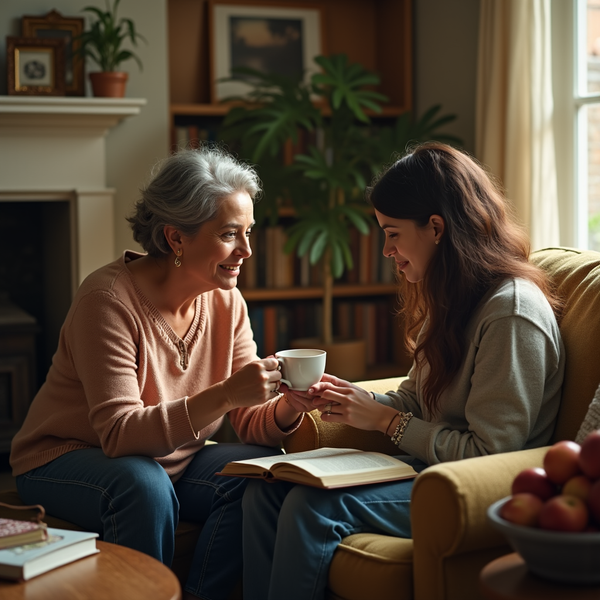
You know, when I was growing up, my parents’ love wasn’t always visible in the way we tend to expect it to be. It wasn't about lavish gestures or constant reassurance; it was woven into the fabric of everyday life—a warm meal prepared without prompting, a shared quiet evening reading, a knowing glance across the dinner table. These small acts communicated a deeper kind of trust: that I was capable, that my struggles were my own to overcome.
And honestly, it’s almost comforting to think about how much we rely on external validation—on metrics and checklists—to measure our parenting successes. It's exhausting, really. The relentless pursuit of “perfect” children is a losing battle, and I’m slowly letting go of that pressure. Letting go also means accepting that my children might not always adhere to some predetermined ideal; their own paths will be unique, and that's perfectly okay.
I saw it reflected in the data—this surge in chatbot use among young people seeking mental health support. It’s a symptom of something deeper—a hunger for connection, for understanding, that isn't being met by traditional channels. Maybe we need to reframe our approach, recognizing that sometimes, simply *being* a safe space—a listening ear—is more valuable than any prescribed solution.
It just struck me the other day: I want my kids to understand that boredom isn’t necessarily a problem. It's fertile ground for creativity, for self-discovery. Letting them get lost in their own thoughts and interests, without imposing a constant stream of activity or “solutions,” is, I think, one of the greatest gifts we can give them. It allows them to cultivate an inner compass—a sense of direction that doesn’t rely on external validation.